Radio Reception
19
Distortion, interference and lack of signal
clarity, are often attributed to a fault in
the radio - this is rarely the case!
Problems of this kind are usually caused
by phenomena such as atmospheric
conditions, signal strength, hilly terrain,
tall buildings, bridges and even electrical
interference from power lines.
Please remember: A car radio receives
signals while the vehicle is in motion
(unlike a domestic set!) - constantly
changing direction and moving away
from, or nearer to the transmitter whilst
negotiating terrain with widely differing
reception characteristics. Some
interference is to be expected!
FM transmitters can only broadcast over
a limited range and good, clear signals
will only be received in the immediate
area of the transmitter. When travelling, it
may be necessary to re-tune the radio
from time to time, to offset the effects of
moving from one transmitter area to
another. While the RDS capability of
automatic retuning to the strongest FM
signal eases this problem, some manual
retuning may still be needed (especially
for local stations) in areas of weak
reception.
The broadcast range for good stereo
reception (usually within a 50 to 65 km
radius of the transmitter) is noticeably less
than it is for mono.
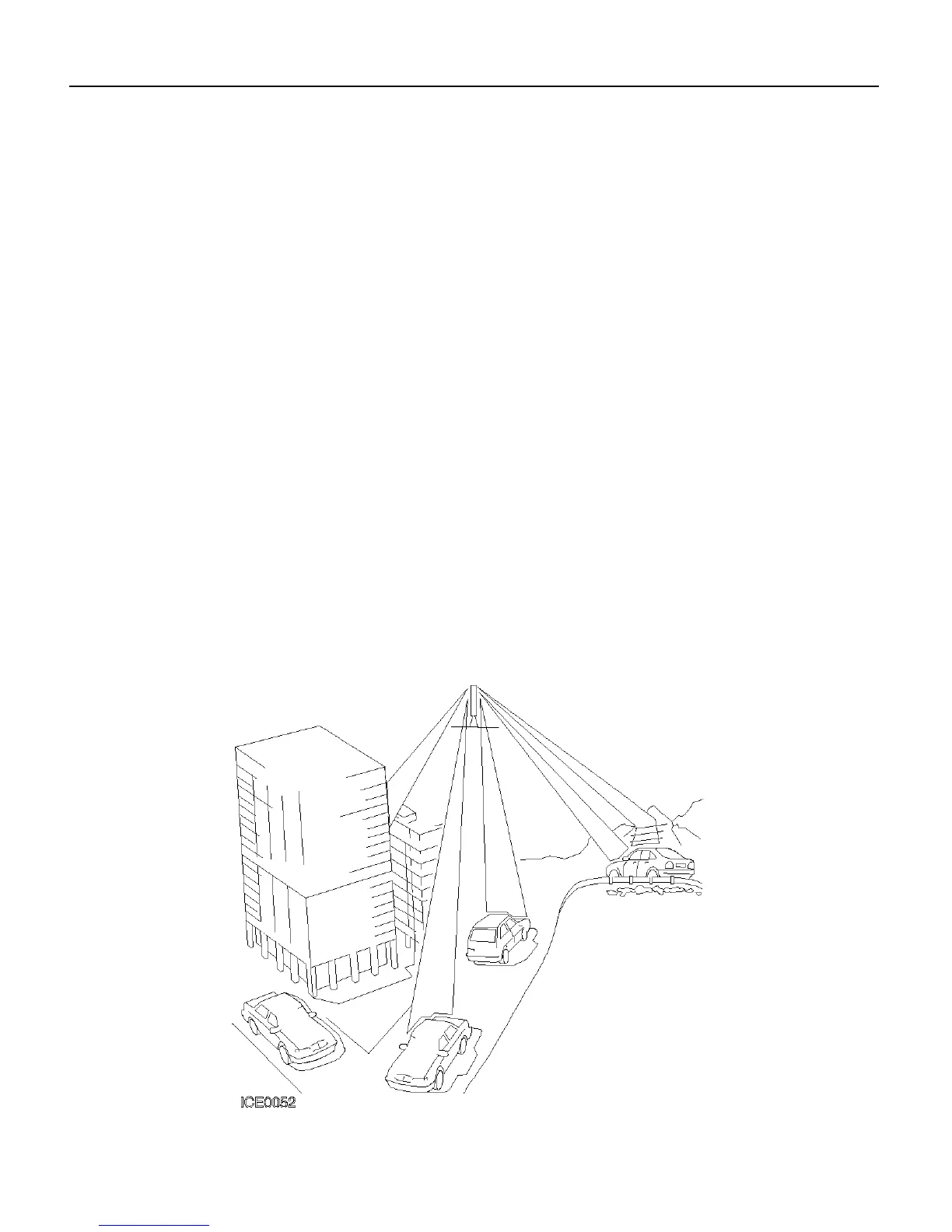
FM Signals (like light waves) travel in a
straight line, so large obstacles, such as
tall buildings, can shield the car from the
signal causing distortion or loss of
reception (known as dead spots).
Distortion can also occur if FM signals
received directly from the transmitter mix
with signals which have been reflected
by obstructions such as mountains, hills
and tall buildings (this is known as
multi-path distortion).


 To Next Page