Page 27
OPERATION
■ Make sure the wood is clear of the blade before turning on
the saw.
See Figure 35.
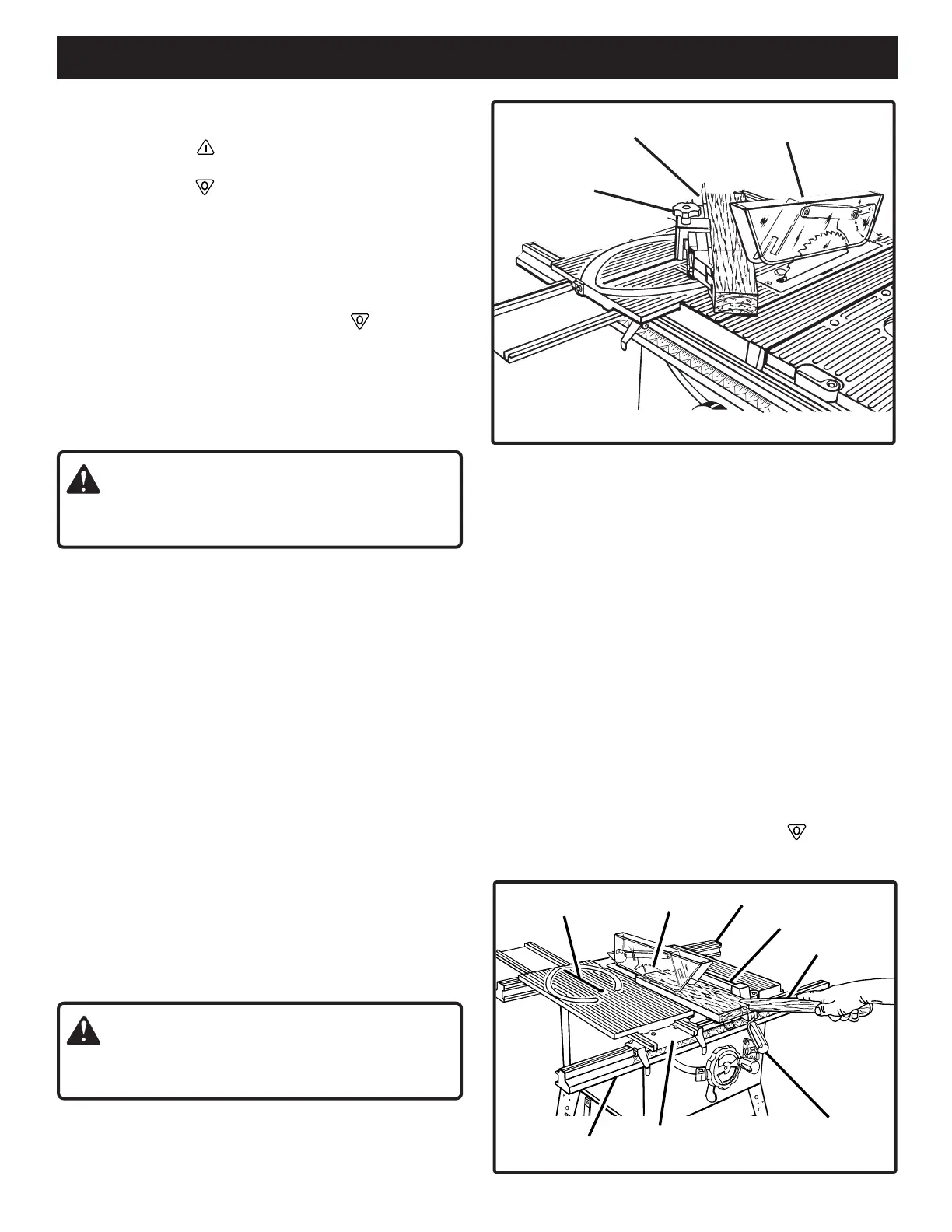
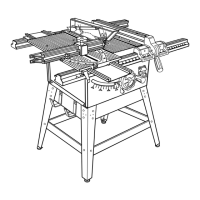
Fig. 37
MITR
E
FENCE
BLADE
GUARD ASSEMBLY
ADJUSTING CLAMP
RIP FENCE
BLADE
MITRE TABLE
PUSH STICK
REAR RAIL
BASE
FRONT RAIL
LOCKING HANDLE
■ To turn saw on ( ), lift switch cover and press switch
button. Then lower switch cover.
■ To turn saw off ( ), press the switch button down.
Note: To prevent unauthorised use, remove the switch
key as shown in figure 36.
■ Let the blade build up to full speed before moving the
workpiece into the blade.
■ Hold the workpiece firmly with both hands on the mitre
gauge and feed the workpiece into the blade.
■ When the cut is made, turn the saw off ( ). Wait for the
blade to come to a complete stop before removing the
workpiece.
TO MAKE A MITRE CUT
See Figure 37.
It is recommended you make test cuts on scrap wood.
WARNING:
Make sure the blade guard assembly is installed and
working properly to avoid serious personal injury.
■ Remove the rip fence by lifting the locking handle.
■ Loosen the adjusting clamp to set the desired angle of the
mitre fence. Place the mitre indicator on the mitre fence
to the desired angle on the mitre table. Retighten the
clamp.
■ Place a support (the same height as saw table) behind the
saw for the cut work.
■ Make sure the mitre fence will not contact the blade while
feeding the wood. Make a trial pass of the mitre table. The
mitre fence should not contact the blade. Loosen the
adjusting clamp to move it away from the blade if needed.
■ Make sure the wood is clear of the blade before turning on
the saw.
■ Let the blade build up to full speed before moving the
mitre table to feed the workpiece into the blade.
■ Hold the work firmly against the mitre fence with both
hands, keeping well clear of the blade, and push the mitre
table to feed the work into the blade.
TO MAKE A STRAIGHT RIP CUT
See Figure 38.
It is recommended you make a test cut on scrap wood.
WARNING:
Make sure the blade guard assembly is installed and
working properly to avoid serious personal injury.
■ Don't leave one side of saw unsupported.
■ Position the rip fence the desired distance from the blade
for the cut and securely lock the handle. Adjust the scale
to zero at the cutting edge of the blade.
■ Place a support (the same height as saw table) behind
the saw for the cut work.
■ Use a push block or push stick to move the wood through
the cut past the blade. Never push a small piece of
wood into the blade with your hand, always use a
push stick. The use of push blocks, push sticks, and
featherboards are necessary when making non-through
cuts.
■ Stand to the side of the wood as it contacts the blade to
reduce the chance of injury should kickback occur. Never
stand directly in the line of cut.
■
Make sure the wood is clear of the blade before turning
on the saw.
■ Let the blade build up to full speed before feeding the
workpiece into the blade.
the cut being performed. Securely lock the rip fence with
the locking handle.
■ Remove the mitre fence. Position accessory table and
sliding mitre table to provide the support necessary for
■ When the cut is made, turn the saw off ( ). Wait for the
blade to come to a complete stop before removing the
workpiece.
Fig. 38


 To Next Page