Seats, restraints 63
Child restraints
Child restraint systems
Older Children
Older children who have outgrown
booster seats should wear the vehi‐
cle's safety belts.
The manufacturer's instructions that
come with the booster seat, state the
weight and height limitations for that
booster. Use a booster seat with
a lap-shoulder belt until the child
passes the below fit test:
■ Sit all the way back on the seat. Do
the knees bend at the seat edge? If
yes, continue. If no, return to the
booster seat.
■ Buckle the lap-shoulder belt. Does
the shoulder belt rest on the shoul‐
der? If yes, continue. If no, then re‐
turn to the booster seat.
■ Does the lap belt fit low and snug
on the hips, touching the thighs? If
yes, continue. If no, return to the
booster seat.
■ Can proper safety belt fit be main‐
tained for the length of the trip? If
yes, continue. If no, return to the
booster seat.
?
What is the proper way to wear
safety belts?
!
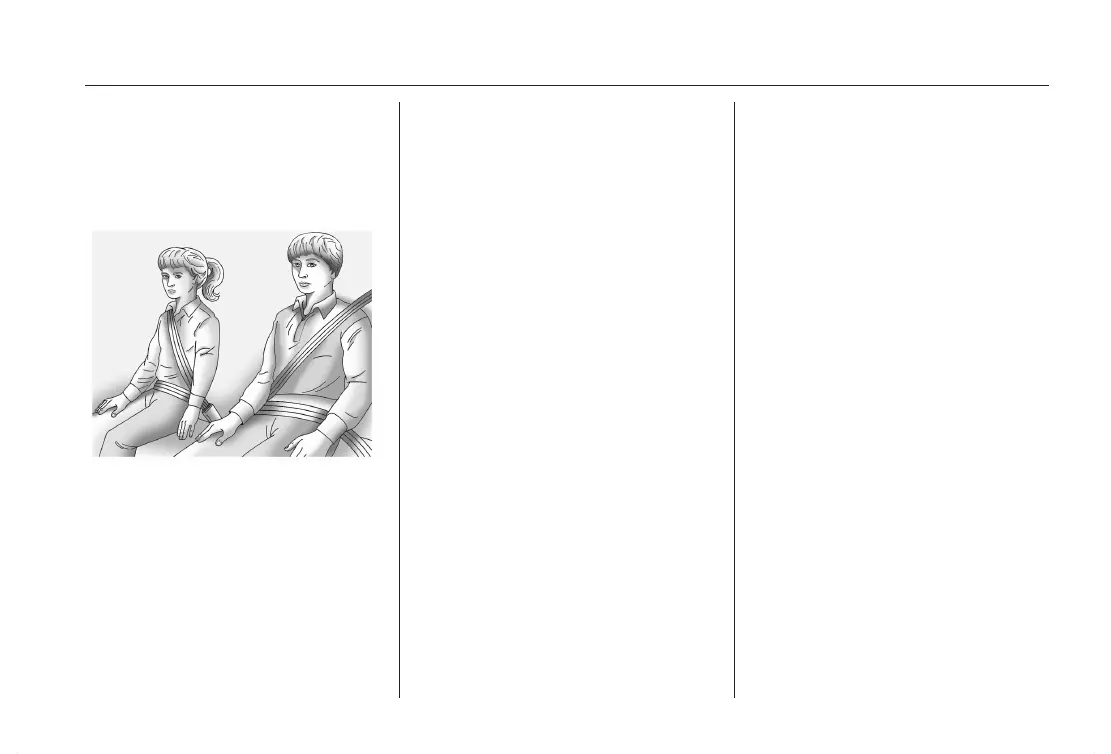
An older child should wear a lap-
shoulder belt and get the additional
restraint a shoulder belt can pro‐
vide. The shoulder belt should not
cross the face or neck. The lap belt
should fit snugly below the hips,
just touching the top of the thighs.
This applies belt force to the child's
pelvic bones in a crash. It should
never be worn over the abdomen,
which could cause severe or even
fatal internal injuries in a crash.
According to accident statistics, chil‐
dren and infants are safer when prop‐
erly restrained in a child restraint sys‐
tem or infant restraint system secured
in a rear seating position. In a crash,
children who are not buckled up can
strike other people who are buckled
up, or can be thrown out of the vehi‐
cle. Older children need to use safety
belts properly.


 To Next Page
 Loading...