MAGIC 5. SERVICE PROGRAMME
Saeco International Group REV.5 SEPT.2004 Page 15/24
5.2. Diagnosis menu
The values below can be read and adjusted in the diagnosis menu as shown in the table.
Access: Access via the Standby mode by keeping the EXPRESSO LUNGO, EXPRESSO and HOT
WATER buttons simultaneously pressed, and pressing the MENU button.
(The user programme is also available in this mode.)
Using the button scroll to the menu item "Diagnosis" and confirm using ENTER/MENU.
Changing programme values: Access appropriate item using the ENTER/MENU button.
Change value with ARROW buttons
Save value by using ENTER/MENU.
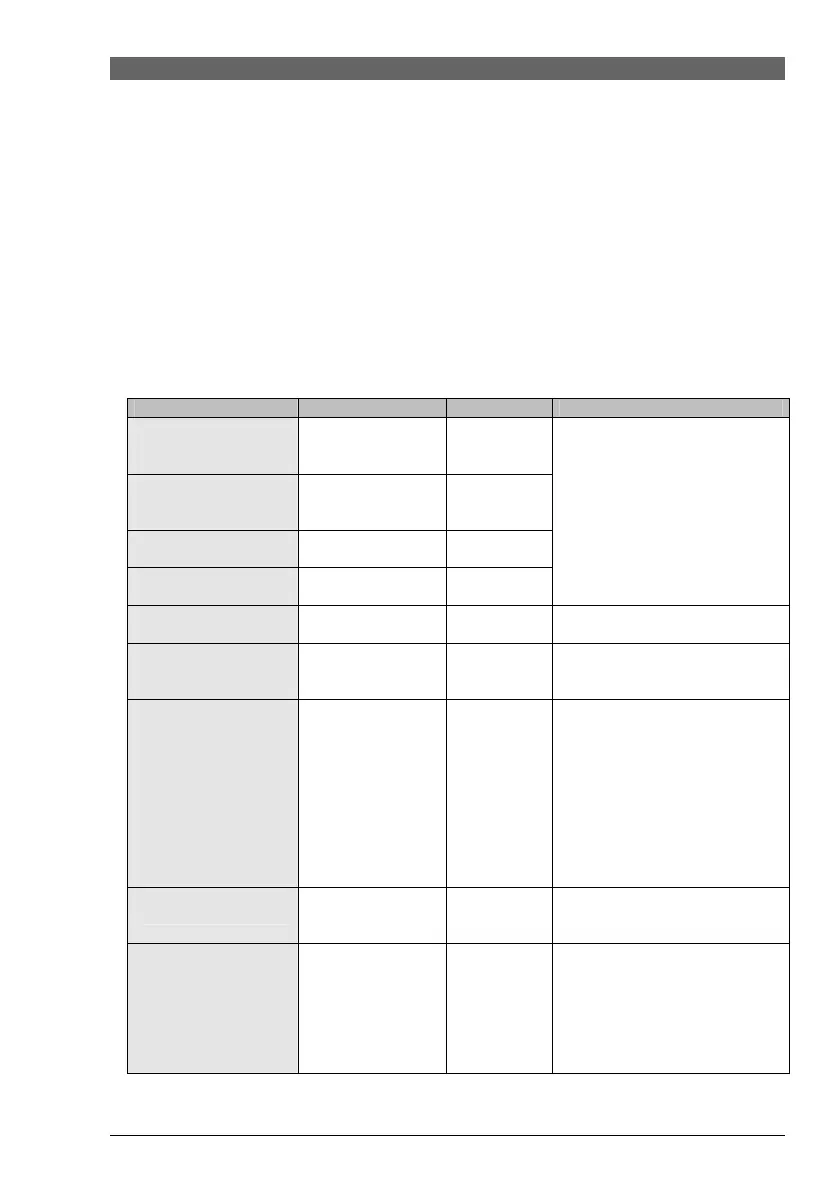
Programme table (diagnosis menu)
Parameter /RD
Setting range
Increment
Comments
EXPRESSO LUNGO
No. PULSES 600
50 - 800 Pulses
+/- 1
EXPRESSO
N° PULSES 195/200
50 - 800 Pulses
+/- 1
COFFEE
N° PULSES 360/350
50 - 800 Pulses
+/- 1
HOT WATER
No. PULSES 360
1 – 50
+/- 1
Number of flow meter pulses for
each saved cup fill volume, where
300 pulses correspond to approx.
100 ml.
----HEATING----
PARAMETER K1 7/8
1 – 50
+/- 1
Do not change!
----HEATING----
PARAMETER K2
30/35
1 – 50 +/- 1
Do not change!
----HEATING----
SENSOR ADJUST.
96
86 – 106
Comfort + RD only
+/- 1 To adjust processor tolerances.
If the temperature in test mode
with a set measuring resistance of
3246Ω exceeds or falls short of
the specified temperature value
(96°C) by more than 1°C, the
value indicated in test mode must
be applied to adjust the sensor.
No measuring resistance: Do not
change!
NORMAL TEMP.
°C 86/82
70- 130°C +/- 1 Normal temperature is used if not
more than 6 min. have elapsed
since last coffee dispensed.
HIGH TEMP.
°C 92/94
70- 130°C +/- 1 If no coffee is dispensed for an
extended time (over 6 min.), the
next coffee will be heated to a
higher temperature to compensate
for cooling of the brewing unit
and the associated temperature
loss.




 To Next Page