GETTING STARTED
“How hard can it be getting started with a
simple speaker amp?” you may be asking. Well,
not hard at all, as long as you keep a few things
in mind.
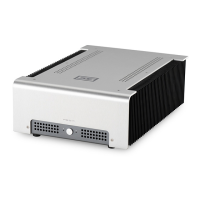
Tyr is heavy. Not like “so heavy you need
reinforced concrete oors,” or “this amp creates
its own gravity,” but probably heavier than you
think. Each is about 55 pounds, while still being
relatively small. Be careful when lifting and
moving Tyr.
Tyr runs warm. Again, this isn’t grille-meat-
while-you-listen warm, but each Tyr runs pretty
warm. That means:
• Do not stack your Tyrs
• Ensure there’s plenty of ventilation around
each Tyr
• If you’re putting Tyrs in a cabinet, ensure at
least 2” of free airspace above each amp, and
that the cabinet is open to the air on at least
one side
• If you’re putting them directly on the ground,
thick carpet may impede airow over the
exposed heatsinks
Also, if you like your house warm--as in, over
80 degrees F, don’t be surprised if Tyr may
need some additional fan cooling. These amps
are designed for use in typical air-conditioned
indoor temperatures.
You need one Tyr per speaker. Yes, this might
sound silly, but we actually have gotten a lot of
questions about how to connect this amplier
to two speakers. However, Tyr is a monoblock—
which means it’s a single-channel amplier.
Which means you need one per speaker.
You can’t “bridge” Tyr. This is a differential
amplier, which means both speaker terminals
are “hot.” This also means you can’t use Tyr with
speakers that have a common ground between
both channels (this is very, very odd—if there are
no cables connecting your speakers together,
you’re safe).



 To Next Page