Schweitzer Engineering Laboratories, Inc. SEL-787-3, -4 Data Sheet
7
Protection Features
The SEL-787 Relay offers dual-slope differential charac-
teristic for transformer differential protection. The
SEL-787 includes a complete set of phase, negative-
sequence, and residual overcurrent elements for each ter-
minal (winding), as well as REF and neutral-overcurrent
elements for grounded wye transformers.
Use as many as 12 independent RTD-driven thermal
elements with trip and alarm levels to monitor ambient
and equipment temperatures throughout the substation.
For the optional volts/hertz element, you can add three-
phase voltage inputs that give the SEL-787 volts/hertz
protection with definite-time and time-delay
characteristics, along with directional power, over- and
underfrequency, and over- and undervoltage elements with
two independent pickup levels and time delay.
Transformer Differential
The SEL-787 has three restrained differential elements
(87R). These elements use operate and restraint quanti-
ties calculated from as many as four winding input cur-
rents. Set the differential elements with either single- or
dual-slope percentage differential characteristics.
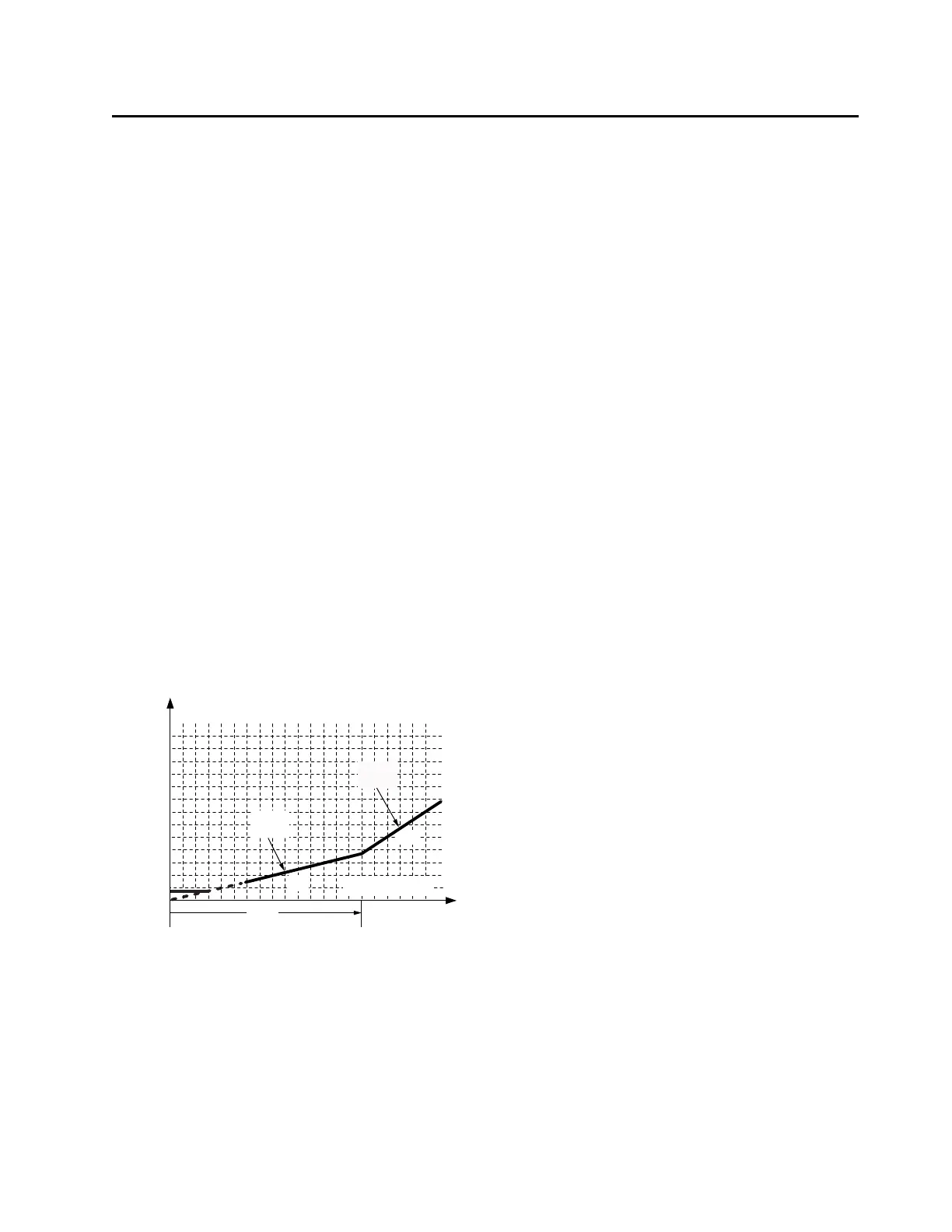
Figure 4 illustrates a dual-slope setting. The percent-
slope characteristic helps prevent undesired relay opera-
tion because of a possible unbalance between CTs during
external faults. CT unbalance can result from TAP
changing in the power transformer and error difference
between the CTs on either side of a power transformer.
Figure 4 Dual-Slope Restrained Differential
Characteristic
With the SEL-787, you can choose harmonic blocking,
harmonic restraint, or both, to provide reliable
differential protection during transformer inrush
conditions. Even-numbered harmonics (second and
fourth) provide security during energization, while fifth-
harmonic blocking provides security for overexcitation
conditions. Set second-, fourth-, and fifth-harmonic
thresholds independently.
An additional alarm function for the fifth-harmonic
current employs a separate threshold and an adjustable
timer to warn of overexcitation. This may be useful for
transformer applications in or near generating stations. A
set of unrestrained differential current elements simply
compares the differential operating current quantity to a
setting value, typically about 10 times the TAP setting.
This pickup setting is only exceeded for internal faults.
The three independent unrestrained differential elements
(87U) provide rapid assertion without delay when
differential operate current levels exceed the 87U pickup
threshold that is set. Typical 87U pickup level settings
are between 8 and 10 per unit of operate current.
Restricted Earth Fault (REF)
Protection
Apply the REF protection feature to provide sensitive
detection of internal ground faults on grounded
wye-connected transformer windings and auto-
transformers. Order the SEL-787-3E with the Slot E card
containing the 1 A or 5 A neutral current input for REF
protection. The single-phase 1 A or 5 A CT, provided as
a Slot E ordering option, is used for introduction of neu-
tral operating current. Also, across all available models,
you can program Winding 3 for inclusion in differential
protection or program Phase A and/or Phase B of
Winding 3 for REF protection.
When Winding 3 is set for REF protection, you can
apply the operate quantity (neutral current) to Phase A or
Phase B of Winding 3 for REF protection. Polarizing
current is derived from the residual current calculated for
the protected winding(s). A sensitive directional element
determines whether the fault is internal or external. Zero-
sequence current thresholds supervise tripping.
Overcurrent Protection
The SEL-787 offers instantaneous overcurrent and time-
overcurrent elements. All the elements can be controlled
individually by means of SEL
OGIC torque control equa-
tions associated with the element.
Instantaneous Overcurrent Elements
The following instantaneous overcurrent elements are
available in the SEL-787.
➤ Four instantaneous phase overcurrent (50P) elements
per winding that operate on the maximum of the
phase currents. A peak detection algorithm is used to
enhance element sensitivity during high-fault current
conditions where severe CT saturation may occur.
➤ Per-phase instantaneous overcurrent (50P) elements,
one element per phase, that operate on the corre-
sponding phase current of Winding 3 (only available
Operating Region
Restraining Region
IRT
70%
25%
IOP
087P = 0.3
Slope 2
(SLP2)
IRS1 = 6
Slope 1
(SLP1)


 To Next Page