12
3.5 Track length
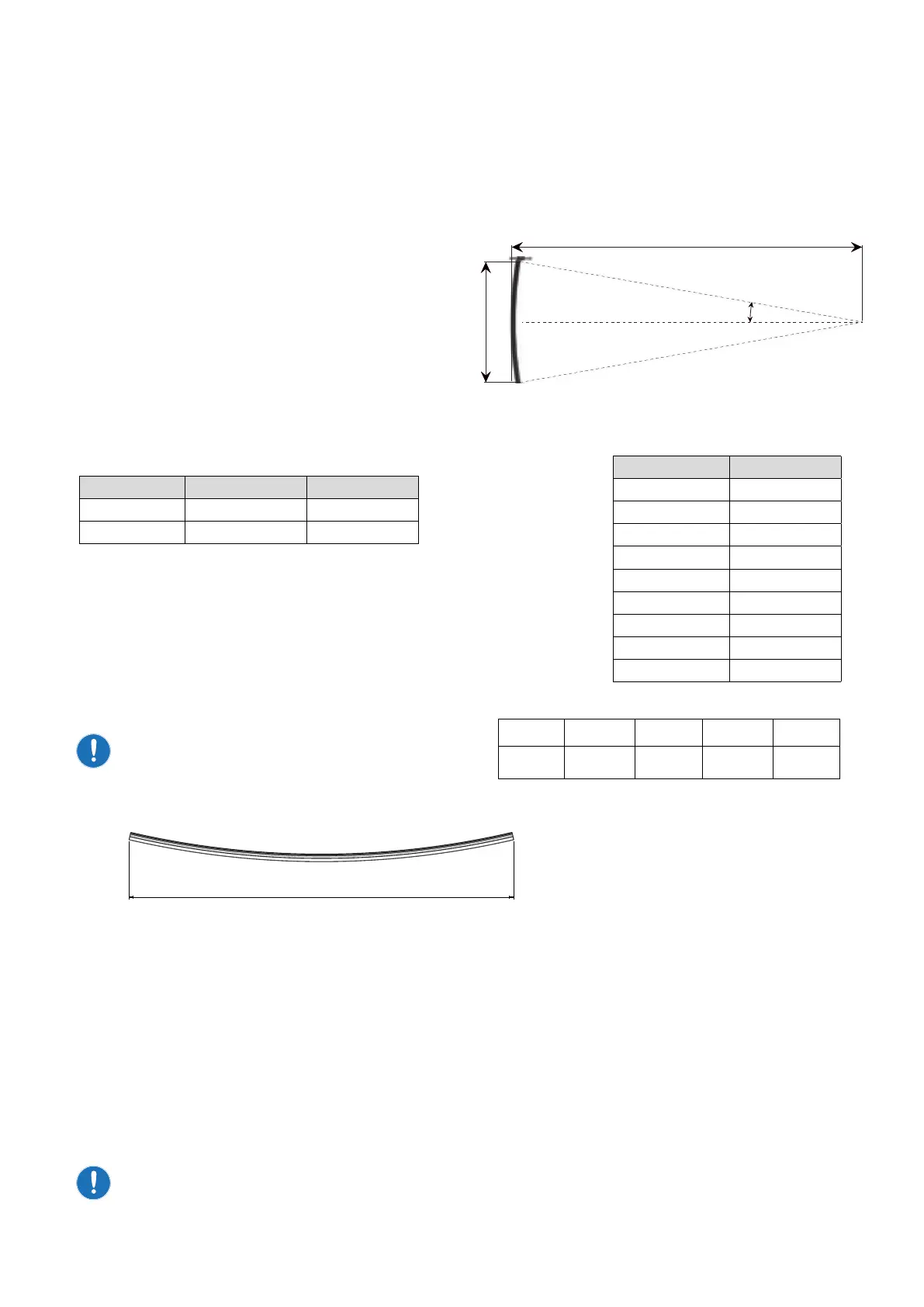
The sheeting angle and Jt-measurement will give the length of the track.
Normally an angle of 8-10° works well (an angle under 7° is not recommended).
Consult your sail maker for the recommended sheeting angle for your sail and boat.
• To calculate the length of the track you need the
distance from the forestay to the track (Jt) and
the sheeting angle (a).
• The length of the track for a given angle can be
approximated as follows:
L = 2 x Jt x A + l
A= factor sheet angle, see table, or calculate as:
L =2 x Jt x tan (a) + l
Jt = fore triangle base length, see gure above
l = car length, see table below
• Mark the centre of the track. Measure out (L/2) from the
centre mark to one side of the track, mark this distance
and repeat procedure for the opposite side.
• Measure and check the distance between the end marks,
this distance should be (L).
When measuring distance (L) on a curved
track, make sure you measure in a straight
line between the two end points.
Jt
a
L
Sheet angle (a) A (tan(a))
7.0º 0.123
7.5º 0.132
8.0º 0.141
8.5º 0.150
9.0º 0.158
9.5º 0.167
10.0º 0.176
10.5º 0.185
11.0º 0.194
L
Art. No. Lenght (l) mm Description
442-148-01 85 Single car
442-148-02 175 Double car
3.6 Placement of side consoles and deck fittings
Place the track in the correct position on the foredeck.
Secure the position of the track and centre console on the deck with tape/clamps etc.
Check the track is centred and the end marks on the track corresponds to the chosen sheeting angle.
Position the centre bracket(s) on deck, ensuring no clashes, and mark the position.
With the track in place, check that there is space beneath the end marks on the track to allow the side
consoles and deck ttings to be mounted.
Check that both ends of the track have the same distance from the forestay chain plate.
L = 2 x Jt x A + l
L = 2 x x + =



 To Next Page