5
TO ENSURE SAFETY
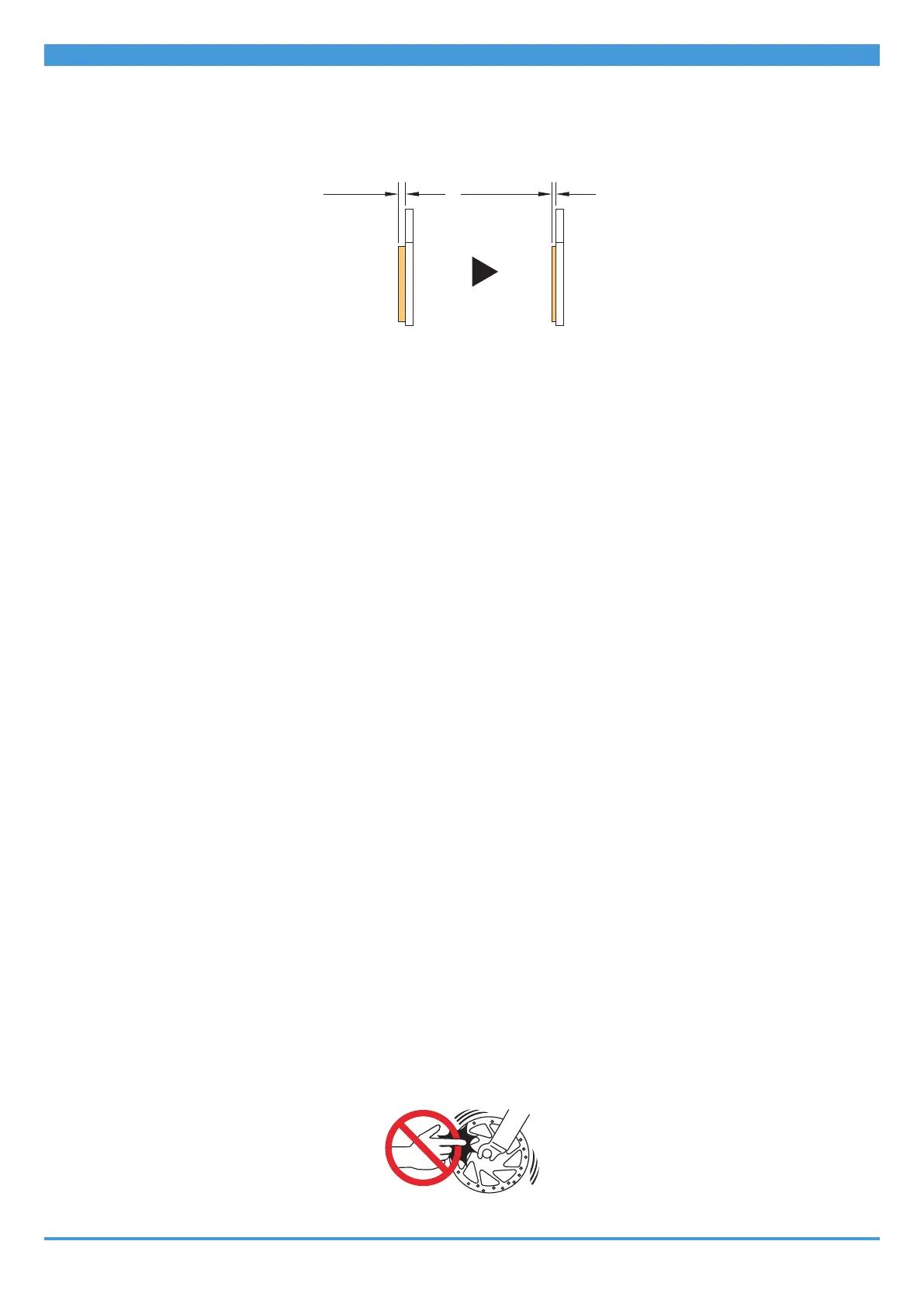
• Check the thickness of the brake pads and do not use them if they have a thickness of 0.5
mm or less. Doing so may prevent the brakes from operating and result in serious injury.
• Do not use the disc brake rotor if it is cracked or deformed. The disc brake rotor may
break, and result in serious injury due to a fall.
• Do not use the disc brake rotor if its thickness is 1.5 mm or less. Also do not use it if the
aluminum surface becomes visible. The disc brake rotor may break, and result in serious
injury due to a fall.
• Do not continuously apply the brakes. Doing so may cause a sudden increase in the brake
lever stroke and prevent the brakes from operating and result in serious injury.
• Do not use the brakes with fluid leaking. Doing so may prevent the brakes from
operating and result in serious injury.
• Do not apply the front brake too strongly. If you do so, the front wheel may lock and the
bicycle may fall forward, and serious injury may result.
• Because the required braking distance will be longer during wet weather, reduce your
speed and apply the brakes early and gently. You may fall or collide and be seriously
injured.
• A wet road surface may cause tires to skid; therefore, to avoid this, reduce your speed
and apply the brakes early and gently. If the tires skid, you may fall and be seriously
injured.
• If the quick release lever is on the same side as the disc brake rotor, confirm that it does
not interfere with the disc brake rotor. Otherwise, the bicycle may fall forward, and
serious injury may result.
For installation to the bicycle, and maintenance:
• Please make sure to keep your fingers away from the rotating disc brake rotor during
installation or maintenance of the wheel. The disc brake rotor is sharp enough to inflict
severe injury to your fingers if caught within the openings of moving rotor.



 To Next Page