108 Operator's Manual S 65 E - S 65 E C
data of the wheel, exceed the normally accepted interval stated in the TECHNICAL
DATA section, the A5 message is displayed.
IMPORTANT
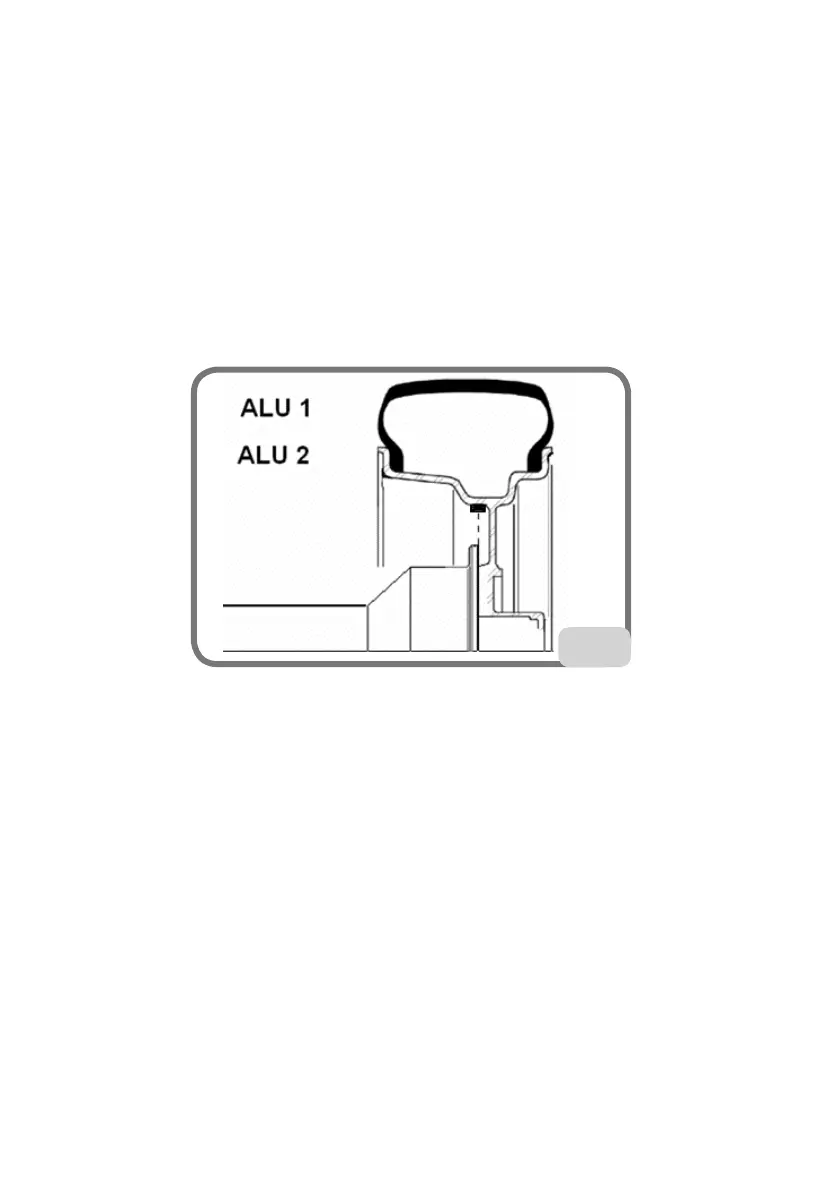
in ALU1 and ALU2 programmes the unbalance displayed by the machine on the outer
side refers to the adhesive weight centre of gravity at the swinging unit bearing flange,
(Fig. 23a)
Some minor residual unbalance may remain at the end of the spin test due to the con-
siderable difference in shape found in rims with the same nominal diameters. Therefore
change the value and position of the previously applied weights based on the configura-
tion performed in the programme "SELECTION OF ADHESIVE WEIGHTS APPLICATION
POSITION" until an accurate balance is obtained.
23a
Motorcycle Wheel Balancing
Motorcycle wheels can be balanced in:
- dynamic mode; when the wheel width is such (over 3 inches) to generate significant
unbalance components which cannot be eliminated with static balancing (the recom-
mended procedure).
- dynamic mode for alloy rims; a programme similar to the ALU programmes for on-vehicle
wheels, featuring the possibility of dividing the weight of one side into two parts in case
of particularly large spokes;
- static mode; just one balancing weight, divided, if necessary, into equal parts on the
two sides; procedure described in the STATIC BALANCING section.
Motorcycle Dynamic programme
Proceed as follows to balance a motorcycle wheel on two planes (dynamic balancing) using clip
weights:
•remove the hub;
•fit the motorcycle wheel adapter on the wheel balancer (A Fig.24);
•insertthetwoscrewsprovidedintotheholesonthewheelcontactflange;
•tightenthescrewsontheadaptermakingsurethatitrestsontheflangecorrectly;


 To Next Page