10 -
TRI
ATTENZIONE !
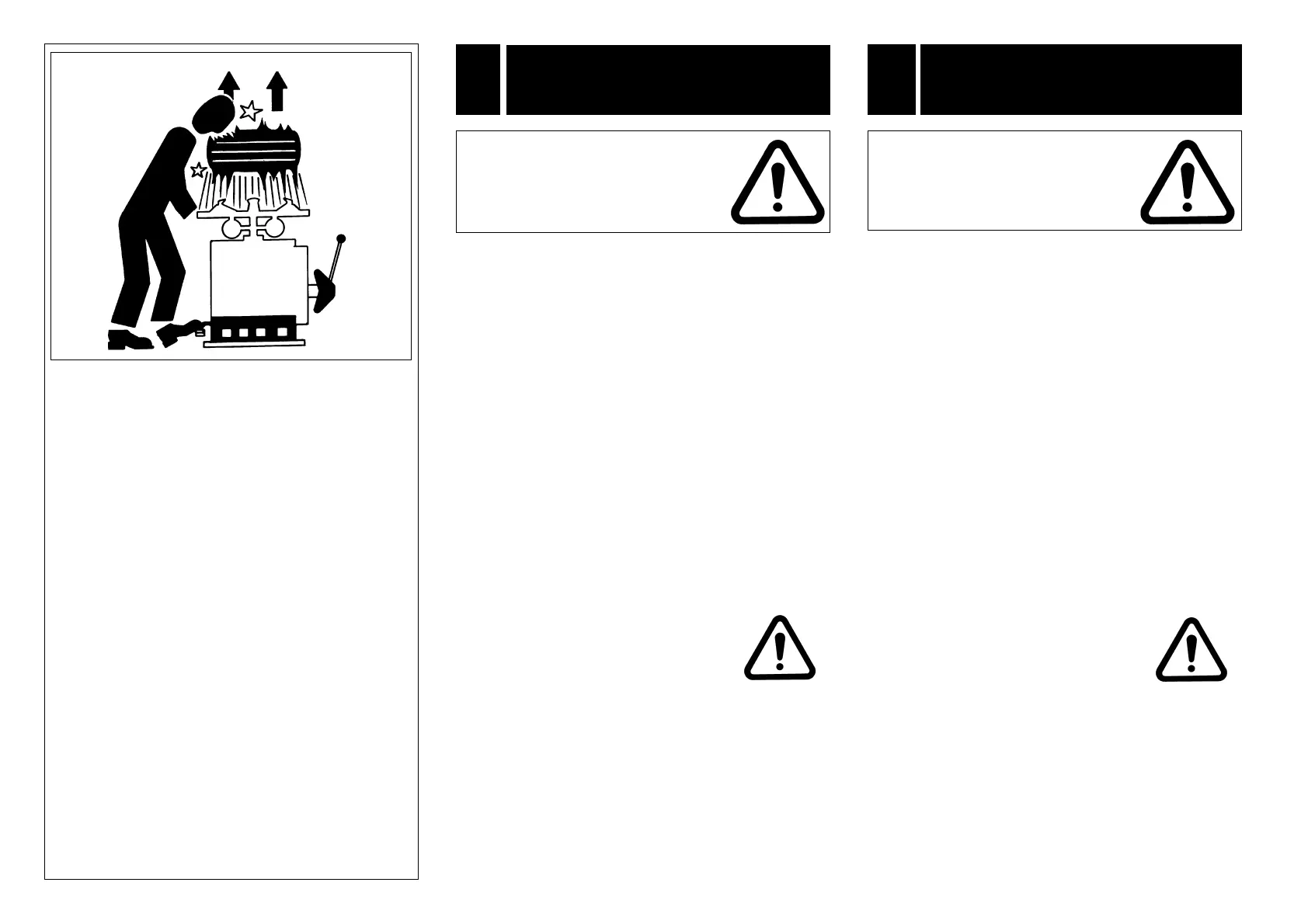
La rottura di un cerchio o di un pneumatico sotto pressione
può provocare una eplosione che proietta la ruota lateralmen-
te o verso l'alto con forza tale da causare danni, serie lesioni o
anche la morte!
Nonostante questo dispositivo sia dotato di un limitatore di pres-
sione tarato a 3,5 bar (50 PSI), esso NON è un dispositivo di
sicurezza e non consente di eliminare completamente rischi e
danni di una eventuale esplosione.
UNA RUOTA PUO' ESPLODERE QUANDO:
1) Il diametro del cerchio non è esattamente uguale al diame-
tro del pneumatico.
(Il diametro del pneumatico è stampato sul fianco del pneu-
matico; il diametro del cerchio è stampato sul cerchio).
2) Il cerchio o il pneumatico sono difettosi.
3) Durante la tallonatura viene superata la pressione massima
raccomandata.
4) Il pneumatico viene gonfiato superando la pressione massi-
ma indicata dal costruttore.
5) L'operatore non osserva le opportune norme di sicurezza.
DANGER!!
Tyre or rim failure under pressure is hazardous and any resulting
explosion can propel the tyre upward and outward with suffi-
cient energy to cause serious injury or death to operator or by-
stander.
Though this device is equipped with a pressure limiter set at 3.5
bar (50 PSI), it is NOT intended to be a safety device to contain
exploding tyres, tubes, rims or bead sealing equipment and,
hence, does not eliminate completely the risk of and damage
from any such explosion.
A WHEEL CAN EXPLODE IF:
1) The diameter of the rim is not exactly the same at the tyre’s.
(The tyre diameter is printed on tyre side; the rim diameter is
molded on the rim).
2) The rim or tyre are defective.
3) If the maximum recommended pressure is exceeded during
bead seating.
4) The tyre is inflated to a pressure higher than the maximum re-
commended by the manufacturer.
5) The operator does not observe the requisite safety regulations.
BEAD SEATING AND
INFLATING
6
DANGER!!
Bead seating and tyre inflation are
dangerous operations!
Follow carefully all the cautions and
instructions given.
TALLONATURA E
GONFIAGGIO
6
PERICOLO !!
La tallonatura e il gonfiaggio dei
pneumatici sono operazioni pericolose!
Seguire scrupolosamente le seguenti
avvertenze e istruzioni.
IMPORTANT SAFETY RULES!
1- ONLY specially trained personnel are allowed
to perform these operations.
2- Do not allow other to operate or be near the
tyre changer.
3- Do not mount tyre on rims if you cannot check that their di-
ameters correspond.
4- Check to make sure the rim and the tyre have the same di-
ameter.
5- Check to make sure the rim and the tyre are not damaged.
6- Seat beads and inflate tyres with short bursts of air checking
the pressure frequently on the gauge.
7- NEVER exceed 3.5 bar (50 PSI) during bead seating opera-
tion.
IMPORTANT! If a higher tyre inflation pressure is required, remove
the wheel from the tyre changer and continue the inflation proce-
IMPORTANTI NORME DI SICUREZZA!
1- Solo personale opportunamente addestrato
può eseguire queste operazioni.
2- Non permettere ad altri di operare od avvi-
cinarsi allo smontagomme.
3- Non montare mai pneumatici su cerchi se non può essere
verificata l'esatta misura dei rispettivi diametri.
4- Verificare che cerchio e pneumatico abbiano esattamente
lo stesso diametro.
5- Verificare attentamente che il pneumatico e il cerchio non
siano difettosi.
6- Tallonare e gonfiare introducendo aria a brevi tratti control-
lando frequentemente sul manometro la pressione.
7- Non superare mai 3,5 bar (50 PSI) durante la tallonatura.
N.B.: Quando fosse richiesta una pressione di esercizio del pneu-
matico superiore, togliere la ruota dallo smontagomme e pro-



 To Next Page
 Loading...