EasyManua.ls Logo

SICK KTS - User Manual

SICK KTS
52 pages
Print Icon
To Next Page IconTo Next Page
Loading...
O P E R A T I N G I N S T R U C T I O N S
KTS/KTX Prime
Contrast sensor
5-PIN IO-Link

Questions and Answers

  • B
    brian74Jul 27, 2025
    What to do if “Err” flashes and there is no signal change at the switching output for object detection for SICK Accessories?
    • A
      Amy Thomas DVMJul 27, 2025
      If the "Err" flashes, the Q LED and TCH LED are yellow, and there's no signal change at the switching output for object detection with your SICK Accessories, it typically means the programmed contrast or contrast difference isn't sufficient for stable contrast detection. Try these steps: * Readjust the sensor. * Clean the sensor. * Check the application conditions. * Restart the teach process. * Increase the contrast difference.
  • J
    Jason WilkinsAug 2, 2025
    Why is there no switching output from my SICK Accessories?
    • D
      Danielle EllisAug 2, 2025
      If you no longer have a switching output from your SICK Accessories, consider the following possible causes: * Inconsistent distance or angle to the material: Clean the sensor. * Dirty light emission (optics): Readjust the sensor. * Incorrect manual switching threshold: Check the parameter settings or perform the teach process again.
  • J
    John SummersAug 8, 2025
    How to fix “Err” flashing and Q LED (yellow) flashing on SICK Accessories?
    • S
      starkkristyAug 8, 2025
      If the “Err” is flashing and the Q LED (yellow) is flashing on your SICK Accessories, this could indicate a short-circuit or overcurrent message. Try disconnecting the sensor from the power network. It could also mean the sensor isn't connected properly, so check the pin assignment and reconnect the sensor. Also, check the current at the switching output.
  • A
    Anthony KimAug 14, 2025
    What to do if there is no change to the segment display in Mounting feedback mode for SICK KTS Accessories?
    • E
      Erin WebsterAug 14, 2025
      If there's no change to the segment display in Mounting feedback mode for your SICK Accessories, the distance between the sensor and the background might be too large or too small, so clean the sensor. The light emission (optics) might also be dirty, so check the application conditions. You can also try restarting the adjustment process.
  • J
    Joseph RobertsAug 20, 2025
    What does 'Busy' mean on my SICK Accessories?
    • G
      Gina FrederickAug 20, 2025
      If your SICK Accessories display shows "Busy", it means the sensor is undergoing an internal process. Wait until the process has finished.

Summary

Safety information

Intended use

Describes the KTS contrast sensor's purpose as an opto-electronic sensor for non-contact contrast detection.

Improper use

Lists prohibited uses and applications not suitable for the device to prevent dangerous situations.

Requirements for skilled persons and operating personnel

Specifies the qualifications and training required for personnel handling the device.

Hazard warnings and operational safety

Emphasizes the importance of safety notes and warnings to avoid risks and dangerous situations.

Product description

Product features and functions

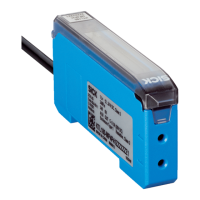
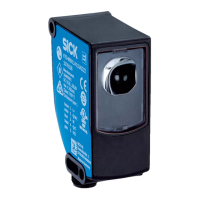
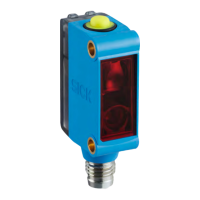
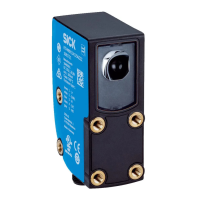
Describes the visual components and key characteristics of the KTS/KTX Prime sensors.

Product characteristics

Explains the primary applications and key features like TwinEye technology and switching frequency.

Mounting

Electrical installation

Notes on the electrical installation

Covers essential safety precautions and guidelines for electrical connections to prevent damage and hazards.

Pin assignment of the connections

Details the pin configurations for M12 connectors and their functions based on teach-in variants.

Connecting the supply voltage

Specifies requirements for the power supply unit and precautions for connecting the device.

Commissioning

Operation

Operating elements

Identifies and explains the function of each button and indicator on the device's control panel.

Teach-in

Introduces the different teach-in processes available for configuring the device's detection parameters.

2-point teach-in (factory setting)

Details the steps for performing a 2-point teach-in for manual positioning of objects.

1-point teach-in;color mode

Explains how to perform a 1-point teach-in, suitable for teaching color properties.

Dynamic teach-in

Describes the dynamic teach-in process for teaching objects in motion, including interference handling.

Auto mode

Explains the automatic mode where the device adapts switching thresholds based on contrast variations.

1-point teach-in

Outlines the steps for 1-point teach-in, particularly for teaching color properties.

Adjusting the switching threshold

Describes how to manually adjust the switching threshold after or independently of teach-in.

Troubleshooting

Possible errors during commissioning

Lists common errors encountered during device commissioning and their solutions.

Possible errors during operation

Identifies typical operational errors and provides troubleshooting steps.

Technical data

General data

Presents comprehensive technical specifications and attributes of the contrast sensor.

SICK KTS Specifications

General IconGeneral
Enclosure ratingIP 67
Output typePNP/NPN
CategoryAccessories
ManufacturerSICK
Light sourceLED
Supply voltage10 V DC ... 30 V DC

Related product manuals