27.Modelsequippedwithanengineradiator:WARNING:
Storedenergydevice.Topreventseriousbodilyinjury
fromhotcoolantorsteamblow-out,neverattemptto
removetheradiatorcapwhiletheengineisrunning.
Stoptheengineandwaituntilitiscool.Eventhen,use
extremecarewhenremovingthecap.
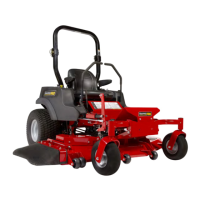
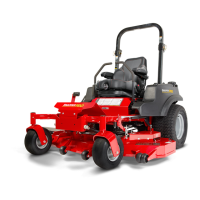
ROLL BAR iNSTRUCTIONS
Formodels equippedwith factory-installed Roll Over
ProtectionSystem(ROPS).
AWARNING
in order to avoid seriousinjury or death from roJJover,
it isimportantto follow the warnings listed beJow.
OPERATIONALWARNINGS
• Always use the seat beltwhen the roll bar is in the
raisedposition.
• Neveruse the seat belt when the roll bar is in the down
position.
• Rememberthere is no roll over protection when the roll
bar is in the down position so it is very important to
alwayskeepthe roll bar in the raised position whenever
possible.
• Lower the roll bar to the down position only when it is
absolutely necessary.
• Checkfor overhead clearancesbefore driving under any
objects. Do not allow roll bar to contact low
overhangingobstacles such as tree branches and guide
wires.
• Neverremove the roll bar from thevehicle.
• Do not exceedthe machine weight rating of the roll bar.
• Readand follow all of the instructions shown below
regarding the inspection and maintenanceof the roll bar
structure and the seat belt.
INSPECTIONOFTHEROLL BAR PROTECTIVESTRUCTURE
, I WARNING
Failureto properly inspectand maintain the ROLL BAR
protective structurecan causeseriousinjury or death.
A ROLLBAR,likeanyother safetydevice,needsto be
periodicallyinspectedto verify that the integrity of the device
hasnot beencompromisedthrough normal machineuse,
misuse,agedegradation,modifications,or a roll over.
Tomaintainoperator roll over protection and roll bar
effectiveness:
• If a ROLL BARbecomesdamagedfor any reason,such
asa collision, roll over or impact, the ROLL BAR must
be replaced. Small undetectablecracks can reducethe
effectivenessof the ROLL BAR. Neverweld, straighten,
or repair the ROLLBAR.
• Neveralter the ROLLBARby welding anything to it or
by drilling additional holes.
• BEFOREFIRSTTllVlEUSE- inspect the ROLL BAR
structure and mounting hardware for:
OperatorSafety
2)
3)
Checkto makesure the machine GVW(Gross
VehicleWeight), including attachments, restrained
payload,fuel and operator, is not in excessof the
maximum weight specified on the ROLL BARlabel.
Makesure there isn't any missing, damaged, or
loosemounting hardware.
Makesure the ROLL BARhas beencorrectly and
completely installed.
EVERY100 HOURS- inspect the ROLL BARstructure
and mounting hardwarefor:
1) Any cracks in the structure (structural members
and/or welds).
2) Significant corrosion on any part of the ROLL BAR
structure or hardware.
3)
4)
5)
Missing, damaged,or loose mounting hardware
Mounting hardware that is of a grade lesser than
specified.
Machine GVW(Gross VehicleWeight), including
attachments, restrained payload, fuel and operator,
in excess of the maximum weight specified on the
ROLLBARlabel.
6) Any modifications that havebeen made,such as
unauthorizedwelds and holes.
7) Any permanent deformation or twisting of the ROLL
BARstructure.
8) That the ROLLBARlabel is still in placeand is
readable.
9) That the ROLLBARon-product warning labels are
still on the ROLLBARand are readable.
If there is any doubt as to the condition of the ROLL
BAR,remove the machine from service and contact your
dealer for assistance.



 To Next Page