25
Sookook Corporation
Gas Butterfly Valve
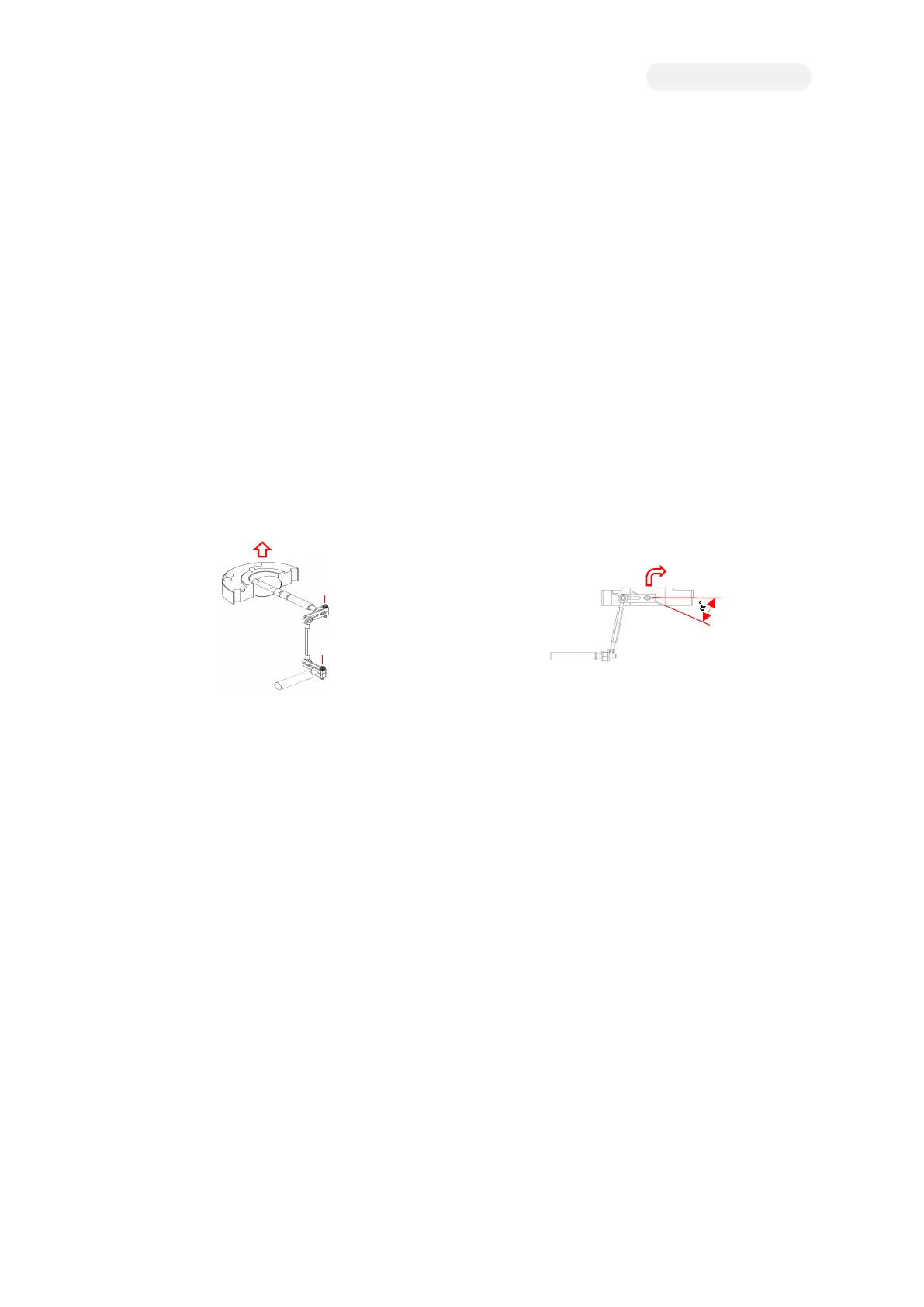
A gas butterfly valve is installed which is connected via a damper motor and a device. The gas butterfly valve regulates the amount of gas
when controlling load.
How to Adjust Gas Flow of HIGH / LOW Control Burner
- Gas flow control at low combustion mode
The low combustion mode has small ignition angle α (Fig. 2D-B), so the resistance of the butterfly valve becomes larger than the solenoid
valve resistance. Thus, the amount of low combustion gas is controlled by increasing or decreasing the gas passage cross-sectional area of the
butterfly valve. To adjust the gas passage cross-sectional area of the butterfly valve, adjust the ignition angle α. If the ignition angle α is larger,
the amount of low combustion gas increases, and if it the angle is smaller, the amount of low combustion gas decreases.
Loosen the bolt VA and adjust α using a (-) screwdriver in the butterfly valve shaft groove. α is the ignition angle of the gas butterfly valve
and shall be set to the position where ignition is best without explosion ignition and pressure pulsation in the gas pipe.
- Gas flow control at high combustion mode
The HIGH / LOW burner has terminal #6 and 7 as the terminal for load control signals. Connecting the two terminals will move the load to
high combustion. In high combustion, when the butterfly valve angle α is opened at 60° or larger, the resistance of the butterfly valve is
minimized and the gas flow rate is maximized. Adjust the damper motor's high combustion positioning cam to sufficiently open the butterfly
valve. Adjust the gas flow by turning V1, the gas flow regulator, according to the gas solenoid valve flow control method (refer to the Figure
2D-A, 2D-B).
[Figure 2F-G.
Butterfly valve] [Figure 2F-H.
Ignition angle α]


 To Next Page