The commissioning engineer must have all necessary information on the plant and the
device available to him.
The test must extend to perfect interaction of the device with the controls of the hoist, the
safe state and assembly according to state work regulations and equipment-specific
safety rules (directives, product standards, BG rules/information).
The test results are to be documented in writing in a report, which is to be signed by the
tester. The report is to be kept at the installation site of the machine/plant.
There are the following types of tests:
a) Tests before initial commissioning and after changes (acceptance tests)
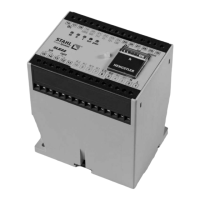
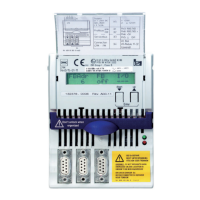
A test must be carried out before initial commissioning of the SLE 3 and after
changes to the SLE 3 or components or units involved in the safety function.
A change is considered as all changes to the circuit, the control system, the con-
figuration and the parameters of the SLE 3 and components or units involved in
the safety function. The aim of the tests is to establish that the requirements re-
garding the hoist are fulfilled when using the SLE 3 and that the components and
units involved in the safety function work perfectly in interaction with the SLE 3.
The type of use / attachment of the SLE 3 and the follow-up of the plant must al-
so be tested.
Acceptance test: overload cut-off:
Lifting of a test load of 110% of the maximum lifting capacity. The device must
detect the overload and switch off the lifting movement at the latest after the load
has been lifted completely from the floor. According to DIN EN 14492-2, an over-
load may not be lifted further than a distance of the maximum nominal lifting
speed multiplied by 1 s.
b) Regular tests
The purpose of regular testing is to systematically uncover and correct safety
shortcomings (e.g. in the case of changes or manipulations) in the protective de-
vices of the plant after commissioning. According to § 3, par. 3 of the Industrial
Safety Regulation, the type, scope and times must be determined and stipulated
by the user on an equipment-specific basis. A test period of at least once a year
has proven to be appropriate. The test intervals can also be shorter in the case
of multi-shift operation, heavy duty or unfavourable environmental conditions or
due to national regulations.
This test also includes testing of the overload cut-off point with a test load of
110% of the maximum lifting capacity, safety testing for perfect functioning of the
SLE 3, inspection of the components, correct and proper attachment of the SLE
3 and testing of the interaction of the SLE 3 with the components and units in-
volved in the safety function. The test also includes checking whether the speci-
fied limit value for the follow-up is not exceeded.



 To Next Page