EasyManua.ls Logo

stellar labs EC Series - User Manual

Default Icon
30 pages
Print Icon
To Next Page IconTo Next Page
Loading...
) *,$('0$', '' 0*(-% +#((,$'"
1
 
Stellar Industries, Inc.
190 State Street
PO Box 169
Garner, IA 50438
800-321-3741
Fax: 641-923-2811
www.stellarindustries.com
Last Revision: 05/08/13
Subject to Change without Notification.
© 2013 Stellar Industries, Inc.
Models:
EC2000
EC3200
EC4000
EC5000
EC6000

Other manuals for stellar labs EC Series

Questions and Answers

Summary

Introduction

A few notes on this manual

Provides information about the manual's content and structure.

Safety Signal Words and Their Meanings

Explains the meaning of NOTICE, WARNING, and DANGER signals for hazard communication.

Chapter 1 - Operation

General Operation

Outlines general principles and responsibilities for safe crane operation.

Pre-Operation Inspection

Details the essential checks to perform before operating the crane.

Job Site Setup

Provides guidelines for preparing the work area and positioning the crane.

Step 1: Disengage drive axle and set the parking brake.

First step in preparing the crane for operation.

Step 2: Turn on power to the crane.

Procedure for activating the crane's electrical power system.

Step 3: Position the stabilizers.

Instructions for deploying and securing the crane's stabilizers.

Step 4: Operate the crane.

Guide on how to operate the crane using controls and remote.

Attaching the load:

Procedures for safely attaching loads to the crane hook.

Lifting the load:

Guidelines for safely lifting loads with the crane.

Moving the load:

Procedures for safely moving lifted loads.

Step 5: Stow the crane.

Instructions for properly retracting and securing the crane.

Step 6: Stow the stabilizers.

Procedure for retracting the crane's stabilizers.

Step 7: Release the parking brake.

Final step before moving the truck after stowing the crane.

Radio Remote Control Features

Radio Remote Sleep Mode

Explains the auto-sleep feature and how to re-engage the transmitter.

E-Stop Button

Describes the function and importance of the emergency stop button.

Radio Remote Battery Replacement

Instructions for replacing batteries in the radio transmitter.

Radio Remote Backup Cord

Guide on using the wired backup control cord for the radio remote.

Radio Remote Control Functions

Emergency Stop Function

Describes how to activate and deactivate the emergency stop function.

Optional Equipment Control

Explains the function of optional control toggles on the remote.

Crane Movement Controls

Details operations for boom, extension, winch, and rotation using toggles.

Wire Rope;Sheave Configurations

Standard 2-Part Line

Configuration for a standard two-part wire rope system.

Single Part Line

Configuration for a single-part wire rope system and its setup.

Safety Decals of Note

Body;Chassis Decals

Details safety decals related to the crane's body and chassis.

Stabilizers Decals

Explains safety decals concerning the crane's stabilizer legs.

Crane Compartment Safety Decals

Electrocution Hazard

Warning about electrocution hazards in the crane compartment.

Overload Hazard

Warning regarding exceeding the crane's load capacity.

Untrained Operator Hazard

Caution for operators who have not read manuals or safety signs.

Main Boom Safety Decals

Fall Hazard

Warning about the risks of hoisting personnel or riding on the crane.

Free Falling Boom Hazard

Hazard related to manual boom extensions falling freely.

Misuse Hazard

Warning against using the stow hook for lifting.

Electrocution Hazard

Warning about electrocution hazards near high voltage power sources.

Component Safety Decals

Crane Horse Head Misuse Hazard

Warning about misusing the crane hook block and boom.

Valve Bank Movement Hazard

Hazard related to the valve bank manual overrides.

Main Cylinder Overload Hazard

Warning about tampering with the main cylinder's overload device.

Chapter 2 - Maintenance

Basic Crane Maintenance Schedule

Provides a schedule for routine maintenance tasks.

General Maintenance Guidelines

General safety and procedural guidelines for performing maintenance.

Hydraulic and Battery Maintenance

Procedures for hydraulic oil and auxiliary battery maintenance.

Crane Cleaning and Rope Maintenance

Guidelines for washing the crane and maintaining wire rope.

Winch and Extension Boom Maintenance

Maintenance procedures for winch and extension booms.

Rotation Gear Bearing Maintenance

Rotation Worm Gear and Open Gear Teeth

Lubrication procedure for worm and open gear teeth.

Worm Gear Bearings and Races

Lubrication instructions for worm gear bearings.

Inner Gear Bearing Race

Procedure for lubricating the inner race of the rotation gear bearing.

Gear-Bearing Bolt Maintenance

Gear-Bearing Bolt Maintenance

Guidelines for replacing and torquing gear-bearing bolts.

Rotation Gear Bearing Thread Tightening Procedure

Step-by-step procedure for tightening gear bearing threads.

Torque Data Chart

Torque Data Chart

Table of torque values for various bolt sizes and grades.

Rotation Gear Bearing Tilt Test

Rotation Gear Bearing Tilt Test

Procedure to check for play in the rotation gear bearing.

Rotation Gear Bearing Worm End Play & Backlash

Locate High Tooth

Steps to find the high tooth on the rotation gear.

Set Worm End Play

Procedure to set the end play for the worm gear.

Set Gear Bearing Backlash

Procedure to set the backlash for the gear bearing.

Lubrication Recommendations

Crane Lubrication

Recommendations for lubricating various crane components.

Compressor Lubrication

Lubrication specifications for the crane's compressor.

Chapter 3 - Troubleshooting

Prior to troubleshooting

Initial checks and precautions before troubleshooting.

Problem: Crane will not operate.

Common issue and troubleshooting steps for a non-operating crane.

Problem: Crane will operate manually but will not operate by radio remote.

Troubleshooting steps when manual operation works but radio remote does not.

Problem: Two functions operate at the same time while only toggling one function.

Troubleshooting for unintended simultaneous function activation.

Problem: Crane operates slowly.

Causes and solutions for slow crane operation.

Problem: Winch will not lift load.

Steps to diagnose why the winch is not lifting.

Problem: Cylinder drifts outward or downward.

Diagnosing and resolving cylinder drift issues.

Crane Hoist Troubleshooting

Hoist Operation Failure Troubleshooting

Steps for hoist not operating, power-in/out issues, and motor stalls.

Hoist Performance Issues Troubleshooting

Diagnosing issues with lifting rated load, slowing, stalling, vibration, or noise.

5 Function Hetronic Radio Remote Troubleshooting

System and Transmitter Response Issues

Troubleshooting system failure, transmitter not responding, and intermittent motion.

Transmitter Troubleshooting

Status LED Troubleshooting

Interpreting LED indications on the transmitter.

Transmitter Repairs

Precautions and notes for repairing the transmitter.

Receiver Troubleshooting

Receiver Troubleshooting Steps

Step-by-step guide for diagnosing receiver issues.

Receiver Testing

How to test receiver functionality based on LED indications.

Manual Operation

Manual Solenoid and Winch Operation

Steps for manually operating crane functions via solenoids and winch switch.

Manual Override Functions

How to use the manual override for pull and push solenoid functions.

Post-Manual Operation Steps

Crucial step to return valve bank to neutral and service the unit.

Summary

Introduction

A few notes on this manual

Provides information about the manual's content and structure.

Safety Signal Words and Their Meanings

Explains the meaning of NOTICE, WARNING, and DANGER signals for hazard communication.

Chapter 1 - Operation

General Operation

Outlines general principles and responsibilities for safe crane operation.

Pre-Operation Inspection

Details the essential checks to perform before operating the crane.

Job Site Setup

Provides guidelines for preparing the work area and positioning the crane.

Step 1: Disengage drive axle and set the parking brake.

First step in preparing the crane for operation.

Step 2: Turn on power to the crane.

Procedure for activating the crane's electrical power system.

Step 3: Position the stabilizers.

Instructions for deploying and securing the crane's stabilizers.

Step 4: Operate the crane.

Guide on how to operate the crane using controls and remote.

Attaching the load:

Procedures for safely attaching loads to the crane hook.

Lifting the load:

Guidelines for safely lifting loads with the crane.

Moving the load:

Procedures for safely moving lifted loads.

Step 5: Stow the crane.

Instructions for properly retracting and securing the crane.

Step 6: Stow the stabilizers.

Procedure for retracting the crane's stabilizers.

Step 7: Release the parking brake.

Final step before moving the truck after stowing the crane.

Radio Remote Control Features

Radio Remote Sleep Mode

Explains the auto-sleep feature and how to re-engage the transmitter.

E-Stop Button

Describes the function and importance of the emergency stop button.

Radio Remote Battery Replacement

Instructions for replacing batteries in the radio transmitter.

Radio Remote Backup Cord

Guide on using the wired backup control cord for the radio remote.

Radio Remote Control Functions

Emergency Stop Function

Describes how to activate and deactivate the emergency stop function.

Optional Equipment Control

Explains the function of optional control toggles on the remote.

Crane Movement Controls

Details operations for boom, extension, winch, and rotation using toggles.

Wire Rope;Sheave Configurations

Standard 2-Part Line

Configuration for a standard two-part wire rope system.

Single Part Line

Configuration for a single-part wire rope system and its setup.

Safety Decals of Note

Body;Chassis Decals

Details safety decals related to the crane's body and chassis.

Stabilizers Decals

Explains safety decals concerning the crane's stabilizer legs.

Crane Compartment Safety Decals

Electrocution Hazard

Warning about electrocution hazards in the crane compartment.

Overload Hazard

Warning regarding exceeding the crane's load capacity.

Untrained Operator Hazard

Caution for operators who have not read manuals or safety signs.

Main Boom Safety Decals

Fall Hazard

Warning about the risks of hoisting personnel or riding on the crane.

Free Falling Boom Hazard

Hazard related to manual boom extensions falling freely.

Misuse Hazard

Warning against using the stow hook for lifting.

Electrocution Hazard

Warning about electrocution hazards near high voltage power sources.

Component Safety Decals

Crane Horse Head Misuse Hazard

Warning about misusing the crane hook block and boom.

Valve Bank Movement Hazard

Hazard related to the valve bank manual overrides.

Main Cylinder Overload Hazard

Warning about tampering with the main cylinder's overload device.

Chapter 2 - Maintenance

Basic Crane Maintenance Schedule

Provides a schedule for routine maintenance tasks.

General Maintenance Guidelines

General safety and procedural guidelines for performing maintenance.

Hydraulic and Battery Maintenance

Procedures for hydraulic oil and auxiliary battery maintenance.

Crane Cleaning and Rope Maintenance

Guidelines for washing the crane and maintaining wire rope.

Winch and Extension Boom Maintenance

Maintenance procedures for winch and extension booms.

Rotation Gear Bearing Maintenance

Rotation Worm Gear and Open Gear Teeth

Lubrication procedure for worm and open gear teeth.

Worm Gear Bearings and Races

Lubrication instructions for worm gear bearings.

Inner Gear Bearing Race

Procedure for lubricating the inner race of the rotation gear bearing.

Gear-Bearing Bolt Maintenance

Gear-Bearing Bolt Maintenance

Guidelines for replacing and torquing gear-bearing bolts.

Rotation Gear Bearing Thread Tightening Procedure

Step-by-step procedure for tightening gear bearing threads.

Torque Data Chart

Torque Data Chart

Table of torque values for various bolt sizes and grades.

Rotation Gear Bearing Tilt Test

Rotation Gear Bearing Tilt Test

Procedure to check for play in the rotation gear bearing.

Rotation Gear Bearing Worm End Play & Backlash

Locate High Tooth

Steps to find the high tooth on the rotation gear.

Set Worm End Play

Procedure to set the end play for the worm gear.

Set Gear Bearing Backlash

Procedure to set the backlash for the gear bearing.

Lubrication Recommendations

Crane Lubrication

Recommendations for lubricating various crane components.

Compressor Lubrication

Lubrication specifications for the crane's compressor.

Chapter 3 - Troubleshooting

Prior to troubleshooting

Initial checks and precautions before troubleshooting.

Problem: Crane will not operate.

Common issue and troubleshooting steps for a non-operating crane.

Problem: Crane will operate manually but will not operate by radio remote.

Troubleshooting steps when manual operation works but radio remote does not.

Problem: Two functions operate at the same time while only toggling one function.

Troubleshooting for unintended simultaneous function activation.

Problem: Crane operates slowly.

Causes and solutions for slow crane operation.

Problem: Winch will not lift load.

Steps to diagnose why the winch is not lifting.

Problem: Cylinder drifts outward or downward.

Diagnosing and resolving cylinder drift issues.

Crane Hoist Troubleshooting

Hoist Operation Failure Troubleshooting

Steps for hoist not operating, power-in/out issues, and motor stalls.

Hoist Performance Issues Troubleshooting

Diagnosing issues with lifting rated load, slowing, stalling, vibration, or noise.

5 Function Hetronic Radio Remote Troubleshooting

System and Transmitter Response Issues

Troubleshooting system failure, transmitter not responding, and intermittent motion.

Transmitter Troubleshooting

Status LED Troubleshooting

Interpreting LED indications on the transmitter.

Transmitter Repairs

Precautions and notes for repairing the transmitter.

Receiver Troubleshooting

Receiver Troubleshooting Steps

Step-by-step guide for diagnosing receiver issues.

Receiver Testing

How to test receiver functionality based on LED indications.

Manual Operation

Manual Solenoid and Winch Operation

Steps for manually operating crane functions via solenoids and winch switch.

Manual Override Functions

How to use the manual override for pull and push solenoid functions.

Post-Manual Operation Steps

Crucial step to return valve bank to neutral and service the unit.

Overview

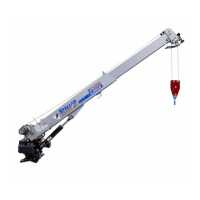
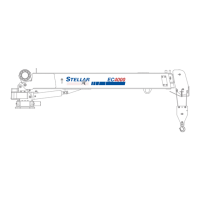
This document is the owner's manual for the Stellar EC Series Crane, providing comprehensive information on its operation, maintenance, and troubleshooting. The Stellar EC Series Cranes are designed for safe and dependable service across various operations, emphasizing the importance of proper use and maintenance for peak performance and longevity.

Function Description:

The Stellar EC Series Crane is a telescopic crane designed for lifting and positioning loads. It is operated via a radio remote control, allowing for precise and simultaneous control of multiple functions. The crane is intended for use in various job site applications, requiring the operator to have a firm understanding of safety practices and the equipment's capabilities. Key operational steps include disengaging the drive axle, setting the parking brake, turning on crane power, positioning stabilizers, operating the crane (including unstowing, lifting, moving, and stowing), and finally, stowing the stabilizers and releasing the parking brake.

Important Technical Specifications:

The manual covers models EC2000, EC3200, EC4000, EC5000, and EC6000. While specific load capacities are not detailed in the provided pages, the manual repeatedly stresses the importance of adhering to manufacturer's load charts and ratings, which are based on the machine's hydraulic, mechanical, and structural design, as well as stability. The crane utilizes a hydraulic system, and specific hydraulic oil recommendations are provided based on ambient temperature: High VI, low pour, ISO 22, AW hydraulic oil for below -5°F; High VI, low pour, ISO 32, AW hydraulic oil for -5°F to 90°F; and ISO 46, AW hydraulic oil for above 90°F. The rotation gear bearing tilt test specifies a maximum dial indicator change of 0.060” (1.524 mm) for Stellar Models EC3200-EC6000. Backlash specifications for the worm gear are 0.005” (0.127 mm) total indicator movement, with a recheck range of 0.005" to 0.012” (0.127 to 0.3048 mm). Torque data for various bolt sizes (5/16-18 to 1 1/2-6) and grades (Grade 5, 8, and 9) are provided in foot-pounds for both plain and plated bolts.

Usage Features:

The crane features a radio remote control with an emergency stop button for immediate cessation of crane functionality. The remote control enters sleep mode after 15 seconds of inactivity and can be re-linked by activating a toggle switch. Battery replacement for the handheld transmitter uses AA Alkaline batteries. A backup cord is provided for manual operation if the radio function is unusable, connecting the transmitter handle to the control receiver on the crane mast. The remote control functions include Boom Up/Down, Extension In/Out, Winch Up/Down, and Rotate Clockwise/Counterclockwise. The manual emphasizes maintaining safe clearance from high voltage power lines, using wheel chocks on slopes, and ensuring stabilizers are positioned on stable, flat ground. It also warns against lifting personnel, exceeding load charts, and leaving loads suspended or unattended.

Maintenance Features:

The manual outlines a basic crane maintenance schedule, including daily checks for hydraulic reservoir oil level, weekly greasing of rotation gear inner race bearings, monthly greasing of rotation gear worm drive bearings, quarterly greasing of open gear teeth, cylinder pivot points, and lubricating extension booms. Winch gear grease level should be checked monthly, and hydraulic oil should be drained and replaced after 6,500 hours. Hydraulic lines should be tightened every 6 months. General maintenance guidelines include using only qualified service personnel, avoiding modifications without Stellar Industries' approval, positioning the crane safely, placing controls in the off position, and disconnecting power/relieving hydraulic pressure before maintenance. Specific instructions are given for hydraulic oil maintenance, recharging the auxiliary battery, and washing the crane (covering the radio remote receiver). Wire rope maintenance refers to ANSI B30.5, and winch maintenance refers to the winch manual. Extension boom lubrication uses Stellar PN 44512 aerosol lubricant. Detailed procedures are provided for rotation gear bearing maintenance, including lubricating the worm gear and open gear teeth with heavy Moly Lube grease (Stellar PN 4460), worm gear bearings and races with EP2 grease, and the inner gear bearing race with EP2 grease weekly at specific clock positions. Gear-bearing bolt maintenance requires replacing removed bolts with new ones of identical grade and size and using Red Loctite Threadlocker sealant. A specific thread tightening procedure for rotation gear bearing bolts is outlined, involving torquing in stages (40%, 75%, and final listed torque) following a specific sequence. Rotation gear bearing tilt tests and worm end play & backlash adjustments are also detailed. Lubrication recommendations include specific greases for various components: Lithium complex, NLGI 2 grease with moly for crane rotation gear; Lithium complex, synthetic based NLGI 00 grease for worm drive bearings and turntable bearing inner race; Lithium complex, NLGI 2 grease for crane pivot areas; and Synthetic lubricant containing Teflon® for extension booms. Compressor lubrication recommendations are also provided based on temperature and compressor type.

stellar labs EC Series Specifications

General IconGeneral
Brandstellar labs
ModelEC Series
CategoryConstruction Equipment
LanguageEnglish

Related product manuals