
 Need help?
Do you have a question about the Sterling QVF 100 and is the answer not in the manual?
Key safety warnings and installer's responsibilities before and during installation.
Instructions for inspecting the unit for damage upon arrival.
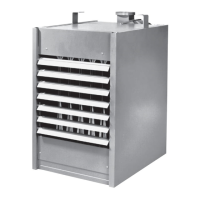
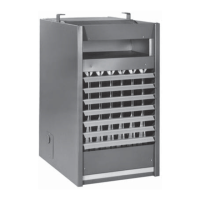
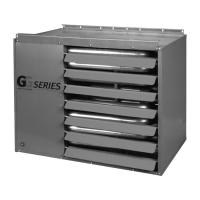
Description of the gas unit heater and its CSA certification.
Explains DANGER, WARNING, CAUTION, and NOTICE symbols used in the manual.
Adherence to national and local codes, fuel type, and electrical grounding.
Warnings on power disconnection, tampering, and hazardous locations.
Guidelines for installing unit heaters in aircraft hangars and public garages.
Directing airflow and understanding heat throw distances for optimal performance.
Ensuring secure mounting and structural integrity for the unit heater.
Specifies minimum clearances from walls, ceilings, and combustible materials.
How to determine the correct gas pipe size based on input and length.
Special instructions for installing units with propane gas.
Proper methods for connecting gas piping, including unions and drip legs.
Critical safety measures for leak and pressure testing gas piping systems.
Dangers of carbon monoxide and importance of clear venting.
Specific instructions for vertical runs, slope, elbows, and insulation.
Critical safety warnings for electrical work and proper grounding.
Guidelines for optimal thermostat placement and wiring connections.
Adjusting heat anticipator and understanding fan time delay controls.
Details on gas control valves, limit switches, fan switches, and thermostats.
Step-by-step guide for safely lighting the pilot and starting the unit.
Identifies common parts found in the burner drawer assembly.
Lists and identifies safety devices and gas control components.
Explains functions of the dual gas valve and electric ignition device.
Step-by-step guide for safely starting the unit with spark ignition.
Lists common parts for the burner drawer in spark ignition systems.
Identifies controls specific to the intermittent pilot ignition system.
How to check and adjust the gas input rate for optimal performance.
Adjusting the primary air shutter for correct flame appearance.
Safety warnings and procedures for periodic checks of gas valves and connections.
Instructions for cleaning burners, heat exchanger, and fan section.
Recommendations for oiling the fan motor based on duty cycle.
Identifies motor, fan guard, fan blade, and hardware.
Details heat exchanger, draft diverter, burner drawer, and burner assembly parts.
Diagnosing and correcting flame lifting, backfiring, and noisy flames.
Addressing yellow tipping flames, floating flames, and gas odors.
Resolving water condensation, burners not turning off, and rapid cycling.
Troubleshooting noisy operation, pilot issues, and fan motor problems.
Diagnosing fan not running, cycling, or stopping issues.
Addressing low heat output, too much heat, and cold air delivery.
Resolving cold air delivery, no spark, and pilot light problems.
Diagnosing hi-limit switch tripping and unit overfiring.
Information required for ordering replacement parts from the manufacturer.
Details of the product's limited warranty, exclusions, and conditions.
Pre-start-up checks with power and gas off, and general system checks.
Checks performed with power and gas on, including ignition and blower function.
 General
| Category | Gas Heater |
|---|---|
| Heat Output | 100, 000 BTU |
| Fuel Type | Natural Gas / Propane |
| Efficiency | 80% |
| Ignition Type | Electronic |
| Model | QVF 100 |


 To Next Page