
 Need help?
Do you have a question about the Stryker Power-LOAD and is the answer not in the manual?
Cot gets stuck halfway out when the red release lever at the foot end of the anchor is pressed.
Trolley and cot get stuck halfway out during the loading process.
Cot fails to release from the trolley in the loading position, and the error LED is illuminated.
Trolley arms fail to lower and lock the cot into the transfer during loading.
Cot begins to collapse, and the trolley lifting arms do not raise.
Lifting arms are misaligned with cot legs, and amber head end LED indicators flash.
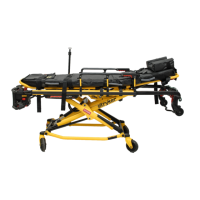
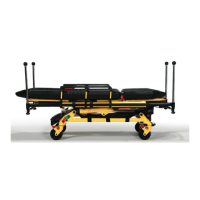
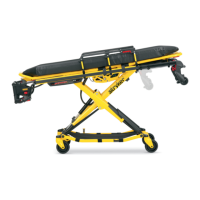
The Stryker Power-LOAD Cot Fastener System is an advanced patient transport and loading system designed to enhance safety and efficiency for emergency medical services personnel. This system automates the loading and unloading of a cot into an ambulance, significantly reducing the physical strain on operators and minimizing the risk of injury. The Power-LOAD system integrates seamlessly with Stryker Power-PRO cots, forming a comprehensive solution for patient handling.
The primary function of the Power-LOAD system is to provide powered assistance for loading and unloading a cot into and out of an ambulance. It utilizes a series of lifting arms, a trolley assembly, and a transfer assembly to guide and secure the cot. When loading, the system automatically lifts and centers the cot, ensuring it is properly aligned and locked into the vehicle. During unloading, it provides controlled lowering and release, allowing for a smooth and safe transfer of the patient. The system is designed to prevent the cot from getting stuck during these operations, and it includes troubleshooting features to address common issues.
The Power-LOAD system incorporates several user-friendly features to facilitate its operation. The Power-LOAD control panel, located at the head end of the system, provides intuitive controls for lifting, lowering, and releasing the cot. This panel includes LED indicators for battery status and error conditions, offering immediate feedback to the operator. For manual intervention or troubleshooting, a manual release button is available on the control panel.
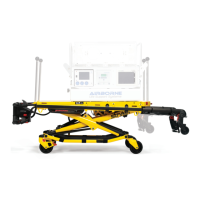
The system features lifting arms that engage with the cot legs, providing stable and secure support during movement. Head end LED indicators provide visual cues for proper cot alignment and system status. The transfer lock triggers, located on the transfer assembly, are crucial for securing the cot within the vehicle and for initiating the unloading process. The red release lever at the foot end of the anchor is another key component for manual release and troubleshooting during unloading.
When a cot gets stuck during unloading, the system provides a clear procedure to resolve the issue. Operators are instructed to pull the patient left transfer lock trigger and push the cot back into the vehicle until it locks. Then, by holding down the red release lever at the foot end of the anchor and using a knuckle to hold the transfer in place, the cot can be pulled out until it raises up, allowing for complete unloading.
For situations where the cot gets stuck during loading, the system guides the user to check for debris in the transfer trolley lock. If debris is present, it should be removed to allow the roller to spring up. If no debris is found, the cot and trolley should be pulled all the way out of the vehicle to reset, then reloaded. Alternatively, pulling the patient left transfer lock trigger can help load the cot into the vehicle.
If the cot does not unlock from the trolley, the manual release button on the Power-LOAD control panel can be pressed firmly to release pressure in the hydraulics. To lower the lifting arms, the extend (+) button on the cot or the press down (↓) button on the Power-LOAD control panel can be used. This may require applying pressure to the lifting arms while pressing the manual release button to lower them completely.
When the cot does not lower and lock into the transfer during loading, firmly pressing the manual release button on the Power-LOAD control panel will cause the cot to lower and lock into the transfer.
If the cot is locked into the trolley in the load position and begins to collapse, and the trolley lifting arms do not raise, pressing the up (↑) button on the Power-LOAD control panel will raise the cot until the lifting arms stop. Subsequently, at the foot end of the cot, pressing the retract (-) button will raise the cot legs, allowing the cot to be loaded into the vehicle.
Should the Power-LOAD lifting arms stop when loading, particularly if the lifting arms are not centered between the cot legs and amber head end LED indicators are flashing, the cot needs to be realigned to center the lifting arms between the cot legs until the head end LED indicators are solid green. After realignment, pressing the up (↑) button on the Power-LOAD control panel or the retract (-) button on the cot will resume loading.
While the provided document focuses on troubleshooting, it emphasizes the importance of professional maintenance. The instructions are intended as short-term solutions, and users are advised to contact a local Stryker Service Technician or Account Manager to schedule a maintenance inspection following any incident requiring troubleshooting. This proactive approach ensures the long-term reliability and safety of the Power-LOAD system. The manual also serves as a comprehensive resource for complete troubleshooting information, indicating that detailed maintenance procedures and guidelines are available for trained personnel. Regular inspections and adherence to the manufacturer's maintenance schedule are crucial for optimal performance and to prevent potential issues. The system's design, with accessible components like the transfer trolley lock, allows for basic user checks, such as inspecting for debris, which can be a common cause of operational interruptions.
 General
| Load Capacity | 700 lbs (317.5 kg) |
|---|---|
| Battery Type | Sealed Lead Acid |
| Charging Time | 8 hours |
| Compatibility | Stryker ambulance cots |
| Power Source | Battery |
| Lifting Mechanism | Hydraulic |



 To Next Page
