7
SN 138804 - ...
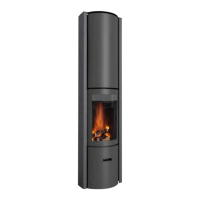
Stûv 30
a
h
k
i
j
f
c
e
d
b
Stûv 30 - directions for use [en] - 07/13
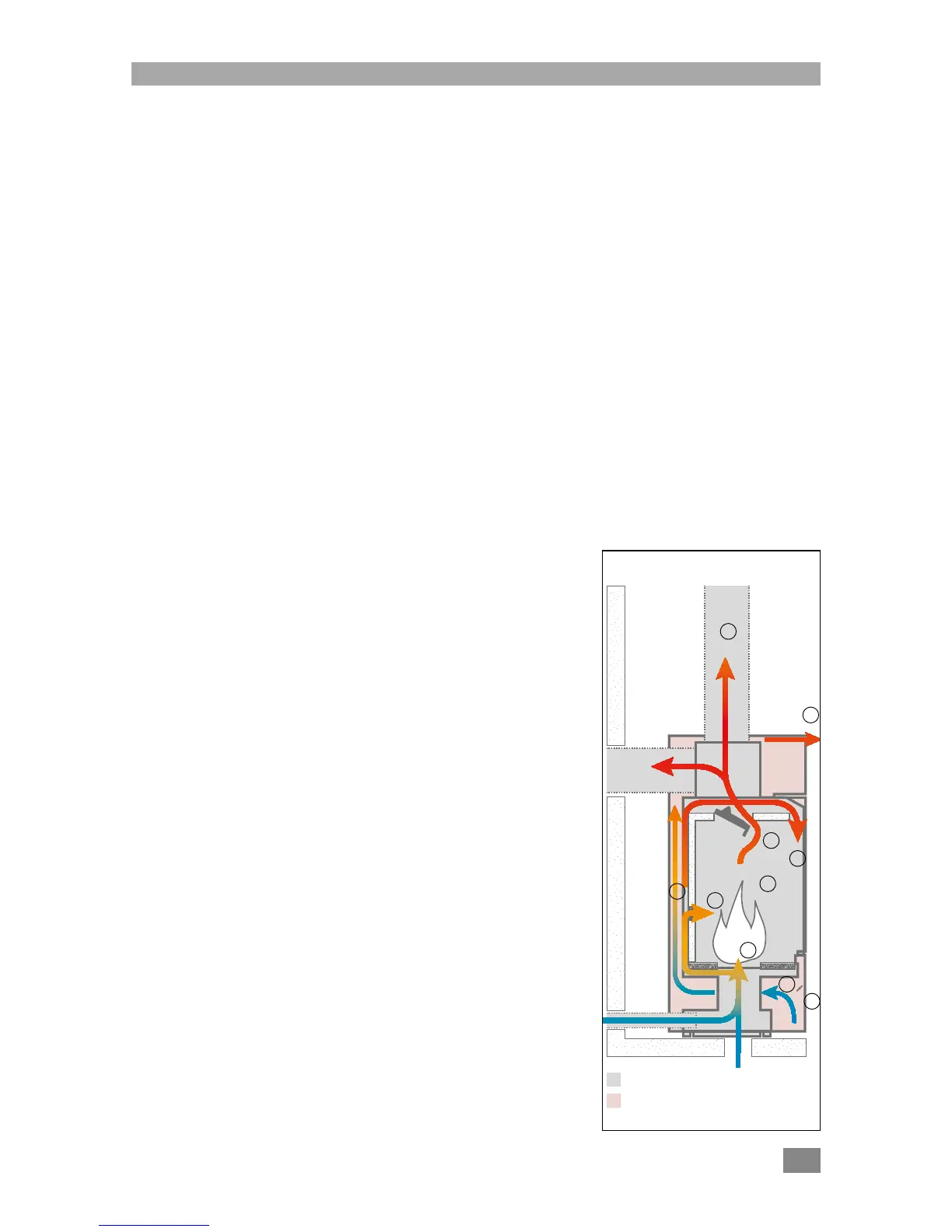
How does your Stûv30 work ?
Conserving heat
The flue[d] is full of hot gases that
are much lighter than the air outside
and therefore rise out of the flue that
is holding them. The flue therefore
literally sucks in the gases contained
in the stove. However, it is important
that the gases and the heat that they
contain do not escape too easily from
the flue.
Two mechanisms stop them :
– Firstly, the air needed for
combustion cannot get into the
stove unless the regulator lever is
used[e] – this allows you to control
the quantity needed to obtain the
desired rate.
– The hot gases cannot enter directly
into the flue : they have to pass
through a system of deflectors[f]
which form a second bottleneck.
In open-fire mode...
... You can enjoy the crackling of the
embers, the scent of the wood fire
and the pleasant sensation of heat
radiated directly from the flames of
the primitive fire.
... But your stove heats less well and
consumes more wood.
Lots more air floods into the
combustion chamber[a]. To avoid
backdraughts, the deviator[f] is
raised. There is nothing to impede
the gases (and the heat they contain),
and they escape much more quickly
into the chimney[d]. Combustion is
therefore incomplete.
Your Stûv30 provides optimal and
eco-friendly heating as well as greater
efficiency in the “closed” position.
Therefore, we recommend this mode
of usage and advise you to restrict use
in open-fire mode to short periods
(e.g. barbecues).
Exactly what’s required
where it’s required !
The air required for combustion
is strictly reduced to the amount
necessary and, when the stove is in
operation, it is distributed as follows :
– a small amount feeds the base of
the flames[h],
– another quantity enters the
combustion chamber through
small holes arranged between the
Stûv30 :
3 modes of operation
In glass door mode, your stove offers
excellent efficiency and good visibility
of the flames.
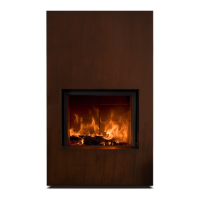
The stove also offers excellent
efficiency when used in closed-door
mode. This position is used both when
the stove is not in operation and to
achieve a slow-burn rate.
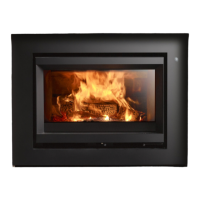
Use the stove in open-fire mode for
loading logs, for barbecues and to feel
the warmth of the flames.
It heats !
When the stove is working (i.e.when
the lighting stage is finished) the
bed of embers will glow and the
logs will produce large flames. The
temperature in the combustion
chamber[a] is very high and the heat
dissipates in two ways :
– by radiation through the glass door,
– also by convection : the air circulates
in the double wall[b] around the
combustion chamber and reheats
before dissipating around the
room[c].
bricks[i] at the back of the chamber
and ignites the residual gases in
the upper part of the stove ; this is
“post-combustion”,
– a final quantity sweeps the glass[j]
to prevent smoke from condensing
there. This air is also used in
“post-combustion”.
You determine the rate of the
stove by controlling the amount of
combustion air using the control
valve[k]. This has been designed to
optimally distribute airflows in a single
action whatever the rate chosen.
combustion zone
convection zone



 To Next Page