8
SN 138804 - ...
2
1
3
5
4
Stûv 30 - directions for use [en] - 07/13
Fuel
Which wood should you choose ?
Different kind of wood have different
heat capacities and do not burn in the
same way.
Generally you should opt for hard
wood such as oak, beech, ash,
hornbeam or fruit trees. They produce
lovely flames and a lot of embers
which will glow for a long time.
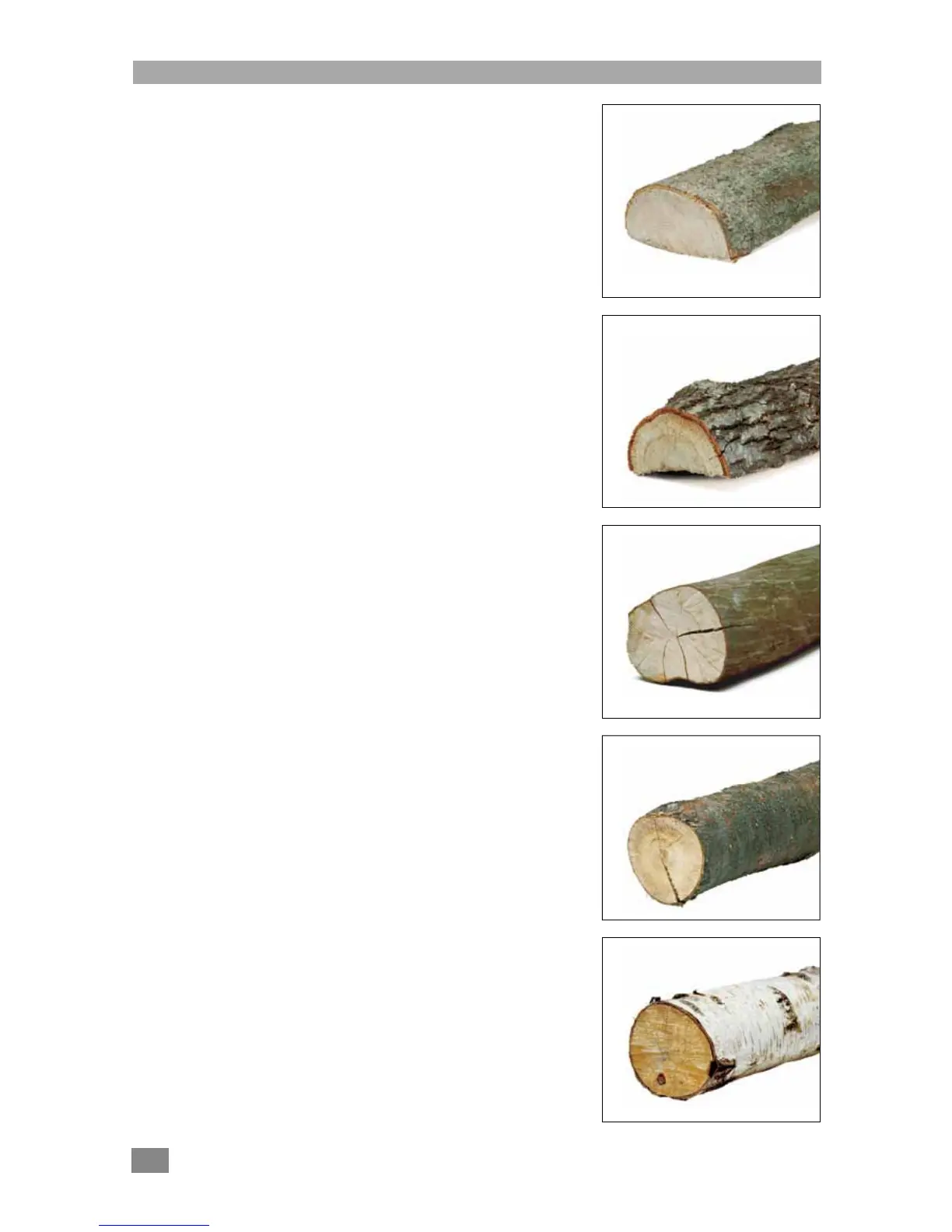
Beech [photo1], ash
Firewood to be recommended : they
dry quickly and are readily available.
They should be stored under shelter as
soon as they have been cut and split
otherwise they rot very quickly and
lose their heat capacity. They are easy
to ignite, provide dynamic fires and
rather bright flames.
Oak [photo2]
An excellent fuel but – contrary to
other wood – must remain unsheltered
for 2 years so that rain can wash away
the tannins it contains. Then it should
be stored under shelter for another
two years or so before being suitable
for burning. There is a significant
proportion of sapwood (which burns
too quickly) in small branches. Oak
burns slowly, provides a quiet fire
and gives nice embers. This is ideal
for having a barbecue and a fire at a
lower rate.
Hornbeam [photo3],
cherry wood [photo4], fruit trees
Excellent fuels but scarce. These are
hard woods providing nice flames,
harmonious, quiet and give nice
embers. This is ideal for having a
barbecue or a less intense fire.
Birch [photo5], lime, chestnut,
poplar, robinia, acacia
These are broad-leaved trees
producing soft wood. They provide
nice but lively flames and few embers.
Wood burns fast and will be used to
light or rekindle the fire.
Warning : Poplar produces abundant
and volatile embers. Robinia and
acacia can cause important ember
projections.
Conifers
They produce a lot of heat but burn
quickly ; they sputter embers and the
resin they contain foul up the flue.
They should be avoided.
Unsuitable
Stûv stoves are designed for domestic
use, and should never be used for
burning waste of any kind. Only
burn wood logs ; do not burn coal,
chipboard, varnished or chemically
treated wood or any other fuel not
recommended (no liquid fuels). The
heat produced by these materials is
too intense and can damage your
stove (including the glass door which
can become cloudy) and cause it
to soot up. They give off toxic and
polluting emanations.




 To Next Page