10
SN 138804 - ...
1
2
3
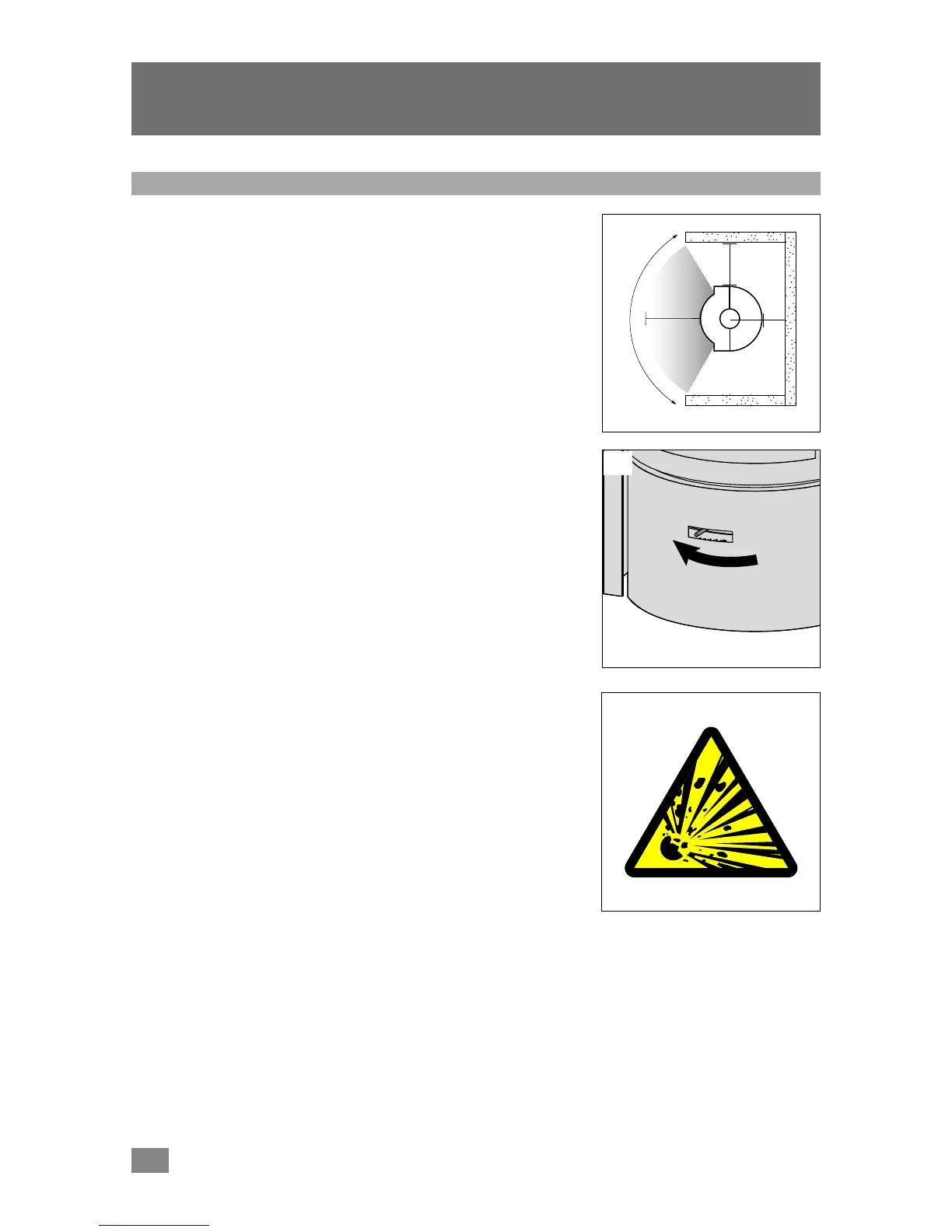
≥800*
≥100
≥100
120°
Stûv 30 - directions for use [en] - 07/13
Recommandations
USE
Important !
This stove should have been installed
in accordance with good practice
guidelines and local and national
regulations. A qualified professional
should have ensured that the
characteristics of the smoke flue and
the surroundings are suitable for the
stove installed.
Read this user guide carefully
and follow the maintenance
recommendations.
Complete and return the guarantee
certificate [at the end of this
document] to us.
Use
The stoves in the Stûv30-compact
range are designed to operate with
the door closed.
The stove should be used in
accordance with local and national
regulations and European standards.
Some authorities impose or restrict the
conditions of use depending on the
fuel used. Please bear this in mind.
Some parts of the stove – the glass
door and the outside walls – may
become very hot even during normal
usage (rated power) and significant
heat may be radiated from the glass
door.
In order to prevent any damage or
risk of fire, when the stove is in use,
remove all heat-sensitive objects from
the radiation area [diagram1]. Take
particular care when you leave the
room.
Do not leave young children without
supervision in the room where the
stove is installed.
Ensure the air inlets and outlets are
always kept clear.
Repairs / Maintenance
Any modification carried out to the
system may cause danger and will
invalidate your guarantee. Only use
Stûv spare parts in the case of repairs.
Should a fire in the flue get out of
control
Do not open the stove's door during
the initial period.
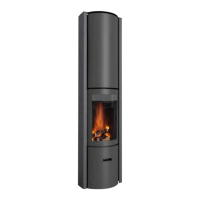
Close the air valve completely
[photo2].
Call the fire brigade.
If the fire has not died down after
a few minutes, use a dry powder,
soda acid or sand extinguisher (never
water).
After a chimney fire, ventilate the
room where the stove is situated.
Have the chimney cleaned and
inspected by a professional. Have
repairs carried out if necessary.
Preventing the risk of explosion
Poor draught increases the risk of
explosion. A weak draught may
be caused by a poor chimney,
unfavourable weather, another
operational ventilation system creating
a backdraught, etc.
– Never close the damper completely
when the stove is full of high flames.
– Never close the damper after placing
a large block of wood on a bed of
dying embers.
– A period of use in slow-burn mode
(overnight, for example) must be
followed by a roaring fire (1/2
to 3/4 of an hour) to eliminate
the build-up of any combustible
materials.



 To Next Page