9
SN 138804 - ...
Stûv 30 - directions for use [en] - 07/13
Drying
Whatever the wood chosen it should
be really dry. Damp wood heats a
great deal less and a great part of the
energy is used to evaporate the water
it contains. The sapwood – as the soft
wood just beneath the bark is called –
can contain up to 75% of water.
Furthermore, moist wood releases a
lot of smoke and not many flames and
it causes the fireplace, its window and
the flue to get dirty and soot up.
To avoid wasting energy and slow
combustion, Stûv highly recommends
burning wood that has a moisture
content below 20%.
Wood drying
Big logs should be split for the wood
to dry better. Wood should be covered
or sheltered from the rain, but well
ventilated.
Generally you should allow two years
for the wood to dry properly. You will
soon learn to estimate the dryness of
logs by weighing them in your hand.
The dryer they are the lighter they will
feel, and they will produce a clearer
sound when you knock two together.
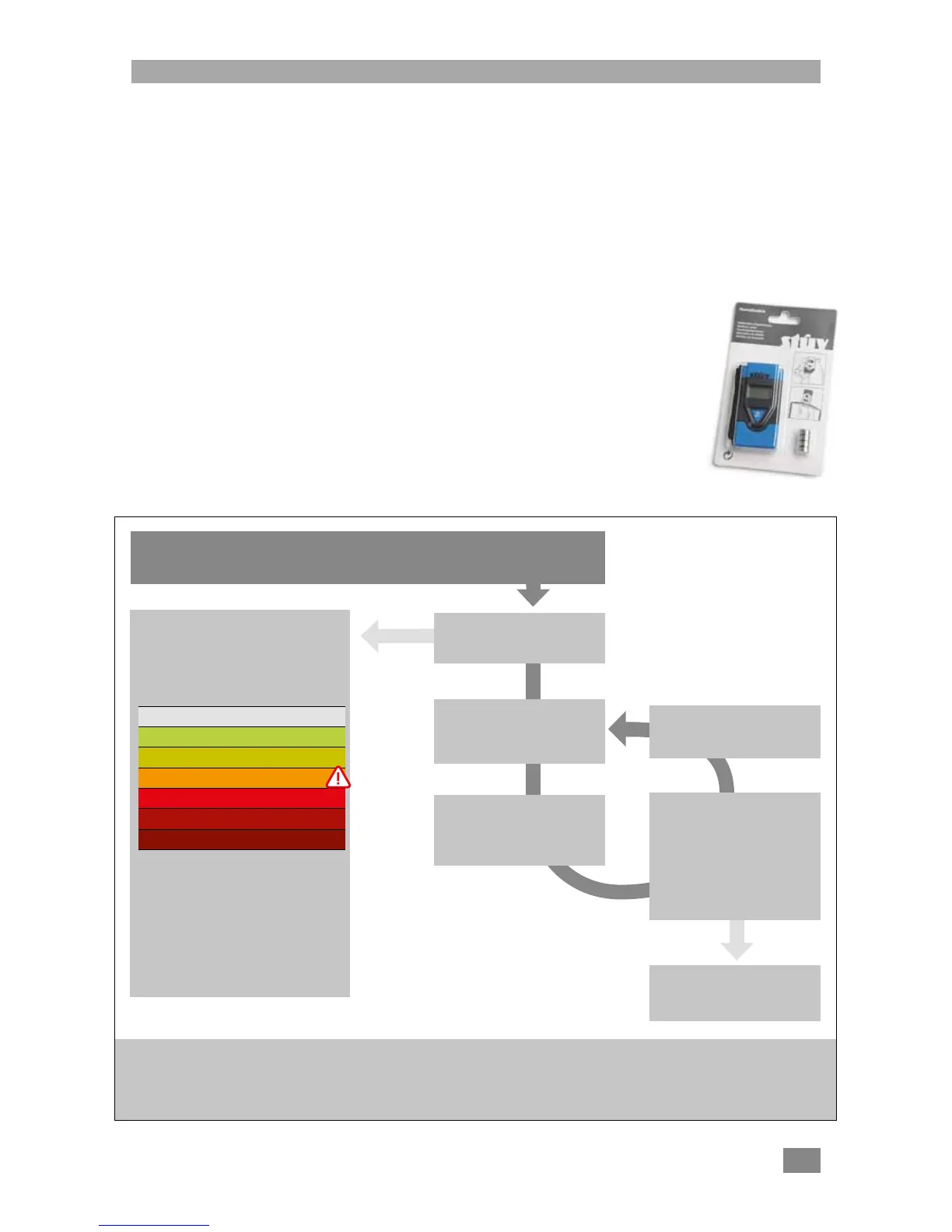
Moisture tester
This little accessory, available from
your Stûv dealer, accurately tests the
quality of the wood and its moisture
content.
Before measuring the moisture
content, split the log. Take the
reading on the freshly split face of the
wood. For electrode moisture meters,
the electrodes must be pushed
into the wood
perpendicular to the
grain of the wood.
Fuel (continued)
If the log's moisture content is too high...
less heat is given off
the temperature in the
stove is not high enough
The flue and the various
mechanisms become sooty
the fire does not burn as
well
The table below gives the calorific
value (CV) of a 1-kg log according
to its moisture content.
Moisture content CV
10% 16393
15% 15344
20% 14296
25% 13248
30% 12199
35% 11151
This table shows that by burning
logs with a moisture content
of 30% rather than logs with a
moisture content of 10%, there is
a 25% energy loss, in other words,
the energy of one in four logs is
lost !
some energy is wasted
evaporating the water
combustion is incomplete
(some energy is wasted as
smoke)
The vicious circle above illustrates the negative impact of a stove fuelled with wood that is too wet. By burning logs with
a moisture content of 30% rather than logs with a moisture content of 10%, 25% of the log's energy is lost and an
additional 25% is lost due to the poor operation of the stove.




 To Next Page