Evaporating Chamber
The third chamber is the floor of the Sun-Mar “CENTREX
2000 Family” which forms the evaporation chamber
from where excess liquids may be evaporated. You will
always see liquid in this area, which is waiting to be
evaporated.
In electric and AC/DC units, air is pulled through intake
holes at the rear of the unit; over the evaporating
chamber, and up the 2”(50mm) vent stack which exits
from the front of the composting unit when AC power is
being used.
On non-electric or AC/DC units, when AC power is
unavailable, natural draft caused by the chimney effect
of the 4”(100mm) vent and assisted by the 12 volt fan
draws air into the unit and up the 4”(100mm)vent
stack.
In the electric mode, the evaporation process is further
assisted by a thermostatically controlled heating ele-
ment in a separate sealed compartment under the
evaporating chamber. This heater is on when there is
liquid in the evaporating chamber, and mostly off when
the chamber is dry. The heating system maintains
warmth in the evaporating chamber, and the indirect
warmth assists the composting process, without the
compost drying out. A safety drain exits from the side
of the composter which drains off any excess liquid to a
cess pool, recycling bed, or other approved facility.
Winter Use
Because "Sun-Mar" units are made largely of fiberglass
and high grade stainless steel, freezing temperatures
will not damage the composting unit. Composting action
decreases as the temperature drops, so for continuous
use, the composting unit should be kept constantly at or
above 55-60 degrees F (13-15 C). All exposed vent
stack should be insulated (right up to 2" or 5cm below
the diffusor) to minimize the condensation in the pipe
and avoid ice blockages. Drain pipe should be insulat-
ed or, in extreme temperatures, heat tape used to pre-
vent ice blockages.
In extreme temperatures, an additional source of heat
will also be required.
If the compost is frozen in the drum, the unit may be
used periodically as a "holding tank", until the compost
warms up and the microbes emerge from dormancy.
Space should be made in the drum prior to freezing to
accommodate winter use. The drum should NOT be
rotated when the compost is frozen.
Make sure that the composting unit is protected from
snow and ice accumulation to ensure that moisture
doesn't get into the heater base. It is a good idea to
put a tarp over the composting unit to protect it from
snow.
- 3 -
- 26 -
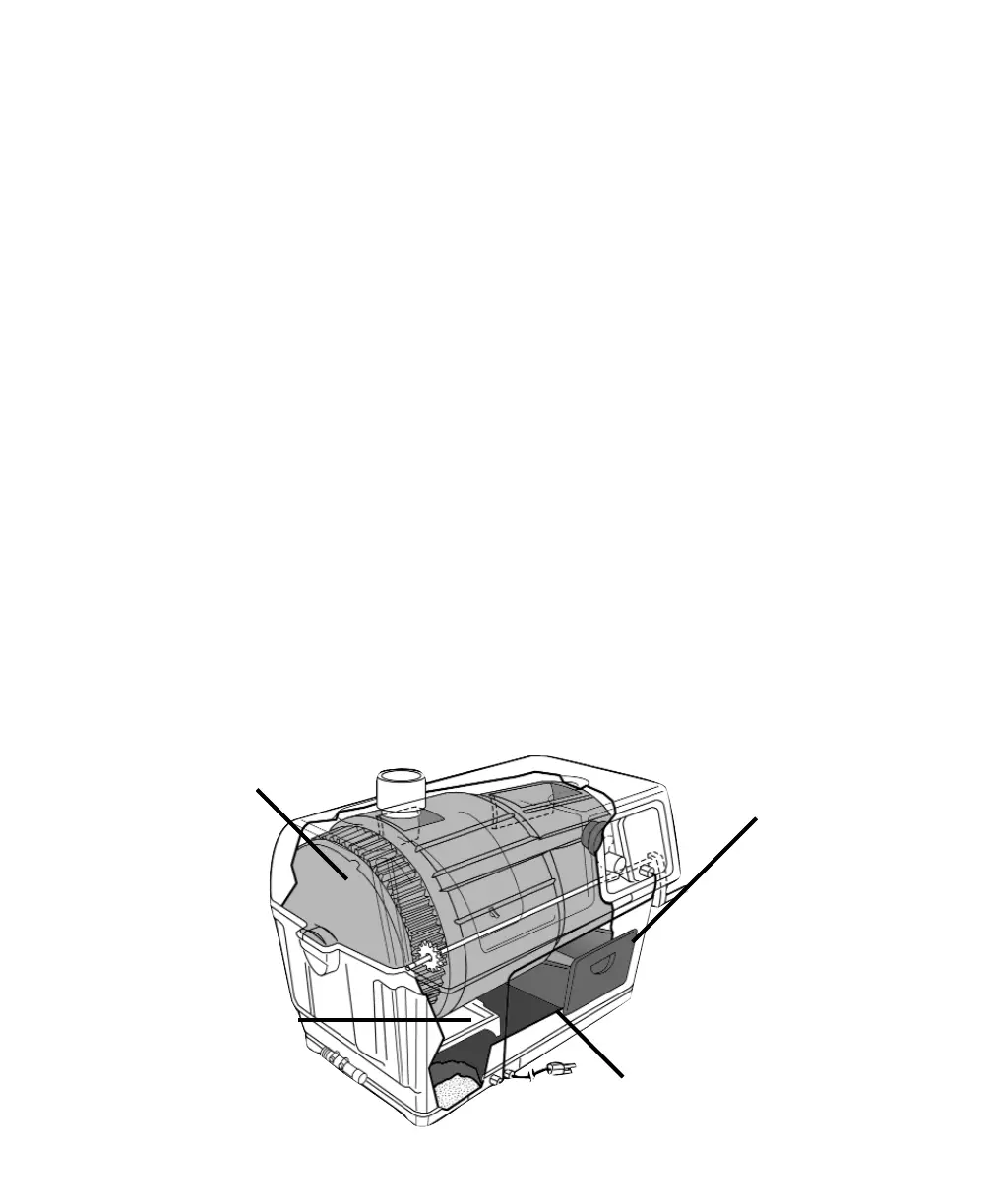
Composting Drum:
Waste and bulking mix-
Finishing Drawer: Where
compost is put to ‘finish’
Evaporation Chamber: This is
where you will frequently see liq-
uid collecting.
Evaporation Tray: Extends
the surface area of the
evaporation chamber
WARRANTY
SUN-MAR Corp. warrants the original purchaser that this toilet is free from defects in material
and workmanship under normal house or cottage use. SUN-MAR Corp. will furnish new parts for
any part that fails within three years or 5 years on the fibreglass tank, provided that our inspec-
tion shows that such failure is due to defective material or workmanship. Any part supplied by
us to replace another part is warranted for the balance of the original warranty period.
This warranty does not cover:
1. Damage resulting from neglect, abuse, accident or alteration; or damage caused by fire,
flood, acts of God or any other casualty.
2. Parts and accessories not sold or manufactured by SUN-MAR Corp. or any damage resulting
from the use of such items.
3. Damage or failure resulting from failure of the purchaser to follow normal operating proce-
dure outlined in the Owner’s Manual or in any other printed instructions.
4. Labor and services charges incurred in the removal and replacement of any parts found
defective under the terms of this warranty.
5. All returns to the factory must by made freight prepaid. All shipments from the factory are
made F.O.B. the factory.
This warranty is in lieu of all other warranties expressed or implied, and no person is author-
ized to enlarge our warranty responsibility, which is limited to the terms of this certificate. The
Company reserves the right to change, improve or modify its products without obligation to
install these improvements on equipment previously manufactured.


 To Next Page