Doc No: OMM50001243
Rev: C Page 61 of 68
This document and all the information contained herei
n are the confidential and exclusive property of TechnipFMC,
and may not be reproduced, disclosed, or made public in
any manner prior to express written authorization by TechnipFMC.
-Fluid cylinder bolts not properly tightened
-Fluid cylinder o-rings (or gaskets) damaged
-Properly tighten and torque bolts
-Replace damaged o-rings or gaskets
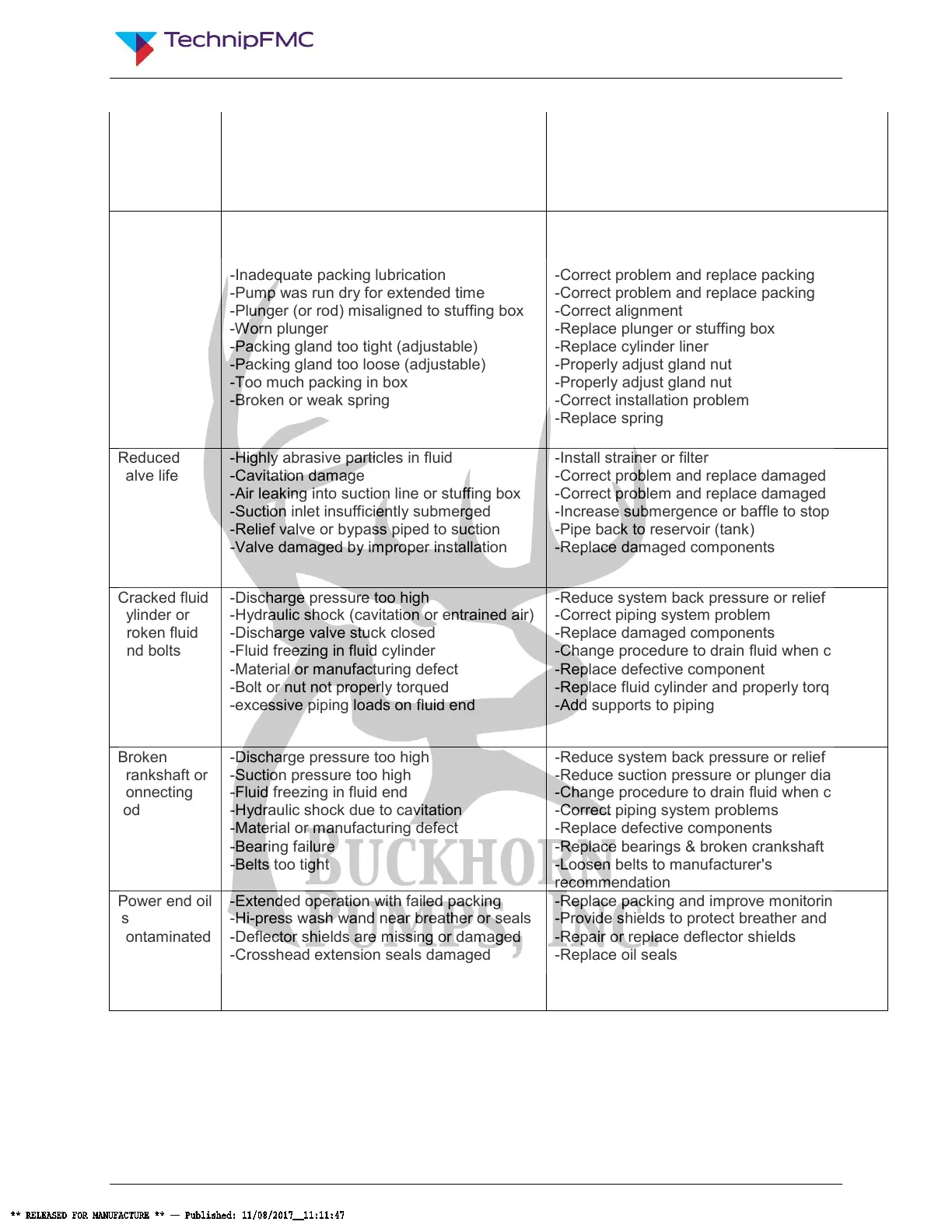
Reduced
packing or
piston cup life
-Highly abrasive particles in fluid
-Packing run dry
-Incorrect packing for fluid type
-Inadequate packing lubrication
-Pump was run dry for extended time
-Plunger (or rod) misaligned to stuffing box
-Worn plunger
-Packing gland too tight (adjustable)
-Packing gland too loose (adjustable)
-Too much packing in box
-Broken or weak spring
-Install strainer or filter
-Correct problem & replace packing
-Change to correct packing
-Correct problem and replace packing
-Correct problem and replace packing
-Correct alignment
-Replace plunger or stuffing box
-Replace cylinder liner
-Properly adjust gland nut
-Properly adjust gland nut
-Correct installation problem
-Replace spring
-Highly abrasive particles in fluid
-Cavitation damage
-Air leaking into suction line or stuffing box
-Suction inlet insufficiently submerged
-Relief valve or bypass piped to suction
-Valve damaged by improper installation
-Install strainer or filter
-Correct problem and replace damaged valves
-Correct problem and replace damaged valves
-Increase submergence or baffle to stop vortex
-Pipe back to reservoir (tank)
-Replace damaged components
Cracked fluid
cylinder or
broken fluid
end bolts
-Discharge pressure too high
-Hydraulic shock (cavitation or entrained air)
-Discharge valve stuck closed
-Fluid freezing in fluid cylinder
-Material or manufacturing defect
-Bolt or nut not properly torqued
-excessive piping loads on fluid end
-Reduce system back pressure or relief valve
-Correct piping system problem
-Replace damaged components
-Change procedure to drain fluid when cold
-Replace defective component
-Replace fluid cylinder and properly torque
-Add supports to piping
Broken
crankshaft or
connecting
rod
-Discharge pressure too high
-Suction pressure too high
-Fluid freezing in fluid end
-Hydraulic shock due to cavitation
-Material or manufacturing defect
-Bearing failure
-Belts too tight
-Reduce system back pressure or relief valve
-Reduce suction pressure or plunger diameter
-Change procedure to drain fluid when cold
-Correct piping system problems
-Replace defective components
-Replace bearings & broken crankshaft or rod
-Loosen belts to manufacturer's
recommendation
Power end oil
is
contaminated
-Extended operation with failed packing
-Hi-press wash wand near breather or seals
-Deflector shields are missing or damaged
-Crosshead extension seals damaged
-Replace packing and improve monitoring
-Provide shields to protect breather and seals
-Repair or replace deflector shields
-Replace oil seals



 To Next Page