34
SERVICE HANDBOOK
Troubleshooting Chart
For your safety, review the “General Service Safety Precautions” (on pages 2-7) before using the
troubleshooting chart below. The “General Service Safety Precautions” section provides informa-
tion on the following topics:
• Trained Personnel Only
• Terminal Venting and Electrocution
• Refrigerants and Other Chemicals
• Compressor Removal
• System Flushing, Purging, and Pressure Testing for Leaks
• System Charging
• Prevention of Water-Utilizing System Explosions
• Start Capacitor Overheating
• System Evacuation
This Troubleshooting Chart (Table 4-1) is not designed to replace the training required for a profes-
sional air conditioning/refrigeration service person, nor is it comprehensive.
If you have any questions about returns under warranty, see “Is Your Compressor Eligible for
Return Under Warranty” on page 70.
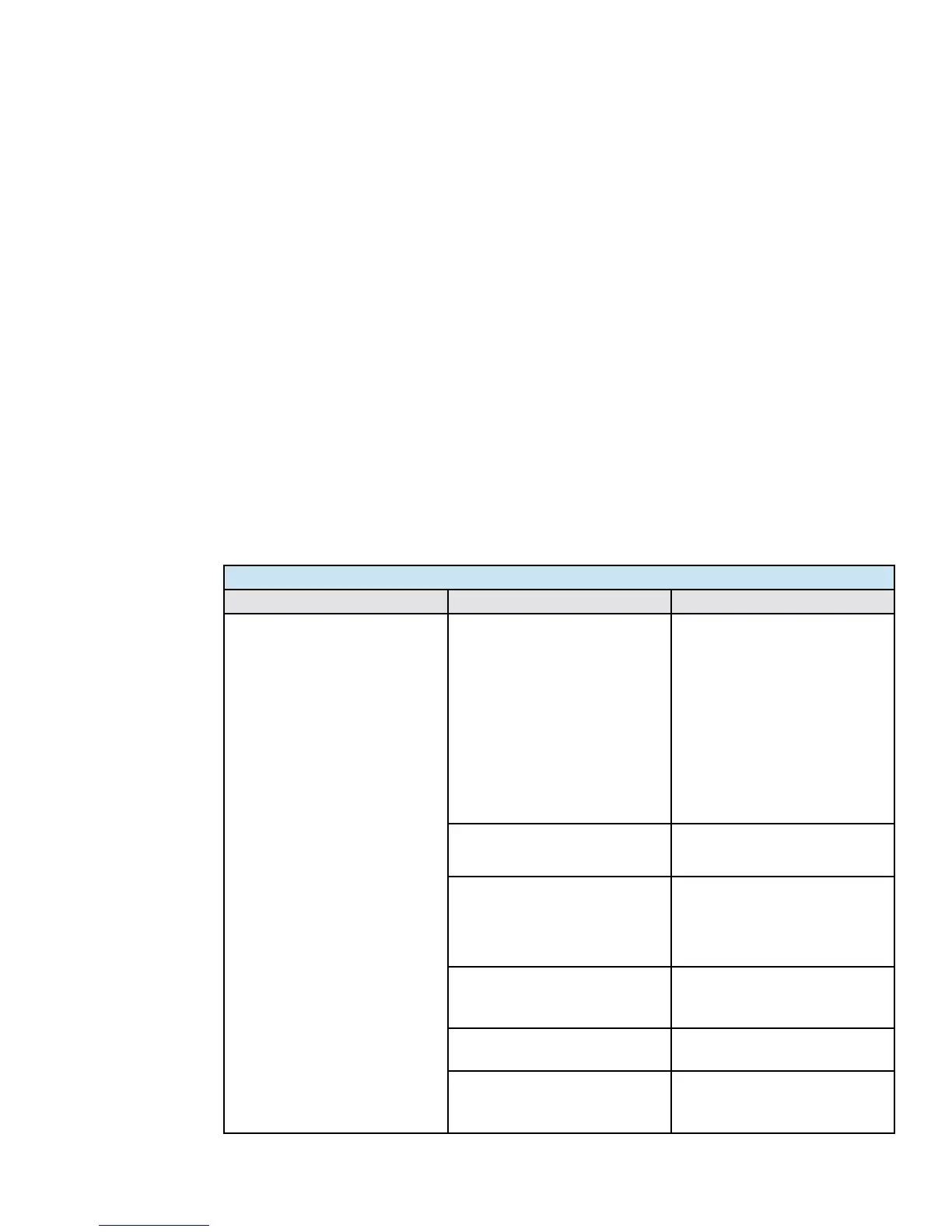
Table 4-1: Troubleshooting Chart
Complaint Possible Causes Response
Compressor will not start - no
hum
System component not func-
tioning properly:
1. Control/ contactor stuck in
open position
2. Control off due to cold lo-
cation
3. Thermostat not function-
ing properly
Refer to the original equip-
ment manufacturer (OEM)
service information
Line disconnect switch open Close the start switch or the
disconnect switch
Circuit breaker tripped or fuse
open or removed
Before resetting breaker or re-
placing fuse, see "Identifying
Compressor Electrical Prob-
lems" on pages 40-41
Thermal protector not working
properly
See "Identifying Compressor
Electrical Problems" on pages
40-41
Wiring improper or loose Check against wiring diagram
and wire properly
Compressor motor has a
ground fault (also known as a
short circuit to ground)
See "Identifying Compressor
Electrical Problems" on pages
40-41



 To Next Page