90
SERVICE HANDBOOK
Control of Liquid Migration to the Compressor During
Shutdown
Liquid Refrigerant Migration to Compressor During Shutdown
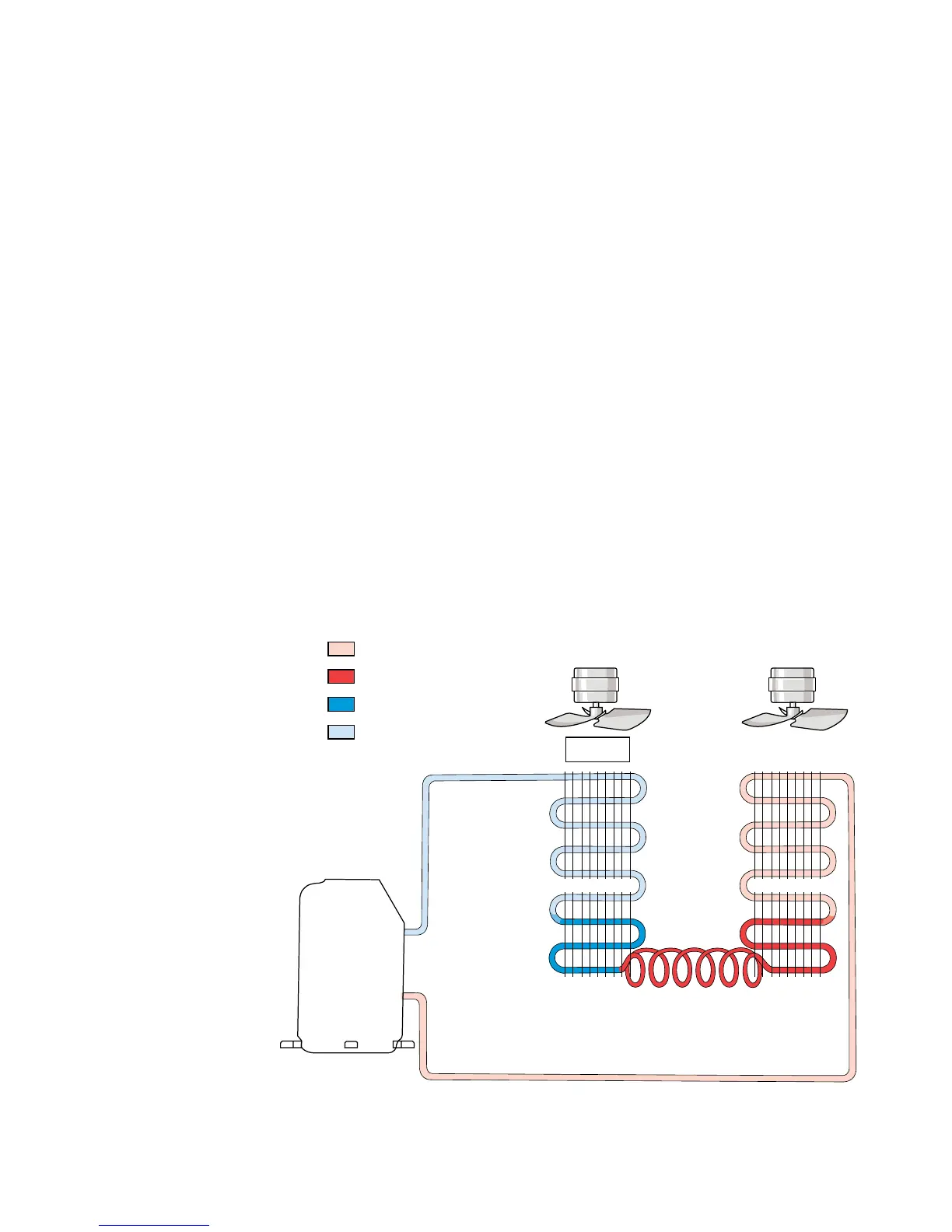
Liquid refrigerant migration to the compressor is a natural occurrence within refrigeration
and air conditioning systems (see Figure 6-1). The amount and severity of this liquid re-
frigerant migration depends on several things such as the size of refrigerant and oil charge
and the length of shutdown interval.
This discussion shows that while Tecumseh compressors enjoy a fine reputation for reli-
ability and long life, there are application safeguards that can be employed to increase
compressor life and eliminate unnecessary service calls. These action photographs (see
Figures 6-2 to 6-4) were taken in the engineering laboratories of Tecumseh Products Com-
pany. A five ton split air conditioning system was used with a four inch sign glass installed
in the compressor housing. The condensing unit and evaporator sections were connected
by approximately 25 feet of suction and discharge tubing. The first internal view shows the
system shut down for a weekend. The temperatures of the compressor and evaporator
are the same, 76°F.
Even at this condition, the fluid in the evaporator, which is mostly refrigerant, has a higher
vapor pressure than the fluid in the crankcase, which is mostly oil. This difference in vapor
pressure acts as a driving force for the refrigerant to migrate to the crankcase—to become
absorbed in the oil until the pressures are equalized and saturation has been reached.
High Pressure Gas
High Pressure Liquid
Low Pressure Liquid
Low Pressure Gas
Fan Fan
Evaporator
Condenser
Compressor
Expansion Device
Filter
FIGURE 6-1: Liquid refrigerant migration to compressor



 To Next Page