Need help?
Do you have a question about the Teleco TVPLA868AC2 and is the answer not in the manual?
Details wiring terminals, DIP switches, and LED status indicators.
Guidance for first-time system startup and motor setup.
Configuration for a single motor setup.
Configuration for two synchronized motors.
Configuration for two independent motors.
Fast procedure for setting motor limit switches.
How to memorize transmitter radio codes.
How to memorize sensor radio codes.
Procedures for deleting radio codes.
Remote memorization and deletion of radio codes.
System response to lost sensor signal.
Wind detection and alarm thresholds.
Alarm triggered by low temp and rain.
System response to rain detection.
Post-rain operational mode for drainage.
Temperature monitoring for ice formation.
Customizing slat angles for alarms.
Solutions for common operational problems.
Procedure for replacing the control unit.
List of compatible wind, rain, and temperature sensors.
Optional LED cards for lighting control.
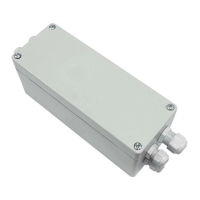
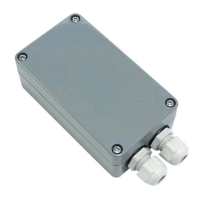
This document describes the Teleco Automation SRL control unit, available in models TVPLA868AC2, TVPLA916AC2, TVPLA868AC2B, and TVPLA916AC2B. These units are designed to control one or two 230VAC motors for adjustable slats, commonly used in pergolas. The control unit integrates a radio receiver, allowing for remote operation and sensor integration.
The core function of the device is to manage the movement of adjustable slats. It can be configured to control either one motor (Pergola with 1 motor) or two motors, which can operate in either a synchronized or independent mode. The control unit supports self-learning procedures for setting motor limit switches and defining working times, simplifying the initial setup process.
A key feature is the integration of various sensor inputs, enhancing the automation capabilities. It can connect to rain, wind, and temperature (for ice detection) sensors. These sensors enable the system to react automatically to environmental conditions, providing protection and comfort. For instance, a combination of rain and temperature sensors can detect snow conditions, triggering specific slat adjustments.
The control unit also offers an optional LED CARD, which allows for the control of 1-colour, RGB, or RGBW 12/24Vdc LED lights. This expands the functionality beyond motor control to include integrated lighting solutions, adding to the aesthetic and practical aspects of the pergola.
The device offers flexible motor control modes. In "Pergola with 1 motor" configuration, a single motor's movement is managed. For "Pergola with 2 synchronized motors," both motors operate in unison, ensuring coordinated slat movement. Alternatively, "Pergola with 2 independent motors" allows each motor to be controlled separately, providing greater flexibility for complex slat arrangements or different sections of a pergola.
The self-learning procedure for limit switches and working times is designed for ease of use. This process involves a sequence of button presses on the control unit (P1 and P2) to define the full opening and closing positions of the slats. The system provides visual (L2 flashes) and auditory feedback (continuous sound) during this process to guide the user. If the motor direction is incorrect, the wiring can be inverted to correct it. A "Quick Learning of Limit Switch" function is also available, allowing for calibration without direct access to the control unit, provided certain parameters (motor control mode, correct motor direction, at least one transmitter for each independent motor output, and current threshold) have been previously programmed. This quick learning is initiated by pressing a specific button on a memorized transmitter for 10 seconds.
Transmitter memorization is a crucial aspect of operation. The system supports various transmitter types, including 7/42 channel, automatic commands (2 or 3 buttons), hold-to-run commands (2 or 3 buttons), and the Green Mouse Screen transmitter. The memorization process involves pressing P1 or P2 on the control unit a specific number of times, holding the last press, and then activating the desired button on the transmitter. Successful memorization is indicated by an intermittent sound from the buzzer. The system can also memorize radio codes from sensors like wind and rain sensors, following a similar procedure.
Remote memorization of other radio codes is possible using an already memorized transmitter. This feature allows new transmitters to be added to the system without direct access to the control unit, by pressing a specific button (P3) on a memorized transmitter and then activating the new transmitter.
The control unit incorporates an alarm priority system to manage various environmental conditions. These alarms are ordered by precedence, from highest to lowest priority.
The automatic alarm angles can be changed to desired positions. This involves setting the slats to the preferred angle and then performing a specific memorization procedure using P1 or P2 on the control unit.
The manual provides troubleshooting guidance for common issues. For example, if the control unit does not move motors at power-on, it indicates the system needs programming. If L3 flashes and an intermittent sound occurs after configuration, the procedure needs to be repeated without changing DIP4-5 settings. Issues with transmitter memorization are also addressed, often related to incorrect button press sequences or a full memory.
A significant maintenance feature is the ability to replace a defective control unit without losing configuration parameters, provided the memory card is still functional. This involves transferring the memory card from the old unit to the new one, setting the DIP switches on the new unit to match the old, and then powering on the system. This modular design simplifies repairs and minimizes reprogramming efforts.
Radio code deletion procedures are also detailed, allowing for the removal of single radio codes or all memorized codes. This is useful for security or when replacing transmitters. Remote deletion of radio codes is also supported, using a memorized transmitter to remove other codes from the system.
 General
| Input Voltage | 230 VAC |
|---|---|
| Frequency | 50/60 Hz |
| Storage Temperature | -20°C to +70°C |
| Humidity | 5% to 95% non-condensing |
| Dimensions | 120 x 80 x 40 mm |
| Protection Class | IP20 |
| Operating Temperature | -10°C to +55°C |


 To Next Page