31
4.9 Determining the Residual Compaction
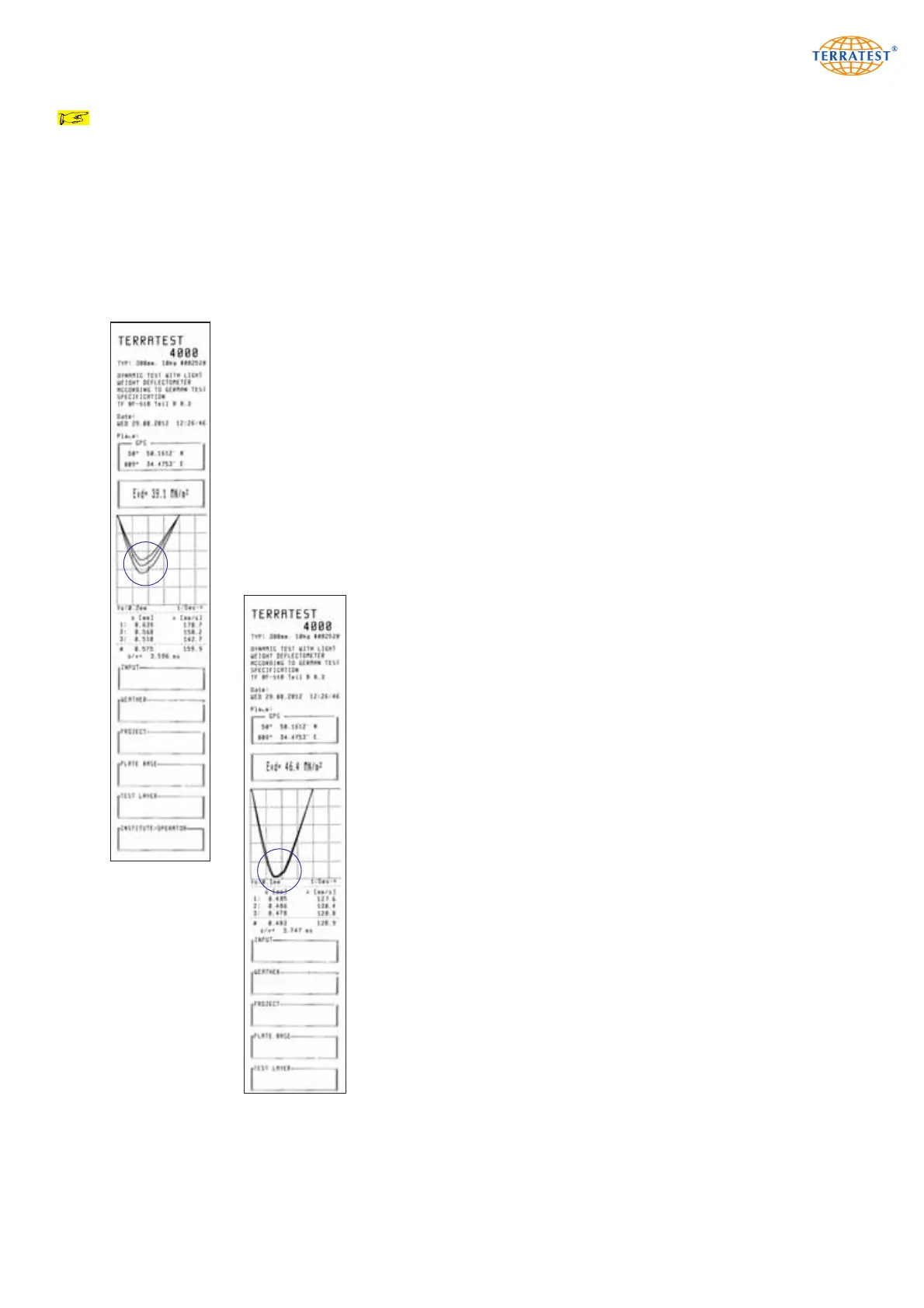
If three individual curves are shown on the protocol printout (see Figure 1) and if the Smax value of the
individual settlements decreases significantly, re-compaction has occurred caused by the test; further
compaction work is usually necessary. In this case we recommend improving the compaction at the same
place by performing 15 more impact drops with the Light Weight Deflectometer. Afterwards, repeat the
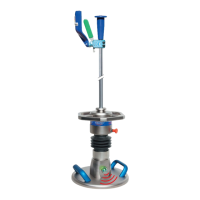
compaction test. If the distance between the individual curves decreases, in the ideal case only one
single curve composed of three congruent curves will be shown (see Figure 2), one can conclude that the
ground can be further compacted without difficulty, due to residual compaction.
Figure 1: Test performed
on relatively soft soil with
visible re-compaction by
the dynamic plate load test.
Three individual curves
are shown.
Figure 2:
Test performed after 15 re-compacting impact
drops with the Light Weight Deflectometer at
the same testing point: The protocol printout
shows a single settlement curve composed of
three congruent curves. The Evd value, and
thus the bearing capacity of the ground, has
increased by 20% compared to the first test.
Further compaction work should be conside-
red for this test area.


 To Next Page