Measurement
Measurement of the rpm
or frequency of an object using a flashlight transmitter
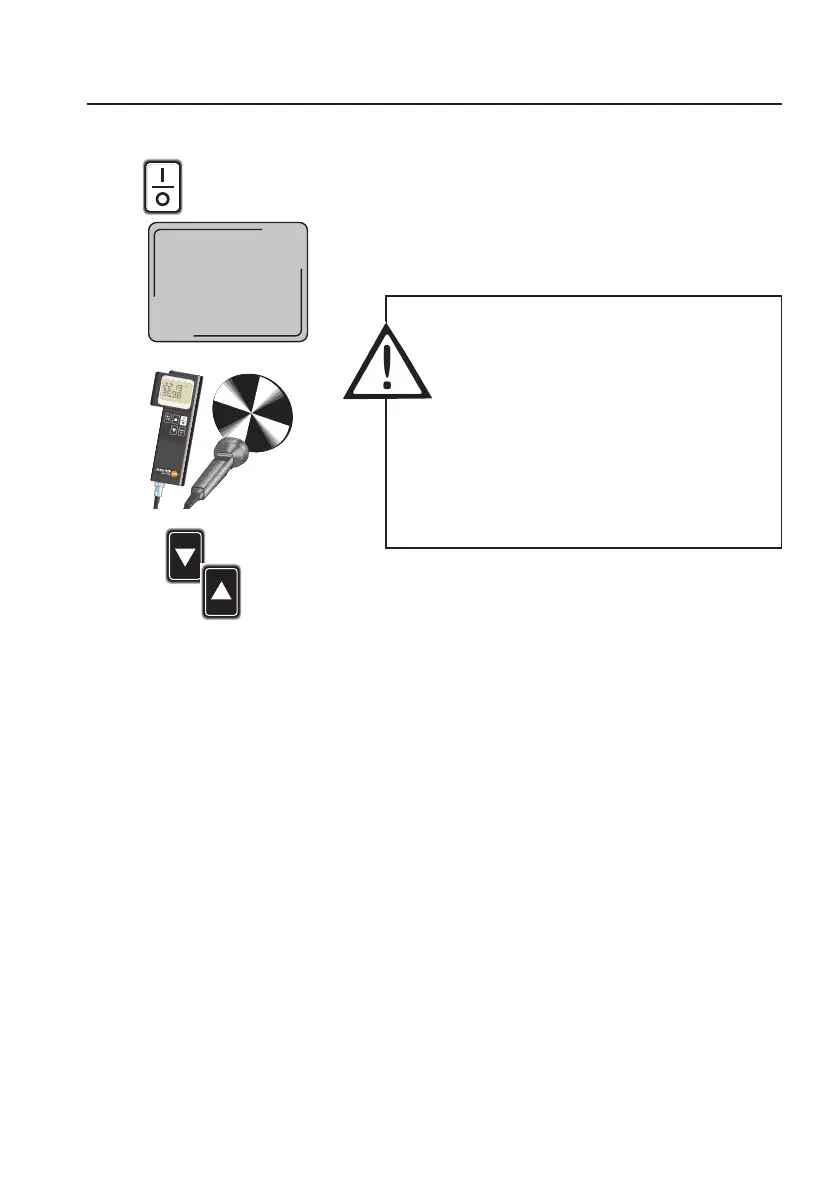
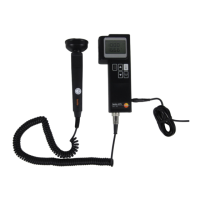
Press the On/Off key and the instrument (flash
tubes) starts to illuminate the moving object to be
measured with very short light pulses (setpoint:
1000 rpm/16.66 Hz). Place the flashlight transmit-
ter as near as possible to the object.
If you know the approximate rpm or frequency
of the object to be measured then set it by
activating the frequency keys (lower or higher). It
adjusts itself very slowly at the start but speeds up
if the key is kept pressed. Once you have just
about reached the required frequency you should
stop briefly and then proceed in the desired direc-
tion. The quicker you activate the frequency keys
the shorter the adjustment steps.
If you do not know the frequency or rpm of the
object increase the flash frequency until you can
no longer recognise any single images. Then lower
the flash frequency until you have the first ”statio-
nary” images.
In the case of integral multiples or divisors the flas-
hed objects to be measured are “stationary” in the
image. The required rpm (frequency) is that at
which the picture is sharpest. This is normally the
highest value.
To measure correctly, an area with many con-
trasts must be illuminated. Ensure that rotating
parts only have
one
contrast mark at the peri-
phery so that you can recognise double ima-
ges (flashlight frequency = double rotary
frequency). For measurements without contrast
markings you should orientate yourself to a stri-
king point on the object to be measured. Try to
avoid external light (bright, direct lighting, sun-
light).
p
m
1000
rpm
16.66
F
7


 To Next Page