Diaphragm Pressure & Stethoscope Frequency Response
The Thinklabs Electromagnetic Diaphragm maintains the tactile sense of an
acoustic stethoscope, where diaphragm pressure was always used to adjust the
sensitivity to lower or higher frequencies. Thinklabs takes this to a new level.
The stethoscope diaphragm sits in front of a conductive plate inside the
stethoscope body. Vibration is sensed when the diaphragm vibrates and the gap
between the diaphragm and the plate behind it changes due to diaphragm
vibration.
Body sounds cause very small gap changes. Pressure you apply against the
patient has a far greater effect on the gap between diaphragm and the plate. The
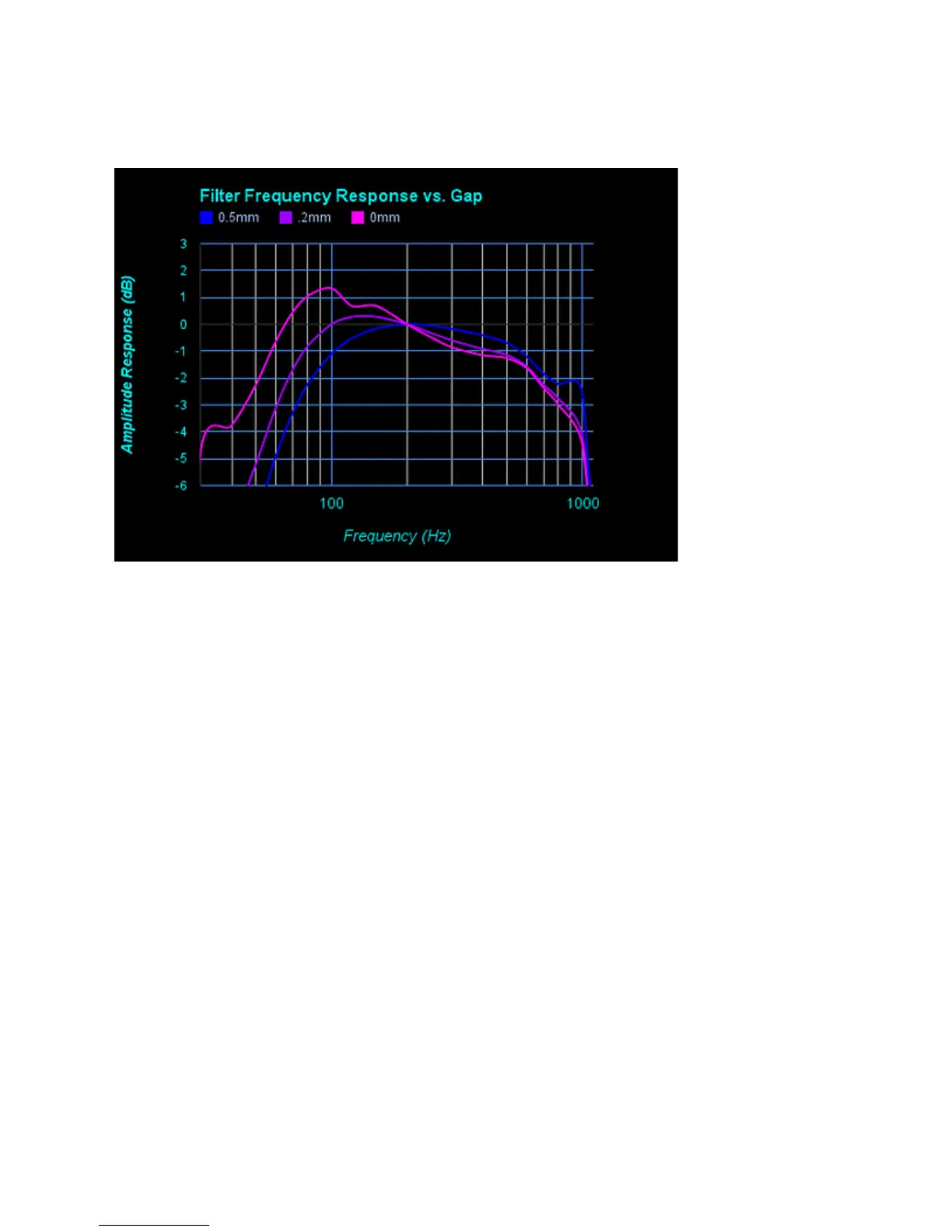
chart shows how frequency sensitivity changes as you push harder, reducing the
gap - sensitivity changes from the blue to purple to pink graph. Notice how the
low frequency (bass sounds) increase?
When you listen, as you apply more pressure, low-pitched sounds get louder.
HOWEVER, when you push hard enough for the diaphragm and plate to touch,
vibration will decrease, and you will no longer hear low pitched sounds as
intensely. This can be helpful to reduce heart sounds when listening to lungs. But
generally, apply enough pressure to find a "sweet spot" where sounds are rich
and loud.
NOTE - Changing diaphragm pressure and thereby changing gap produces very
large signals that can "clip" the sound. So make gentle changes in pressure and
generally apply a steady, consistent pressure to avoid clipped sound.
16


 To Next Page