Foreword
1
Foreword
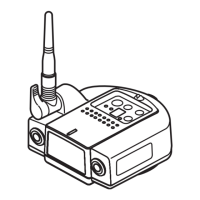
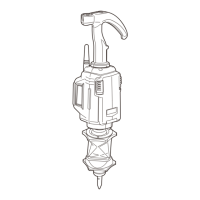
Thank you for purchasing the Topcon RC-2W Remote control system-2W.
For the best performance of the instrument, please read these brief instructions carefully, and
keep them in a convenient location for future reference.
This system has the following features:
●
Enables optical communications between the total station GTS-800A/810A/820A, GPT-8000A
and RC-2RW on the prism side, which allows simplified one-man survey based on the
application programs.
●
For communication between the RC-2RW on the prism side and the data collector FC-1000,
communication by either Bluetooth (wireless) or cable is possible.
●
Has the turn-round function with which more efficient one-man survey is possible.
General Handling Precautions
Before starting work or operation, be sure to check that this system is functioning correctly with
normal performance.
●
Do not submerge the instrument into water.
The instrument can not be submerged underwater.
RC-2RW is designed based on the International Standard IP65 and RC-2H is designed based on
the International Standard IP54, therefore it is protected from the normal rainfall.
●
Guarding the instrument against shocks.
When transporting the instrument, provide some protection to minimize the risk of shocks. Heavy
shocks may cause the measurement to be faulty.
●
Battery level check.
Confirm battery remaining level before operating.
●
Storing the instrument for long period
Remove the dry cells from the instrument when you would not use it for long period.
●
Tu r n-round motions and Optical communications
RC-2RW should be kept aiming so that the total station always stays within the above
range of laser beam emission until the turn-round motions or optical communications are
completed.
If the aiming is out of above range while RC-2RW is in turn-round motions or optical
communications, the turn-round or optical communications could not be completed.
See “Light emitting angle” on page 14 and “Light detecting range” on page 15.


 To Next Page