EasyManua.ls Logo

TP-Link VIGI C540 - User Manual

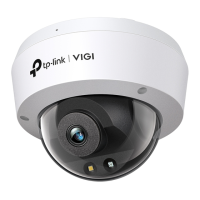
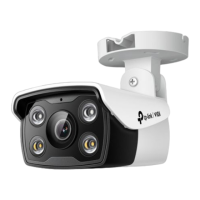
TP-Link VIGI C540
2 pages
Print Icon
To Next Page IconTo Next Page
Loading...
Quick Start Guide
*Images may dier from actual products.
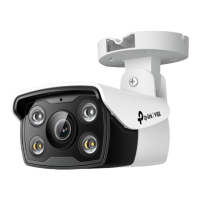
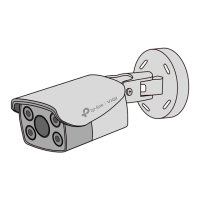
Appearance
*The camera’s standard power supply is 12V DC (14W) or PoE (802.3af/at).
Power Supply Interface
(12V DC)
5
Status LED
6
7
Built-in Microphone
2
RJ45 Network Interface
(supports PoE)*
Infrared LED
3
White LED
4
1
1
2
3
4
5
Package Contents
Network Camera
Waterproof Cable
Attachments
Quick Start Guide
Quick
Start
Guide
Option 1: Wall/Ceiling Mounting
1. Stick the mounting template to the desired mounting place. Drill 4 screw holes
according to the template.
2. Insert the anchors into the holes, use the provided screws to x the camera’s
bracket to the wall or ceiling.
Installing Waterproof Cable Attachments
Wall Mounting
Install the waterproof cable attachments for the network interface when the camera is installed outdoors.
Note: Make sure each part is securely attached and the waterproof rings are ush to keep out water.
1. Route the network cable through the following components in order: x nut,
waterproof ring, and then the waterproof jacket.
2. Fix the O-ring to the network interface of the camera and connect the network
cables.
1
Mount Camera
Fix Nut
Waterproof
Ring
O-ring
Network
Interface
Waterproof
Jacket
OR
Mounting Template
Anchor
Self-tapping Screw
Anchor
Self-tapping Screw
Mounting Template
Option 2: Pole Mounting
1. Thread each of the two cable ties through the slits on the back of the camera’s
bracket indicated below.
2. Slip the two cable ties through the pole. Tighten them to rmly attach the pole.
Cable Tie
Cable Tie
6
Status LED Indication
Blinking Red Slowly
Blinking Red Quickly
Blinking Green Quickly
Solid Green
Solid Red Starting up
Disconnecting from the internet
Working normally and connecting to the internet.
Camera upgrading
Camera resetting
7
Speaker
8
Micro SD Card Slot
Insert a micro SD card for local storage. Initialize the SD card via VIGI app before
recording videos.
9
Reset Button
Long press the button to reset the camera to factory settings.
8
9
Note: Before inserting the micro SD card or resetting
the camera, rotate the sphere and unfasten the two
xed screws to remove the cover.
3. Attach the network interface with the waterproof jacket, then twist to lock.
4. Insert the waterproof ring into the waterproof jacket. Rotate the x nut to secure
it to the waterproof jacket.
Mounting Template
Anchors x 4
Screws x 4
©2022 TP-Link 7106509846 REV2.0.0
Note: Make sure that the wall is strong enough to withstand 3 times the
weight of the camera and mounting bracket .
Question and Answer IconNeed help?

Do you have a question about the TP-Link VIGI C540 and is the answer not in the manual?

Summary

Mount Camera

Option 1: Wall;Ceiling Mounting

Attaching the camera bracket to a wall or ceiling using screws and anchors.

Option 2: Pole Mounting

Securing the camera bracket to a pole using provided cable ties.

Installing Waterproof Cable Attachments

Use Your Camera with an NVR

Step 1. Connect the Hardware

Connecting cameras to the same network as the NVR.

Step 2. Power On the Cameras

Powering the cameras using PoE or an external power supply.

Step 3. Add Cameras with the NVR

Adding activated cameras to the VIGI NVR system for management.

More Management Methods

Method 1: Via the VIGI Security Manager

Managing cameras using the VIGI Security Manager software on Windows.

Method 2: Via the TP-Link VIGI App

Remotely managing cameras and receiving alerts via the TP-Link VIGI mobile app.

Method 3: Via a Web Browser

Accessing and managing camera settings and live video through a web browser.

Summary

Mount Camera

Option 1: Wall;Ceiling Mounting

Attaching the camera bracket to a wall or ceiling using screws and anchors.

Option 2: Pole Mounting

Securing the camera bracket to a pole using provided cable ties.

Installing Waterproof Cable Attachments

Use Your Camera with an NVR

Step 1. Connect the Hardware

Connecting cameras to the same network as the NVR.

Step 2. Power On the Cameras

Powering the cameras using PoE or an external power supply.

Step 3. Add Cameras with the NVR

Adding activated cameras to the VIGI NVR system for management.

More Management Methods

Method 1: Via the VIGI Security Manager

Managing cameras using the VIGI Security Manager software on Windows.

Method 2: Via the TP-Link VIGI App

Remotely managing cameras and receiving alerts via the TP-Link VIGI mobile app.

Method 3: Via a Web Browser

Accessing and managing camera settings and live video through a web browser.

Overview

The TP-Link VIGI camera is a versatile surveillance device designed for both indoor and outdoor use, offering robust monitoring capabilities and flexible management options. This camera is engineered to provide clear video footage, reliable connectivity, and user-friendly operation, making it suitable for a variety of security applications.

Function Description

The primary function of the VIGI camera is to capture and record video surveillance footage. It features an RJ45 Network Interface that supports Power over Ethernet (PoE), allowing for both data and power transmission over a single cable, simplifying installation. Alternatively, it can be powered via a 12V DC power supply. The camera is equipped with an Infrared LED for night vision, ensuring clear images even in low-light conditions. A Status LED provides visual feedback on the camera's operational state, indicating whether it is starting up, disconnected from the internet, working normally, connecting to the internet, upgrading, or resetting. For enhanced visibility in certain scenarios, a White LED is also integrated. Audio capabilities are provided by a built-in microphone and a speaker, enabling two-way audio communication and sound recording.

For local storage of video footage, the camera includes a Micro SD Card Slot, supporting cards for continuous recording. A Reset Button is also present, allowing users to restore the camera to its factory settings by a long press. The camera is designed to integrate seamlessly with Network Video Recorders (NVRs), particularly VIGI NVRs, for batch access and management, allowing users to view live video, manage camera settings, and store recordings centrally. It can also be used with other NVR brands, requiring activation via the VIGI Security Manager or TP-Link VIGI app before integration.

Usage Features

The VIGI camera offers multiple methods for installation and management, catering to different user preferences and deployment scenarios.

Installation:

  • Wall/Ceiling Mounting: The camera can be securely mounted on a wall or ceiling using a provided mounting template, anchors, and screws. It is crucial to ensure the mounting surface is strong enough to support the camera's weight and its bracket.
  • Pole Mounting: For installations on poles, the camera's bracket can be attached using two cable ties threaded through designated slits, providing a firm and stable mount.
  • Outdoor Installation: When installed outdoors, the camera requires the use of waterproof cable attachments for the network interface. These attachments, including a fix nut, waterproof ring, and waterproof jacket, ensure that the connection remains protected from water ingress, maintaining reliability in various weather conditions.

Management Methods:

  • VIGI Security Manager (Windows only): This desktop application allows users to view live video and modify camera settings from a Windows computer. It facilitates the discovery of cameras on the same network, enabling activation and management.
  • TP-Link VIGI App: For remote access and management, the TP-Link VIGI app (available on App Store and Google Play) allows users to view live video, manage cameras, and receive instant alerts from their mobile devices. Users can activate and add cameras through the app using their TP-Link ID.
  • Web Browser: The camera can also be accessed and managed via a web browser by entering its IP address. This method allows for viewing live video, configuring settings, and activating the camera by setting a password and selecting the country/region and time zone.

NVR Integration:

The camera is designed to work efficiently with NVRs. After connecting the camera to the same network as the NVR and powering it on, users can add cameras through the NVR's interface. If the Plug and Play feature is disabled on the NVR, a password can be set for the camera during activation.

Troubleshooting and FAQs:

The manual provides guidance on common issues such as cameras not being discovered (suggesting refreshing, checking power, subnet, manual addition, or activation via VIGI Security Manager/app), resetting the camera (by long-pressing the reset button after removing the cover), forgetting the camera password (retrievable via NVR or VIGI Security Manager, or by resetting the camera via the VIGI app), and issues with the SD card (recommending checking card type, re-inserting, using Class 10 micro SD cards from 8 GB to 256 GB, and initializing the card via the VIGI app).

Maintenance Features

The VIGI camera is designed for ease of maintenance, with features that facilitate troubleshooting and ensure long-term reliability.

  • Reset Button Access: The reset button is strategically placed under the camera's cover, which can be accessed by rotating the sphere and unfastening two fixed screws. This design ensures that the reset function is not accidentally triggered but is easily accessible when needed for factory resets.
  • Waterproof Design: For outdoor installations, the waterproof cable attachments are crucial for maintenance. They are designed to be securely attached with flush waterproof rings to prevent water ingress, minimizing the risk of damage to the network interface and ensuring continuous operation in outdoor environments.
  • Status LED for Diagnostics: The Status LED provides immediate visual cues about the camera's operational status, which is invaluable for quick diagnostics. A solid red indicates startup, blinking red slowly indicates disconnection from the internet, solid green means normal operation and connection, blinking green quickly indicates an upgrade, and blinking red quickly signifies a reset. These indicators help users quickly identify the camera's state without needing to access software.
  • SD Card Management: The camera supports local storage via a Micro SD card, which can be easily inserted or removed. The recommendation to initialize the SD card via the VIGI app and use specific card types (Class 10, 8-256 GB) helps ensure optimal recording performance and longevity of the storage medium.
  • Software Updates: The camera's management methods (VIGI Security Manager, TP-Link VIGI app, web browser) allow for potential firmware updates, which can improve performance, add new features, and address security vulnerabilities, contributing to the camera's long-term maintenance and security.
  • Technical Support: The availability of technical support via the TP-Link website and QR code ensures that users can access assistance for any complex issues or questions that arise, providing a safety net for ongoing maintenance and problem-solving.

Overall, the TP-Link VIGI camera is a comprehensive surveillance solution that combines robust functionality with user-friendly installation and management, making it a reliable choice for various monitoring needs.

TP-Link VIGI C540 Specifications

General IconGeneral
Weatherproof RatingIP66
Digital Zoom16x
Wireless StandardsIEEE 802.11b/g/n
Wireless SecurityWPA/WPA2-PSK
Night VisionUp to 30 m (98 ft)
AudioBuilt-in microphone
ConnectivityWi-Fi, Ethernet
Frame Rate20fps
Video CompressionH.265/H.264
Audio CompressionG.711/G.726/AAC
Ethernet10/100Mbps
Local StorageMicroSD card slot
Operating Temperature-30°C to 60°C (-22°F to 140°F)
Power Supply12V DC

Related product manuals