MAINTENANCE
39
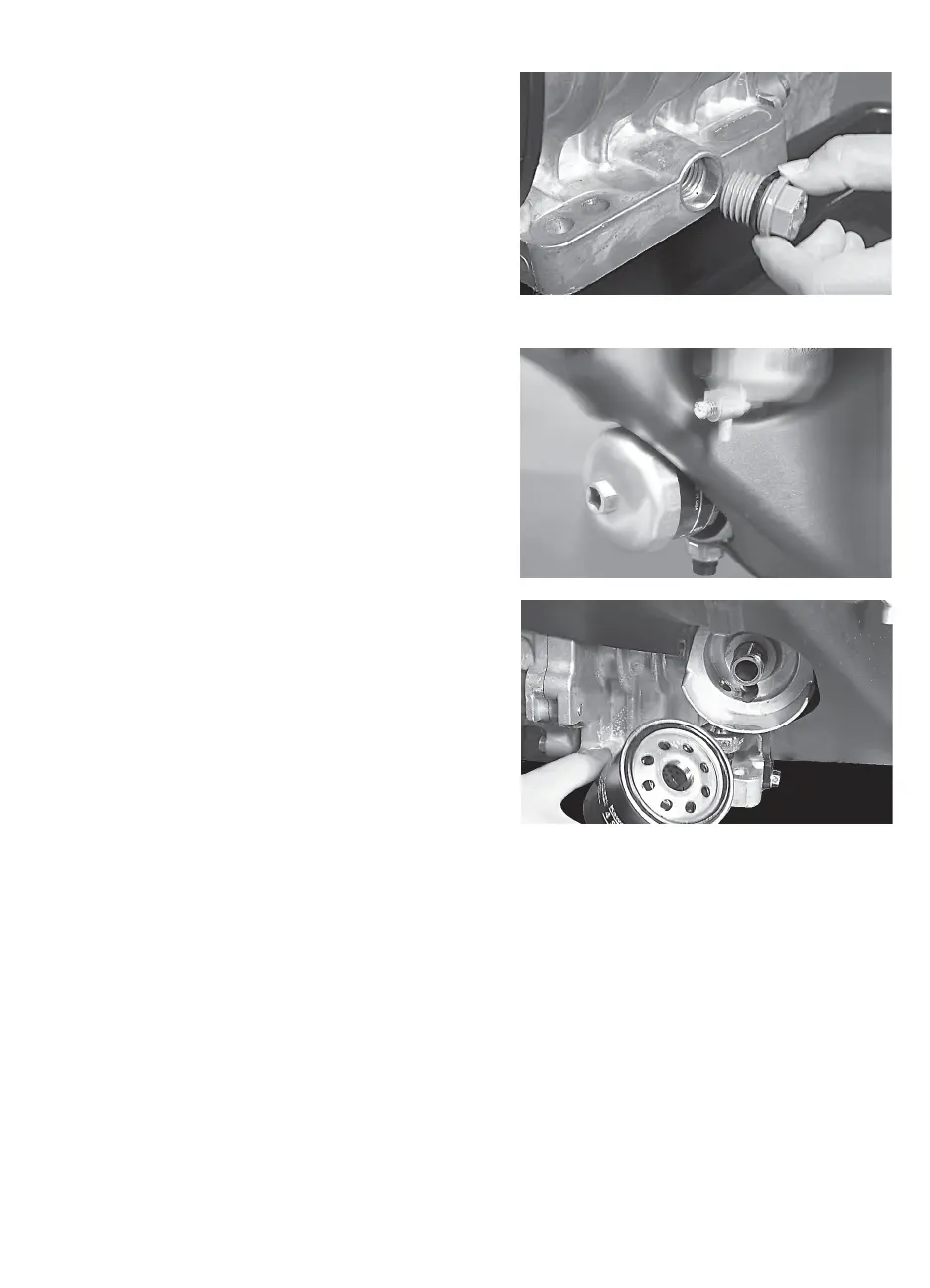
5. Remove the drain plug and allow the oil to completely
drain into the pan.
NOTICE: At the first oil change, small metal chips and lint
may be found. This is normal, resulting from the
break-in period. Inspect the filter at every oil
change. The presence of large metal chips
could indicate possible damage to the engine.
6. Before installing the drain plug, clean the area around
the drain hole with a lint free cloth
7. Inspect the drain plug and o-ring for damage; replace if
necessary.
8. Tighten the drain plug to 62 in. lbs. (7 Nm) torque.
Change the Oil Filter
1. Clean the area around filter.
2. Place a drain pan below the oil filter.
3. Remove the filter from the engine and allow the oil to
drain.
4. If the filter o-ring remains on the engine surface, remove
it and discard it along with the filter (7).
5. Inspect the new oil filter for any defects
6. Apply engine oil to the oil filter o-ring (5).
7. Install the oil filter onto the engine until the o-ring con-
tacts the mounting surface of the engine. Turn the filter
2/3 to 3/4 rotations by HAND(S).
Refill Oil
NOTICE: See RECOMMENDED LUBRICANTS AND FLUIDS on page 32 for oil capacity and grade. The use of
an incorrect grade of engine oil can damage the engine. Always use the recommended grade. Do
not mix engine oils of different grades or viscosity.
Engine oil must be high quality oil that meets or exceeds API SF, SG, CC standards.
Do not overfill. Excessive oil can damage the engine. Add oil in small quantities with repeated level
checks.
1. To allow for possible residual oil left in the engine, add slightly less than the rated engine capacity (RECOM-
MENDED LUBRICANTS AND FLUIDS on page 32) into the fill hole.
2. Check the oil level on the dipstick. The oil should be slightly below the H level and within the crosshatch to allow
for expansion.
3. Add oil in small quantities with repeated level checks to make sure you are not overfilling the engine.
4. When the level is correct, replace the dipstick.
5. As a final check, check the oil level again with the vehicle on level ground.
Oil increases in volume when warm. The H mark on the dipstick is calibrated for an engine at operating temperature.
When the engine is cold, the oil will be below the full mark. The engine can be operated safely as long as the oil is
within the safe operating range as indicated on the dipstick. Do not operate the vehicle if the oil level is below the safe
area indicated on the dipstick.


 To Next Page