Need help?
Do you have a question about the Trane 4TWX8060A and is the answer not in the manual?
Covers warnings for R-410A refrigerant, high pressures, POE oil, and valve handling.
Emphasizes precautions when working with live electrical components to prevent severe injury or death.
Steps to pressurize lines with nitrogen and check for leaks using soapy solution.
Steps for evacuating the system to a specific micron level for proper operation.
Step-by-step procedure for safely starting up the installed system.
Step 1: Gathering refrigerant line total length and lift measurements.
Step 2: Using charts to determine final subcooling value based on line length and lift.
Step 4: Measuring liquid line temperature and pressure at the outdoor unit's service valve.
Step 5: Using Table 14.2 to find proper liquid gage pressure based on subcooling and temp.
Step 6: Adding or recovering refrigerant to match chart values for proper charge.
Steps for calculating additional charge using the weigh-in method for heating mode.
Step 4: Adding charge if 10° subcooling is not met with nameplate charge.
Final inspection checklist for operational readiness and performance verification.
Table detailing system faults, primary and secondary causes, and checks for various modes.
This document serves as an installer's guide for Trane Condensing Units, specifically the 4TWX8 series. It provides comprehensive instructions for the proper installation, setup, and maintenance of these outdoor units, emphasizing compliance with national, state, and local codes. The guide is intended for individuals with adequate electrical and mechanical experience, as improper installation or servicing can lead to personal injury or property damage.
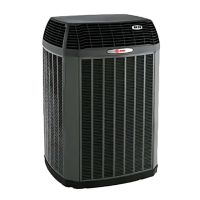
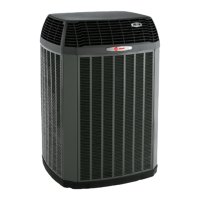
The Trane 4TWX8 series condensing units are outdoor components of a split-system air conditioning or heat pump system. Their primary function is to facilitate the heat exchange process, working in conjunction with an indoor evaporative coil to cool or heat a building's interior. These units are designed to operate with R-410A refrigerant, which requires specific handling procedures due to its higher operating pressures compared to R-22. The manufacturer strongly recommends installing only approved matched indoor and outdoor systems to ensure maximum efficiency, optimum performance, and overall system reliability. The units are factory charged with the system charge required for the outdoor condensing unit, ten feet of tested connecting line, and the smallest rated indoor evaporative coil match.
The installation process begins with unit preparation, including checking for shipping damage and carefully removing the unit from its pallet. Proper unit placement is crucial for optimal performance and longevity. The guide outlines several considerations for unit location, such as ensuring adequate clearance around the unit for unrestricted airflow and service access. For instance, a minimum of five feet of unrestricted space above the top discharge area and three feet in front of the control box (access panels) is required. The unit should also be positioned at least 12 inches from any wall or surrounding shrubbery. To prevent noise and vibration transmission, the guide advises against installing the unit near bedrooms or living areas where condensation and freezing defrost vapor might annoy occupants. When mounting on a roof, the structure must be capable of supporting the unit's weight, and proper isolation is recommended to alleviate sound or vibration transmission.
Refrigerant piping limits are detailed, specifying a maximum total line length of 150 feet (including lift) and a maximum vertical change of 50 feet. Specific line sizes and service valve connection sizes are provided for different models, with exceptions for certain tonnages. The guide emphasizes the importance of insulating the vapor line and preventing direct metal-to-metal contact between the liquid and vapor lines. For retrofit applications using existing refrigerant lines, it is crucial to ensure all joints are brazed (not soldered) and that the lines are free of leaks, acid, and oil.
Refrigerant line routing precautions are outlined to prevent noise transmission within the building structure. This includes using isolation hangers when fastening lines to joists or framing, insulating and isolating lines running through walls or sills, isolating lines from ductwork, and minimizing 90-degree turns.
The brazing process for refrigerant lines is meticulously described, starting with deburring and cleaning pipe ends. It involves removing pressure tap caps and valve cores from service valves, purging lines with dry nitrogen, and wrapping wet rags around valve bodies to prevent heat damage during brazing. For units with field-installed external driers, the directional flow arrow must be confirmed before brazing the drier into the liquid line. After brazing, a leak check is performed by pressurizing the lines and evaporator coil with dry nitrogen to 150 PSIG and checking for leaks with a soapy solution. Any leaks must be repaired before proceeding.
Evacuation of the refrigerant lines and indoor coil is a critical step, requiring evacuation until a micron gauge reads no higher than 350 microns. The system is considered properly evacuated if the micron gauge does not rise above 500 microns in one minute after closing off the valve to the vacuum pump.
Opening the service valves is done after leak checking and evacuation are complete. The gas service valve is opened 1/4 turn counterclockwise to its fully open position, and the liquid line service valve is opened counterclockwise until the valve stem just touches the rolled edge (approximately five turns). Valve stem caps must be replaced and tightened to prevent leaks.
Electrical connections are detailed for both low and high voltage. Maximum wire lengths for low voltage wiring are provided based on wire gauge. Low voltage hook-up diagrams are included for different air handler models (TEM 6/8 and TAM 7/9). High voltage power supply must match the equipment nameplate, and power wiring must comply with national, state, and local codes. A separate disconnect switch must be installed at the outdoor unit, and flexible electrical conduit is recommended for high voltage connections to prevent vibration transmission. The outdoor unit must be grounded according to applicable codes.
System startup procedures include ensuring all previous installation steps are completed, setting the system thermostat to OFF, and applying power to the indoor and outdoor units. If a compressor crankcase heater accessory is used and the outdoor ambient temperature is below 70°F, a one-hour waiting period is required before starting the unit.
The guide provides instructions for system charge adjustment, which is crucial for optimal performance. Subcooling charging in cooling mode is the recommended method for outdoor temperatures above 55°F. This involves determining the required line length and lift, calculating the final subcooling value using provided charts, measuring the liquid line temperature and pressure, and comparing these values to a refrigerant charging chart. Refrigerant is added or recovered as needed to achieve the proper liquid gauge pressure. The system must be stabilized by operating for a minimum of 20 minutes before making accurate measurements.
For outdoor temperatures below 55°F (heating mode only), the weigh-in method is recommended for charging. This involves calculating the additional charge needed based on the total line length and a charge multiplier.
Defrost control features are also discussed. The units have selectable termination temperatures for defrost cycles, with a default of 47°F. Jumper J2 can be cut to achieve a 70°F termination temperature when the ambient temperature is at or below 30°F. Pin identification for the defrost board allows for testing and forced defrost initiation. Normal operation of the defrost control requires the LED to flash once per second, 24V AC between R & B, and 24V AC between Y & B with the unit operating.
Finally, the guide includes a comprehensive checkout procedure to ensure proper operation after installation. This involves verifying refrigerant line integrity, insulation, and security, sealing passages through masonry, checking electrical connections, observing outdoor fan operation, ensuring free drainage of the indoor coil, confirming open and unobstructed supply registers and return grilles, verifying the return air filter installation, and checking the correct airflow setting for the indoor blower motor. The entire system should be operated in each mode to ensure safe operation. A troubleshooting section with a system faults table helps diagnose common issues related to the refrigerant circuit, electrical components, and defrost system. This table categorizes faults by primary and secondary causes, aiding in efficient problem resolution.


 To Next Page
 General