Installation
PART-SVN227B-EN 11
Control Panel to Drive
Connections
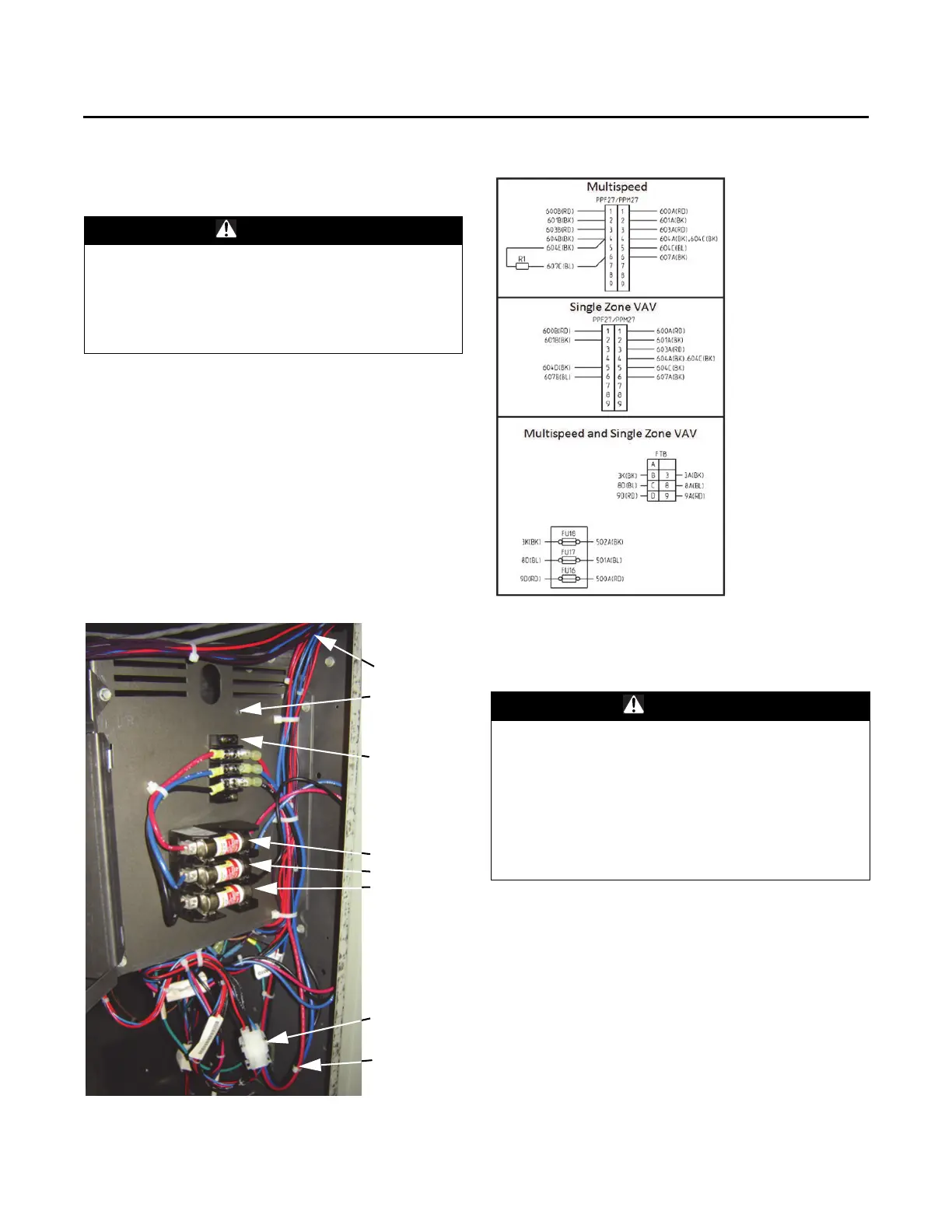
1. Take the nine pin connector (PPF27) that the signal
control wires (600B, 601B etc.) are plugged into and
using steel fish tape/stick run the opposite end of that
wire harness through the wire chase that runs between
the indoor fan section and upper left hand corner of the
control panel.
2. Plug PPF27 into PPM27.
3. Remove the screw that holds
the fuseholder cover
closed in order to make the power connection of wires
3A, 8A, and 9A to FTB. After the connections have been
made close the fusholder cover and re-secure it with
the screw that was removed.
Motor and Drive
Motor to Drive
For 3 and 5 hp motors a separate harness containing wires
505B, 504B and 503B is used to connect the inverter duty
motor to terminal FTB2. After connecting the power wires,
connect the ground wire (506A) from the motor to the
ground screw on the bottom of the drive assembly.
WARNING
Hazardous Voltage!
Failure to disconnect power before servicing could
result in death or serious injury. Disconnect all electric
power, including remote disconnects before servicing.
Follow proper lockout/tagout procedures to ensure the
power can not be inadvertently energized.
Figure 11. Control panel to drive connections
Chase to
Control Panel
Removed
Screw
FTB
FU18
FU17
FU16
Wires to run
back to the
control panel
PPF27/
PPM27
Figure 12. Control panel to drive schematic
WARNING
Proper Field Wiring and Grounding
Required!
Failure to follow code could result in death or serious
injury. All field wiring MUST be performed by qualified
personnel. Improperly installed and grounded field
wiring poses FIRE and ELECTROCUTION hazards. To
avoid these hazards, you MUST follow requirements for
field wiring installation and grounding as described in
NEC and your local/state electrical codes.



 To Next Page