1414
1515
StrengthenStrengthen
LoosenLoosen
TightenTighten
WeakenWeaken
Needle thread tensionNeedle thread tension
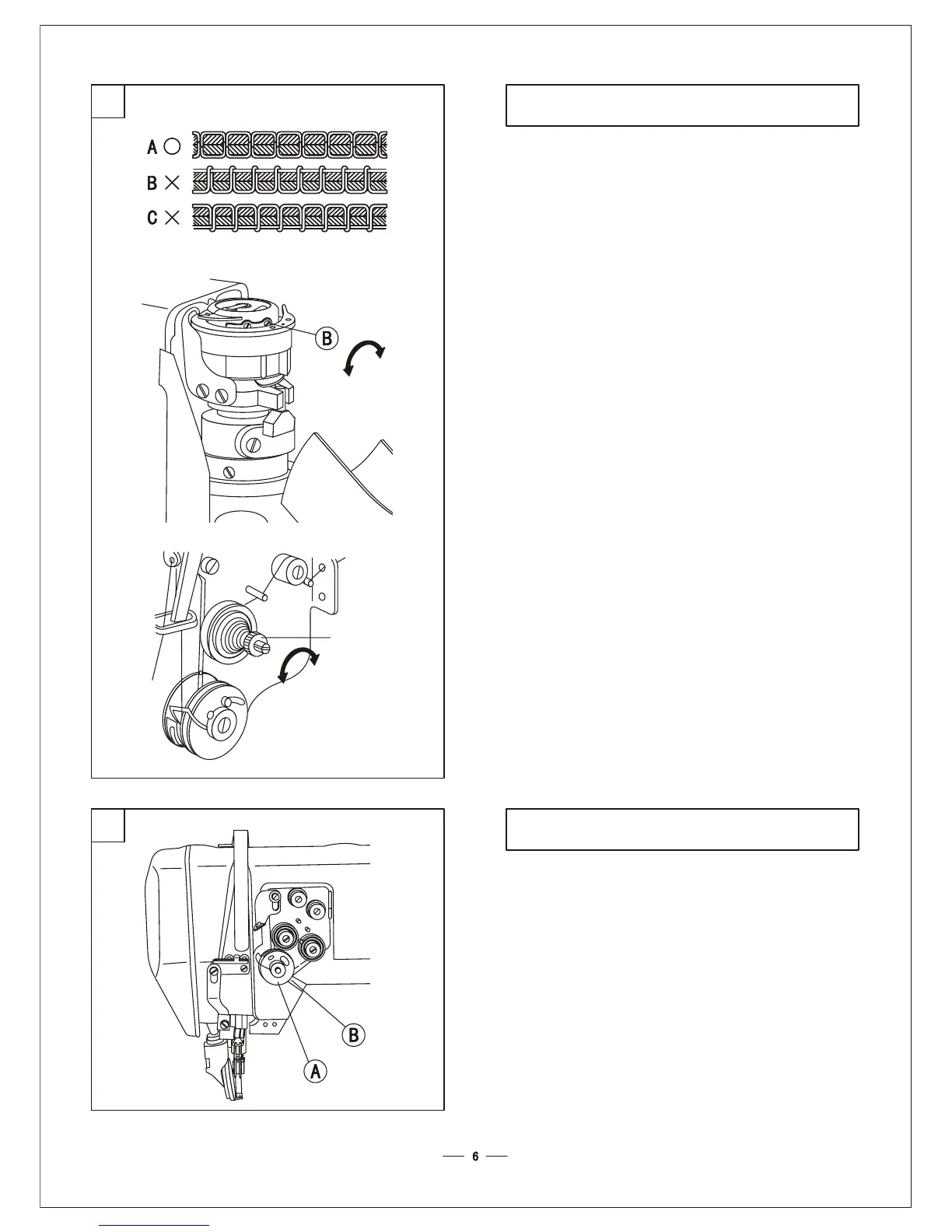
17. Adjusting the bobbin thread and the needle thread (Fig.14)17. Adjusting the bobbin thread and the needle thread (Fig.14)
18. Adjusting the range and the tension of thread take-up spring (Fig.15)18. Adjusting the range and the tension of thread take-up spring (Fig.15)
Normal stitch form should be as shown in Fig.14.
When abnormal stitches occur with puckering or
thread breakage, the tension of needle thread and
bobbin thread must be adjusted accordingly.
1.If the stitch form is the same with B,it indicates that
the needle thread is too strong and the bobbin thread
is too weak. Turn the tension regulating thumb nut
counter clockwise to weaken the needle thread
tension or tighten the screw B to strengthen the
bobbin thread tension.
2.If the stitch form is the same with C,it indicates that
the needle thread tension is too weak and the bobbin
thread tension is too strong. Turn the tension
regulating thumb nut clockwise to strengthen the
needle thread tension or loosen the screw B to weaken
the bobbin thread tension.
Normal stitch form should be as shown in Fig.14.
When abnormal stitches occur with puckering or
thread breakage, the tension of needle thread and
bobbin thread must be adjusted accordingly.
1.If the stitch form is the same with B,it indicates that
the needle thread is too strong and the bobbin thread
is too weak. Turn the tension regulating thumb nut
counter clockwise to weaken the needle thread
tension or tighten the screw B to strengthen the
bobbin thread tension.
2.If the stitch form is the same with C,it indicates that
the needle thread tension is too weak and the bobbin
thread tension is too strong. Turn the tension
regulating thumb nut clockwise to strengthen the
needle thread tension or loosen the screw B to weaken
the bobbin thread tension.
Before delivery, the thread take-up spring is properly
adjusted. Readjustment is only needle in the case of
sewing special material or with special thread.
Loosen the screw B, turn the tension spring A
clockwise to decrease the sewing range, or to turn
the tension spring A counter clockwise to increase
the sewing range. Then tighten the screw B after
finishing the adjustment.
Before delivery, the thread take-up spring is properly
adjusted. Readjustment is only needle in the case of
sewing special material or with special thread.
Loosen the screw B, turn the tension spring A
clockwise to decrease the sewing range, or to turn
the tension spring A counter clockwise to increase
the sewing range. Then tighten the screw B after
finishing the adjustment.



 To Next Page