IM 25.000AA UA (B/6-00)
CHLORINE HANDLING MANUAL
PAGE 6
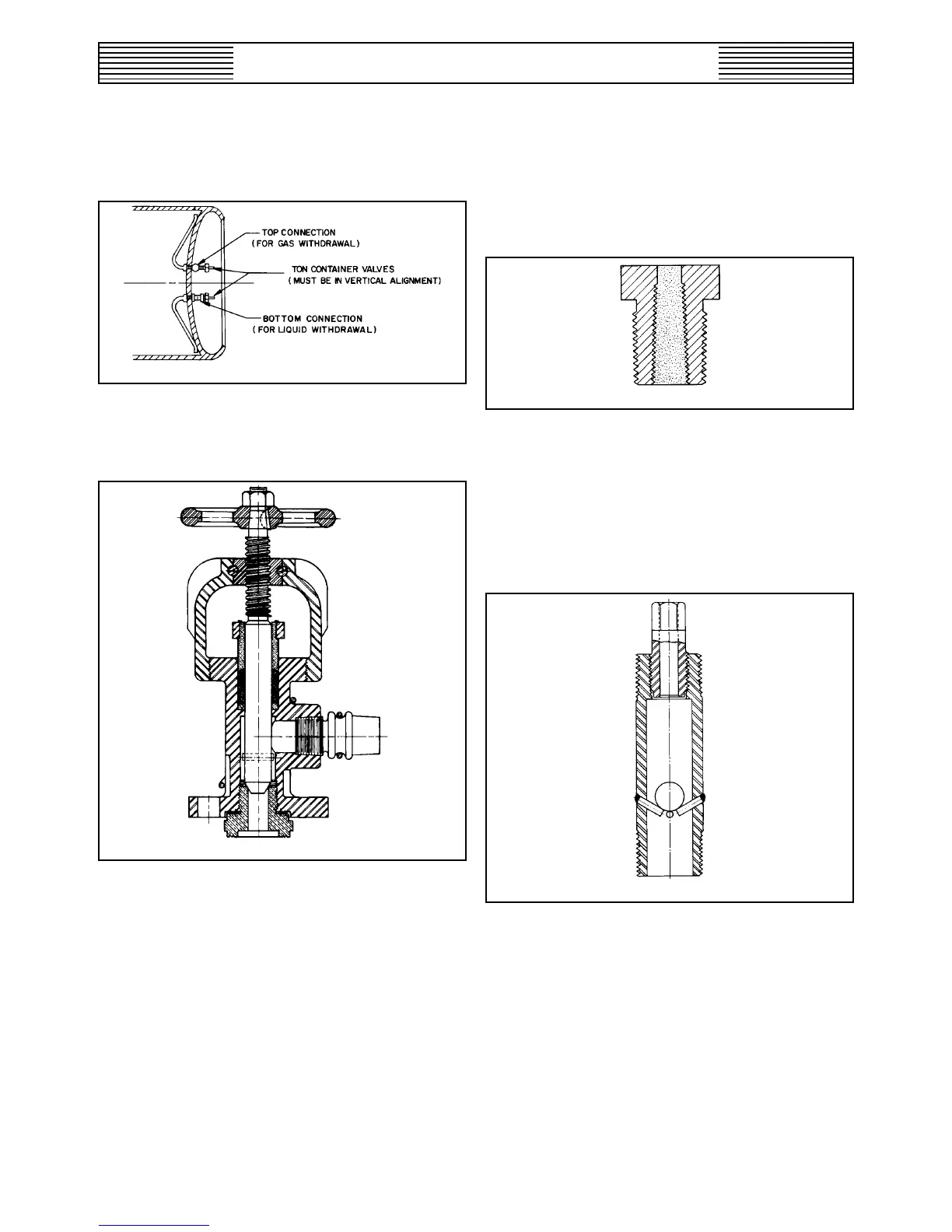
Cylinders are equipped with one valve that is normally used
for gas withdrawal. Ton containers are equipped with two
valves, as shown in Figure 6.
Figure 6 – Ton Container Valves
Figure 7 – Standard Angle Valve
The upper valve is used for gas withdrawal and the lower
valve for liquid withdrawal. Tank cars are equipped with
four standard angle valves, as shown in Figure 7.
Outlet is one-inch female ANSI Standard taper pipe thread.
The liquid withdrawal valves are located on the longitudinal
center line of the tank car. The valves on the transverse
center line are connected to the vapor space and are used to
obtain chlorine gas under pressure for testing the piping or
for air padding the tank car.
3.4 PRESSURE RELIEF DEVICES
All chlorine supply containers are equipped with some type
of device for relief of pressure. Cylinder valves have a fusible
metal plug screwed into the body of the valve, as shown in
Figure 3. The fusible metal melts when the temperature in-
creases to 158-165° F to relieve pressure and prevent rupture
of the cylinder.
Ton containers are equipped with six fusible metal plugs (see
Figure 8), three of which are in each end, spaced 120 degrees
apart.
Figure 9 – Excess-Flow Valve
Figure 8 – Standard Fusible Plug for Ton Containers
Tank cars have an excess-flow valve (see Figure 9) located
under each liquid valve. While this valve may close during
a catastrophic pipe line failure, its main function is to close
automatically if the angle valve is broken off in transit. Tank
cars also have a pressure relief device (see Figure 10) lo-
cated in the center of the manway. The relief level varies
with the type of car or tank.
3.5 STORAGE OF CONTAINERS
Store chlorine containers of any type under cover and in cool,
well ventilated locations protected from fire hazards and
adequately protected from extreme weather conditions. Dur-
ing the summer months, full containers should be shielded
from the direct rays of the sun, otherwise a dangerous build-
up of pressure might result (see Figure 1 and Paragraph 3.3).
If stored out of doors, keep containers in fenced-off areas for
protection. Avoid storage in subsurface areas because chlo-
rine is heavier than air and will not readily rise from subsur-



 To Next Page