EasyManua.ls Logo

Valeport 106 - User Manual

Valeport 106
27 pages
Print Icon
To Next Page IconTo Next Page
Loading...
Model 106 Current Meter
Operating Manual
Document Ref:
0106804 b
Date:
May 2019
This confidential document was prepared by the staff of Valeport Limited, the Company, and is the property
of the Company, which also owns the copyright therein. All rights conferred by the law of the copyright and
by virtue of international copyright conventions are reserved to the Company. This document must not be
copied, reprinted or reproduced in any material form, either wholly or in part, and the contents of this
document, and any method or technique available there from, must not be disclosed to any other person
whatsoever without the prior written consent of the Company.
© 2019 Valeport Ltd
Valeport Ltd
St Peter's Quay
Totnes TQ9 5EW
United Kingdom
Phone:
email:
Web:
As part of our policy of continuous development, we reserve the right to alter, without prior notice, all
specifications, designs, prices and conditions of supply for all our equipment
Question and Answer IconNeed help?

Do you have a question about the Valeport 106 and is the answer not in the manual?

Summary

Introduction to Model 106 Current Meter

General Description

Overview of the Model 106 current meter's capabilities and operating modes.

Self-Recording Mode

Details on setting up and extracting data in self-recording mode.

Direct Reading Mode

Information on direct reading operation via PC or CDU.

Configuration and Data Download

Guidance on using DataLog x2 software for setup and data handling.

System Description

Instrument - Model 106

Describes the internal workings and measurement principles of the Model 106.

Instrument Dimensions

Provides physical dimensions and a diagram of the Model 106 instrument.

Surface Units Overview

Discusses surface units like the 8008 CDU and PC connection options.

Installation Procedures

Mechanical Installation

Instructions for physically installing the instrument, including impeller setup.

Electrical Connections

Details on connecting the instrument for different modes and using connectors.

Direct RS232 PC Operation

Specifics for RS232 connections for PC operation and data transfer.

Self-Recording Mode Connections

Connecting for self-recording mode setup and data extraction via SubConn.

Digital Current Loop Connection

Explains Digital Current Loop for longer cable lengths and CDU use.

Serial Data Format

Defines the data string format transmitted by the instrument.

Battery Information

Information about the instrument's internal and CDU battery types and life.

8008 CDU Battery Details

Details on batteries for the 8008 Control Display Unit.

Operation Using 8008 CDU

Operating Procedure with 8008 CDU

Step-by-step guide for operating the instrument with the 8008 CDU.

Setting Sample and Averaging Periods

How to configure sample and averaging intervals for the instrument.

Data Display and Logging Control

Understanding display modes and managing CDU logging functions.

Instrument Run and Profile Mode

Starting the instrument and using profile mode for depth adjustment.

CDU Logging Notes

Important considerations and limitations regarding CDU data logging.

Data Replay Procedures

How to recover and read data stored in the instrument after deployment.

8008 CDU External Connections

Details of the three external connections on the 8008 CDU.

Printer Output Specifications

Information on the printer output string format and compatibility.

Model 106 Printer String Format

Detailed format of the data string sent to a printer for the Model 106.

Storage Capacity Details

Explains the data storage format and maximum record capacity for the 106 and CDU.

Maintenance Guide

Model 106 Battery Replacement

Step-by-step guide for replacing the battery in the Model 106 instrument.

8008 CDU Battery Replacement

Instructions for replacing batteries in the 8008 Control Display Unit.

Impeller Maintenance

Procedures for removing, cleaning, and refitting the impeller.

Impeller Cleaning

Steps for cleaning the impeller and its components.

Impeller Shaft Reset

Guidance on correctly resetting the impeller shaft position.

Impeller Refitting

Reassembly instructions for the impeller after maintenance.

General Maintenance and Care

General maintenance advice, cleaning, and contact information.

O-Ring Sizes

Lists the sizes of O-rings used in various parts of the instrument.

Lithium Back-Up Battery Replacement

Procedure for replacing the memory back-up lithium battery.

Instrument Calibration

Appendix 1: Figures

Figure 1: Model 106 Interconnections Diagram

Diagram illustrating various interconnection setups for the Model 106.

Figure 2: Model 106 Sensor Layout Diagram

Diagram showing the layout of sensors and components within the Model 106.

Appendix 2: Cable Wiring Schemes

106 Fish SubConn Connector Wiring

Wiring details for the 10-way SubConn connector on the instrument.

Y Lead Wiring

Wiring specifications for the Y lead used for connections.

8008 Comms & Power Lead Wiring

Wiring details for the comms and power lead between SubConn and Milspec.

Surface Unit Connector Wiring

Wiring for DC Input and RS232 connectors on surface units.

Deck Lead Wiring

Wiring pinout for the deck lead used for fish input.

Appendix 3: DataLog x2 Operation

Summary

Introduction to Model 106 Current Meter

General Description

Overview of the Model 106 current meter's capabilities and operating modes.

Self-Recording Mode

Details on setting up and extracting data in self-recording mode.

Direct Reading Mode

Information on direct reading operation via PC or CDU.

Configuration and Data Download

Guidance on using DataLog x2 software for setup and data handling.

System Description

Instrument - Model 106

Describes the internal workings and measurement principles of the Model 106.

Instrument Dimensions

Provides physical dimensions and a diagram of the Model 106 instrument.

Surface Units Overview

Discusses surface units like the 8008 CDU and PC connection options.

Installation Procedures

Mechanical Installation

Instructions for physically installing the instrument, including impeller setup.

Electrical Connections

Details on connecting the instrument for different modes and using connectors.

Direct RS232 PC Operation

Specifics for RS232 connections for PC operation and data transfer.

Self-Recording Mode Connections

Connecting for self-recording mode setup and data extraction via SubConn.

Digital Current Loop Connection

Explains Digital Current Loop for longer cable lengths and CDU use.

Serial Data Format

Defines the data string format transmitted by the instrument.

Battery Information

Information about the instrument's internal and CDU battery types and life.

8008 CDU Battery Details

Details on batteries for the 8008 Control Display Unit.

Operation Using 8008 CDU

Operating Procedure with 8008 CDU

Step-by-step guide for operating the instrument with the 8008 CDU.

Setting Sample and Averaging Periods

How to configure sample and averaging intervals for the instrument.

Data Display and Logging Control

Understanding display modes and managing CDU logging functions.

Instrument Run and Profile Mode

Starting the instrument and using profile mode for depth adjustment.

CDU Logging Notes

Important considerations and limitations regarding CDU data logging.

Data Replay Procedures

How to recover and read data stored in the instrument after deployment.

8008 CDU External Connections

Details of the three external connections on the 8008 CDU.

Printer Output Specifications

Information on the printer output string format and compatibility.

Model 106 Printer String Format

Detailed format of the data string sent to a printer for the Model 106.

Storage Capacity Details

Explains the data storage format and maximum record capacity for the 106 and CDU.

Maintenance Guide

Model 106 Battery Replacement

Step-by-step guide for replacing the battery in the Model 106 instrument.

8008 CDU Battery Replacement

Instructions for replacing batteries in the 8008 Control Display Unit.

Impeller Maintenance

Procedures for removing, cleaning, and refitting the impeller.

Impeller Cleaning

Steps for cleaning the impeller and its components.

Impeller Shaft Reset

Guidance on correctly resetting the impeller shaft position.

Impeller Refitting

Reassembly instructions for the impeller after maintenance.

General Maintenance and Care

General maintenance advice, cleaning, and contact information.

O-Ring Sizes

Lists the sizes of O-rings used in various parts of the instrument.

Lithium Back-Up Battery Replacement

Procedure for replacing the memory back-up lithium battery.

Instrument Calibration

Appendix 1: Figures

Figure 1: Model 106 Interconnections Diagram

Diagram illustrating various interconnection setups for the Model 106.

Figure 2: Model 106 Sensor Layout Diagram

Diagram showing the layout of sensors and components within the Model 106.

Appendix 2: Cable Wiring Schemes

106 Fish SubConn Connector Wiring

Wiring details for the 10-way SubConn connector on the instrument.

Y Lead Wiring

Wiring specifications for the Y lead used for connections.

8008 Comms & Power Lead Wiring

Wiring details for the comms and power lead between SubConn and Milspec.

Surface Unit Connector Wiring

Wiring for DC Input and RS232 connectors on surface units.

Deck Lead Wiring

Wiring pinout for the deck lead used for fish input.

Appendix 3: DataLog x2 Operation

Overview

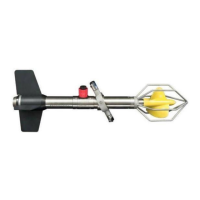
The Model 106 Current Meter is a versatile instrument designed for measuring water speed and direction, with optional capabilities for temperature and depth. It can operate in two primary modes: self-recording and direct reading, offering flexibility for various deployment scenarios.

Function Description

At its core, the Model 106 is an impeller-based current meter. It operates on a basic 1-second cycle, during which it counts impeller rotations and takes a single compass heading reading. From these measurements, East and North velocity vectors are calculated and then summed over a user-defined averaging period. If optional temperature and pressure sensors are fitted, these parameters are sampled once every sample period and also averaged over the same period. It's important to note that for very low flow speeds (in the order of a few centimeters per second), a reasonably long averaging period is recommended to enhance the resolution and accuracy of the flow measurements.

The instrument incorporates a data acquisition micro-controller, operating at a 12-bit resolution. The temperature and depth sensors, if present, sample at a basic 16 Hz rate sequentially.

In self-recording mode, the Model 106 logs raw data internally. For real-time operation, the instrument's software uses built-in calibration constants to convert raw sensor data into actual temperature and pressure readings. When logged data is extracted, the raw data is transferred to a PC, where the accompanying Windows software automatically converts it into engineering units.

The Model 106 offers flexible power options. It can draw power from its internal battery, from the 8008 Control Display Unit (CDU) if used, or from an external surface battery or power supply. The internal battery, which can be either a 1.5V alkaline D cell or a 3.6V Lithium D cell, provides substantial operating life, ranging from approximately 30 to 90 days at a 10-second sampling rate, or even longer at a 5-minute sample rate. To assist users, the battery voltage is displayed in the DataLog x2 software, helping to determine remaining battery life.

The instrument is equipped with a 512K memory, capable of storing over 131,000 speed and direction records, or over 65,000 records if temperature and depth are also fitted, provided the data is stored in a single file. The 8008 CDU, if used, has its own 128K memory, allowing for storage of over 32,000 speed and direction records, or over 10,000 records with temperature and depth. Both the Model 106 and the CDU have a limit of 100 files.

Usage Features

The Model 106 can be configured and operated in several ways:

  • Self-Recording Mode: Instrument setup and data extraction are performed using a supplied Y lead connected from a PC to the external 10-way SubConn connector. For deployment in this mode, a 10-way SubConn switch cap must be fitted for the unit to operate.
  • Direct Reading Mode (PC Operation): For short cable lengths (up to about 50m), direct RS232 communications are possible via the external 10-way SubConn connector and a PC. For longer cable lengths, Digital Current Loop communications are necessary, requiring a separate Digital Current Loop Adapter if operating with a PC. While the internal D cell battery can power RS232 communications, using external power is recommended to extend battery life. External power should be in the range of 12 to 28V DC.
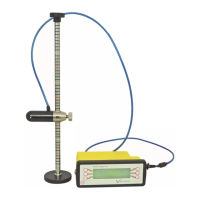
  • Direct Reading Mode (8008 Control Display Unit - CDU Operation): The 8008 CDU has an integral current loop adapter, enabling direct use with the Model 106 over long cable lengths without an additional adapter. The CDU is an ABS-constructed unit with a graphics LCD, backlight, membrane keys, and an integral battery compartment, sealed to IP67. It allows for real-time data display, parameter setting for the Model 106, and has an optional logging facility. However, it cannot upload logged data from the Model 106's memory; a PC is required for that function. The CDU itself can store up to 100 files, with each file containing numerous records.

Operating Procedure with 8008 CDU:

  1. Connection: Connect the CDU to the Current Meter using the Deck Lead and cable for Direct Reading or Both modes, or the 3m 'Y' Lead for Self-Recording mode.
  2. Power On: Press the ON key to switch on the unit.
  3. Initial Display: The unit displays options like RUN, SETUP, TOGGLE B'LIGHT, SET TIME/DATE, and CDU MEMORY.
  4. Set TIME/DATE: This is crucial as all timing references, including the fish time, are derived from it. Use INCREASE/DECREASE keys to adjust figures and NEXT to move between figures.
  5. TOGGLE BACK LIGHT: Switches the backlight on or off.
  6. CDU MEMORY: Controls the CDU's logging facility, which is independent of the Model 106's logging. This menu allows turning logging ON/OFF, viewing file tables, memory status, and extracting data to a PC via CDU Express software.
  7. SET UP: Allows setting sample and averaging periods. Pressing SETUP displays "PLEASE WAIT RESETTING FISH!!" followed by "INTERRUPTING FISH - PLEASE WAIT," then shows instrument type and serial number for acknowledgment.
    • SET SAMPLE PERIOD: Adjusts the sample frequency from 1 second up to 59:59 minutes.
    • SET AVERAGING PERIOD: Sets the averaging period as multiples of the sample period.
    • SET TARE VALUE: Used to take a surface pressure reading (if a sensor is fitted) before deployment, which is then subtracted from subsequent readings to show correct depth.
    • SET FISH TIME: Synchronizes the Model 106's time with the CDU's pre-set time.
    • CLR FISH MEM: Resets the Model 106's memory to zero.
    • RUN: Offers options to select DIR (direct reading), LOG (logging), or BOTH (direct reading and logging). Selecting LOG or BOTH configures the Model 106 to log data.
    • PROFILE MODE: If a pressure sensor is fitted, this mode displays pressure values updated at 1-second intervals, aiding profiling operations.
    • DISPLAY: Shows real-time data (SPEED, TEMP, PR, DIR) updated every averaging period.
  8. Data Replay: A PC and DataLog x2 software are required to recover data stored in the instrument after deployment. All data in a file must be extracted for that file to be read.
  9. Printer Output: The 8008 CDU can output data to an Epson FX-850 or compatible printer, with a serial data string format that varies based on the Model 106's fitted options.

Mechanical Installation:

The instrument comes with a suspension assembly for attachment to a suspension or mooring line. Users must ensure that the maximum working load of the cable (100kgf for Valeport polyurethane covered multi-core cable) is not exceeded, especially if a sinker weight is used.

Before deployment, two critical procedures must be followed for correct impeller operation:

  1. Impeller Filling: Unscrew the impeller nose cap, submerge the impeller to fill its inner part with clean water, then refit the nose cap underwater to seal the water inside.
  2. Meter Balancing: Due to varying material densities and salinities, the meter's balance can be affected. The suspension assembly can be adjusted along the main body to compensate. This involves loosening a 2.5mm socket countersunk screw on the lock ring, immersing the meter to adjust the suspension assembly until the unit sits horizontally, and then tightening the screw. Failure to follow these steps can decrease operating efficiency, accuracy, and impeller life.

Configuration and Data Download:

The Model 106 is supplied with DataLog x2 software for setup, data offload, and display, offering alphanumeric and graphical options. A separate manual details its operation. When using the setup wizard in DataLog x2, if no changes are made, the 'Finish' button may be greyed out. To resolve this, simply type a '#' into the command window to make the 'Finish' button available. After configuration, the instrument will be in a paused state and requires a command (#028 in Terminal window), a RUN button click in DataLog x2, or disconnecting/reconnecting the Power/Comms cable to activate.

Maintenance Features

Regular maintenance is essential to ensure the longevity and accuracy of the Model 106.

  • Battery Replacement (Model 106): The single D cell battery is located at the front end of the instrument.

    1. Remove the four M3 titanium countersunk screws on the impeller side of the central bulkhead.
    2. Gently slide the outer housing and impeller assembly off the bulkhead, being careful not to scratch or damage the internal bore.
    3. Insert a new D cell (alkaline recommended for increased life and leakage protection) into the battery cage with contacts facing the front, ensuring the connector lead is secure.
    4. Before reassembly, inspect the O-rings for cuts or perishing and the sealing bores for scratches. Apply a light coating of silicon grease to O-rings and sealing bores to aid refitting.
    5. Reassemble by reversing the disassembly process. If any M3 screws are lost, replace them only with titanium M3 x 6 countersunk screws to prevent galvanic corrosion.
  • Battery Replacement (8008 CDU): The 8008 CDU uses eight "C" cells (LR14 or equivalent), housed under the battery cover.

    1. Remove the battery cover.
    2. Remove the top PCB by undoing the retaining screw to access the battery cells.
    3. Insert new alkaline "C" cells (recommended) with the negative end against the spring.
    4. Screw the top PCB back into place.
    5. Before replacing the battery cover, inspect the O-rings and sealing bores for damage. Apply a light coating of silicon grease to O-rings and sealing bores.
  • Impeller Maintenance:

    • Rotation Check: The impeller should rotate freely. This can be tested by positioning the instrument vertically and spinning the impeller. Note that when horizontal and not in water, the impeller may not rotate freely due to dry bearings and lack of neutral buoyancy.
    • Removal:
      1. Unscrew the impeller guard from the main body.
      2. Remove the yellow impeller nose cap.
      3. Remove the two M3 nuts from the impeller shaft.
      4. Slide the impeller off the shaft.
    • Cleaning: Wash the inside of the impeller and clean any residue from the impeller shaft.
    • Impeller Shaft Reset: If the impeller shaft needs resetting to ensure correct operation:
      1. Position the instrument with the shaft pointing upwards.
      2. Without the guard, replace the impeller on the shaft with the nose cone.
      3. Unscrew the nose cone to allow the impeller to rest against the instrument body hub face.
      4. Lightly hold the impeller down against the hub face, then slowly screw down the nose cone until it tightens and slightly lifts the impeller.
      5. Check the clearance between the nose cone and impeller end face; adjust the shaft to achieve 0.5 to 0.75mm clearance. Ensure the shaft and lock nut are tightened and recheck the gap.
      6. Refit the nose cone and impeller.
    • Refitting: Reassemble the impeller by reversing the removal steps.
  • General Maintenance:

    • The external parts are made from titanium and polymers, making them corrosion-resistant. The titanium may dull over time.
    • Keep the sensor end clean from mud and debris to maintain sensor accuracy.
    • After use, wash the instrument with clean water.
    • It is recommended to remove and wash the impeller assembly after use to prevent salt deposits that could affect performance.
    • If any problems arise, contact Valeport Limited for advice and support.
  • O-Ring Sizes: Specific O-ring sizes are provided for various components (Line connector, Bulkhead connector pro-cap, Bulkhead Connector/Housing, End Cap, sensor end, Centre section/housings). Anti-extrusion backing rings are used on the sensor end O-rings and should be placed on the pressure (seawater) side. The temperature sensor uses a Dowty seal type 303.

  • Lithium Back-Up Battery: The memory back-up lithium battery (Type T047BA9, 3.6V) should be replaced every 5 years, or if memory/clock settings are lost. While it's recommended to return the instrument to Valeport for replacement, urgent renewal can be done as follows:

    1. Remove the front battery housing section (as per battery replacement for the Model 106).
    2. The battery is connected to board 0104502 but is within the main bulkhead, requiring board removal.
    3. Remove screws from the two PCB support bars to gently remove the board, allowing the lithium battery to slide out.
    4. Remove the heat shrink tube, de-solder the old cell, solder wires to the new battery, and replace the heat shrink tube (19mm bore).
    5. Reassemble by reversing the procedure. Before replacing the rear tube, check O-rings and sealing bores for damage and apply silicon grease.
  • Calibration: Instruments are factory-calibrated using industry-standard methods, with a calibration certificate supplied. Impellers are group-calibrated at HR Wallingford, allowing them to be changed without recalibration. The calibration uses a seventh-order polynomial. If users need to recalibrate, the calibration constants within the instrument can be changed, and Valeport should be contacted for guidance on this procedure.

Valeport 106 Specifications

General IconGeneral
Accuracy±0.01% FS
Resolution0.001% FS
Power Supply9-30V DC
Housing MaterialTitanium
OutputRS232, RS485, SDI-12

Related product manuals