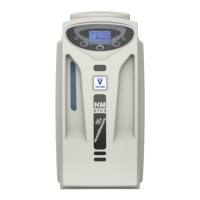
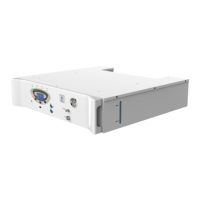
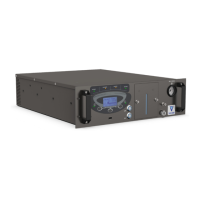
The VICI DBS HP Plus Tower/Rack is a nitrogen generator that utilizes a combination of filtration and pressure swing adsorption (PSA) technology to produce ultra-pure nitrogen. It is designed for various applications, including sensitive ones like GC carrier and make-up gas, where hydrocarbon removal to less than 0.1 ppm is crucial.
Function Description:
The device operates by filtering standard compressed air through high-efficiency coalescing filters, removing contaminants down to 5 microns. For models with catalyst, an additional heated catalyst module ensures hydrocarbons are removed to less than 0.1 ppm. The air then passes through two columns filled with a proprietary blended carbon molecular sieve (CMS), which adsorbs oxygen (O2), carbon dioxide (CO2), and moisture. These adsorbed gases are then desorbed to the atmosphere during a pressure swing cycle, leaving a supply of ultra-pure nitrogen. The HP Plus Tower is designed for vertical placement, while the HP Plus Rack can be placed on a table or in a 19-inch rack cabinet. Both require unobstructed back panels for proper fan operation.
Important Technical Specifications:
Models & Specs - Without Catalyst:
- Flow mL/min: 500, 750, 1000, 2000, 4000
- Purity: >99.999% (for 500-2000 models), 99% (for 4000 model)
- Hydrocarbon purity (measured as methane): n/a
- Dewpoint °C (°F): -50 (-58)
- Outlet pressure barg (psig): Up to 5 (75)
- Inlet pressure barg (psig): 7 to 10 (100 to 145)
- Actual inlet air requirement liters @ 8 barg (psig): 11 (159.5) to 24 (348.1) depending on model
- Recommended compressor air inlet @ 8 barg (psig): 22 (319.1) to 48 (696.2) depending on model
- Pressure drop barg (psig): 1.5 (22)
- Inlet air quality: Clean dry compressed air ISO8573-1:2010 Class 1.2.1
- Technology: Carbon molecular sieve
- Warm up time minutes: 60
- LED indicators: Power on/off, system ready, errors
- Electrical supply: 110-120V 60Hz / 220-240V 50 Hz
- Power consumption watts: 12
- Noise level: Minimal
- Dimensions mm (in): 175W x 490H x 670D (6.9W x 19.3H x 26.4D)
- Weight kg (lb): 22.4 (49.4) to 26.1 (57.5)
- Shipping dimensions mm (in): 795W x 435H x 630D (31.3W x 17.1H x 24.8D)
- Shipping weight kg (lb): 26.4 (58.2) to 32 (70.5)
- Operating temp °C (°F): 15 to 35 (59 to 95)
- Inlet connection: 1/4" Compression
- Outlet connection: 1/8" Compression
- Certification: CE, FCC
Models & Specs - With Catalyst:
- Flow mL/min: 200, 500, 750, 1000, 2000, 4000 (for Tower models), 500 (for Rack model)
- Purity: >99.999% (for 200HC-2000HC models), 99% (for 4000HC model), >99.999% (for Rack 500 model)
- Hydrocarbon purity (measured as methane): <0.1 ppm
- Dewpoint °C (°F): -50 (-58)
- Outlet pressure barg (psig): Up to 5 max (75)
- Inlet pressure barg (psig): 7 to 10 (100 to 145)
- Actual inlet air requirement liters @ 8 barg (psig): 11 (159.5) to 24 (348.1) depending on model
- Recommended compressor air inlet @ 8 barg (psig): 22 (319.1) to 48 (696.2) depending on model
- Pressure drop barg (psig): 1.5 (22)
- Inlet air quality: Clean dry compressed air ISO8573-1:2010 Class 1.2.1
- Technology: Carbon molecular sieve
- Warm up time minutes: 60
- LED indicators: Power on/off, system ready, errors
- Electrical supply: 110-120V 60Hz / 220-240V 50 Hz
- Power consumption watts: 270
- Noise level: Minimal
- Dimensions mm (in): 175W x 490H x 670D (6.9W x 19.3H x 26.4D) for Tower models; 19"W x 3UH x 500D (19W x 3UH x 19.6D) for Rack model
- Weight kg (lb): 24.9 (54.9) to 28.6 (63) for Tower models; 25 (55.1) for Rack model
- Shipping dimensions mm (in): 795W x 435H x 630D (31.3W x 17.1H x 24.8D) for Tower models; 720W x 565H x 375D (28.3W x 22.2H x 14.7D) for Rack model
- Shipping weight kg (lb): 28.9 (63.7) to 34.5 (76) for Tower models; 29 (63.9) for Rack model
- Operating temp °C (°F): 15 to 35 (59 to 95)
- Inlet connection: 1/4" Compression
- Outlet connection: 1/8" Compression
- Certification: CE, FCC, MET
Usage Features:
- Front Panel Controls: The front panel features a luminescent LED bar, a time counter display, an On/Off button, an outlet pressure manometer, and an outlet pressure regulator (for Tower models) or a pressure gauge and pressure regulator (for Rack models).
- LED Light Band Indications:
- Off: Device is off, gas is blocked.
- Green - Solid: Startup check is okay.
- Blue - Solid: Device runs normally, and the optional catalyst has reached operating temperature (650°C +/- 40°C).
- Red - Blinking: Device is in alarm status.
- Blue - Blinking: Catalytic oven is heating up, gas generation is not blocked.
- Connections: Power supply, inlet air gas (Swagelok G 1/4"), outlet nitrogen gas (Swagelok G 1/8"), and a drain for the coalescent filter to an external tank.
- Voltage Selection: The device supports 115 V AC (50-60 Hz) and 210-230 V AC (50-60 Hz) with corresponding fuses (Standard: 2.0 AT). The current setting is indicated on the ID sticker on the back.
- Pressure Adjustment: Nitrogen pressure can be set from the front of the instrument, with an authorized range of 0 to 5 barg. Pressure is adjusted via a regulator knob and displayed on a manometer.
- Safety Features: General warnings, risk of asphyxia, oxidant material presence, WEEE symbol for disposal, and fuse location are indicated by symbols. Personal safety instructions emphasize the risk of oxygen depletion in low-volume rooms and the importance of checking O2 levels. Instrument safety instructions highlight the need for regular dust filter replacement and the power supply cable as an emergency disconnect.
Maintenance Features:
- Annual Maintenance Kit: Required every 12 months, this kit includes a replacement cartridge for the coalescent filter AF20 (4pcs.). More frequent replacement may be necessary depending on air quality.
- Three-Year Catalyst Replacement Kit: For catalyst versions, this kit is required every 3 years to ensure optimal removal of CO and HC to the 0.1 ppm level. It includes an oven/catalyst and a cooling coil.
- Filter Replacement Procedure:
- Remove the filter bowl by pressing the lever and turning it counterclockwise until arrows align.
- Unscrew the base element of the filter and remove the element.
- Insert the new element from the annual maintenance kit and reassemble in reverse order.
- Troubleshooting: The manual provides a table of common problems, their potential causes, and corrective actions, including checking plug-ins, replacing catalysts, checking inlet air pressure, changing CMS, checking/changing restrictors, and searching for gas leakages.
- Service and Warranty: Users are advised to refer to the service manual and contact the service department for any repairs. Opening the device without VICI DBS Service department agreement voids the warranty.
- Transport and Storage: The device should be transported in its original packaging with inlets and outlets protected. Storage conditions are -10°C to 45°C (50°F to 113°F) temperature, 10-90% relative humidity, shocks <1g, and vibrations <0.2g/5Hz, in a vertical position on a flat surface.
Alarms and Warnings:
- Warnings: A "Warmup" warning indicates the catalytic oven has not reached its working temperature (610°C / 1130°F), meaning the produced nitrogen is not yet hydrocarbon-free.
- Alarms: Indicated by a blinking red LED band and an 8-digit red number on the service display. Alarm types include:
- Temp. too low (n. 5): Catalytic oven temperature at steady state is under 610°C.
- Temp. too high (n. 6): Catalytic oven temperature is too high (>700°C).
- High pressure (n. 2): Inlet pressure is, or has been, too high (>9 bar).
- Low pressure (n. 1): Inlet pressure is, or has been, too low (<6.5 bar).
- Catalyst oven (option) expired (n. 4): The catalyst has expired and needs to be exchanged.

 Need help?
 General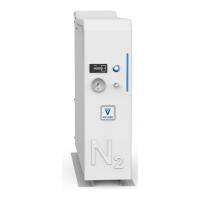

 To Next Page