88
Heating curve/cooling curve
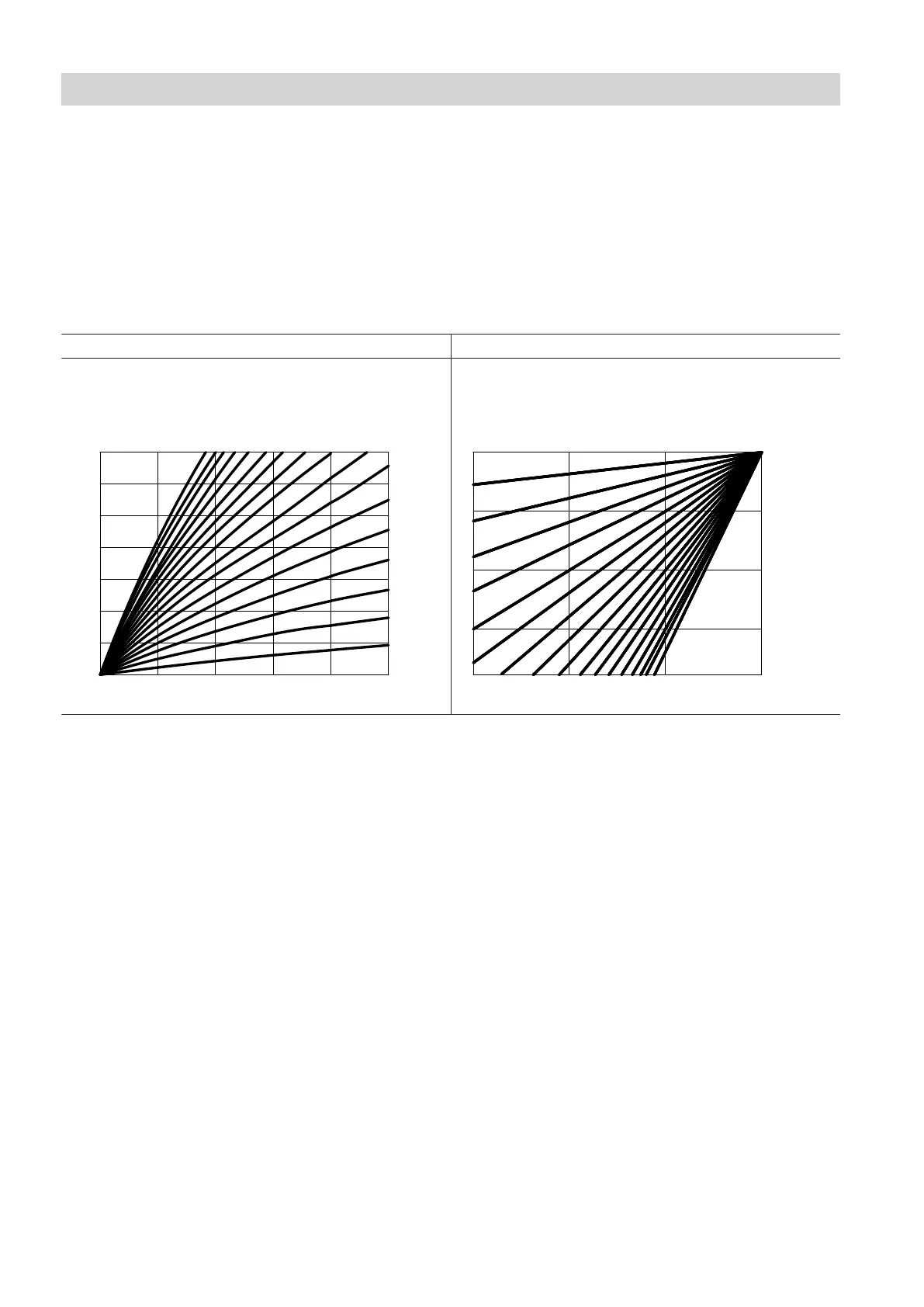
Heating and cooling curves represent the relationship
between the outside temperature, set room tempera-
ture and heating circuit flow temperature.
In order to guarantee sufficient heat at any outside
temperature, the conditions of your building and your
heating system must be taken into consideration. For
this, you can adjust the slope and level of the heating
curve separately for each heating circuit.
You can also adjust the cooling curve for cooling
mode.
Heating curve Cooling curve
The lower the outside temperature, the higher the flow
temperature in the heating circuit.
3.2
3.4
Flow temperature in °C
Outside temperature in °C
Heating curve slope
3.0
2.8
2.2
2.4
2.0
1.6
1.4
1.2
1.0
0.8
0.6
0.4
0.2
90
80
70
60
50
40
30
20
1.8
2.6
1020
-30
-20-100
The higher the outside temperature, the lower the flow
temperature in the cooling circuit.
1.2
30 25
20
35
Outside temperature in °C
Flow temperature in °C
1
5
10
15
20
1.4
1.6
1.0
0.8
0.6
0.4
0.2
1.8
2.0
2.2
3.4
3.0
2.6
Cooling curve slope
Example: setting the heating curve slope and level
The heating curves shown apply with the following set-
tings:
■
Heating curve level = 0
■
Standard room temperature (set room temperature)
= 20 °C
Appendix
Terminology (cont.)
5790940









 To Next Page