WWW.VORONDESIGN.COM
CAD version: ERCF V2
143143
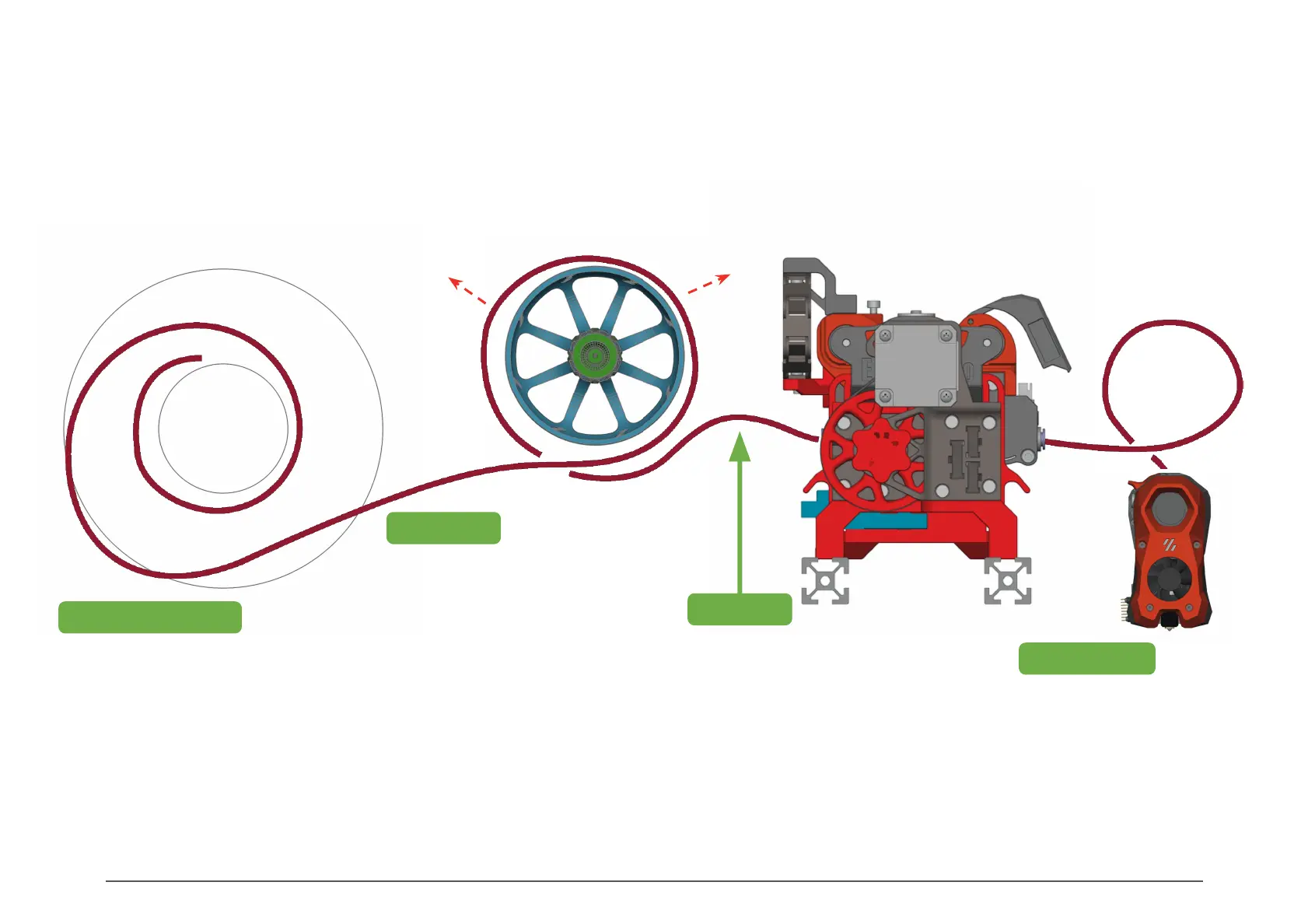
FILAMENT SPOOL
BEST PRACTICES FOR FILAMENT TUBE MANAGEMENT
It is important to optimize your tube path to reduce any resistance for your MMU setup.
This is to ensure that the path you choose does not go against the natural curl of your
filament. ERCT, as an example is designed to support many of these best practices.
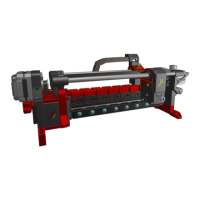
ERCF
Many buffer designs require
optimal paths that come into
the ERCF to reduce pressure
on the filament blocks. It is
important in reducing that
pressure by not allowing
downward orientations. The
tube as well should not be
too long or it meets
additional resistance.
The ideal location for your filament
spool will depend on how it feeds
the buffer. The curl should
naturally work with the path
(filament and tube) that goes into
the buffer. In this example feeding
around to the back and below
allows for the natural curl to
remain in the tube to the buffer.
FILAMENT TUBE MANAGEMENT
BUFFER
When the buffer is fed by the
filament, the natural curl
should also follow the wheel of
the buffer. Depending on the
choice of buffer design, this
should be configured in such
way, to follow the buffering
expansion. It is essential that
the buffer does not pull back
filament on the encoder.
A final turn to the toolhead
can help maintain the natural
curl. This doesn’t have to be
small, and can be a large
radius but shouldn’t be too
long that will introduce
additional resistance.
TOOLHEAD


 To Next Page