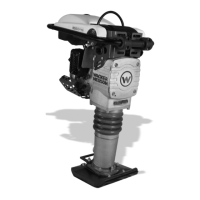
What to do if the muffler or exhaust port is dirty on Wacker Neuson Power Tools?
- MMr. Justin AcostaSep 13, 2025
If the muffler or exhaust port is dirty on your Wacker Neuson Power Tools, remove and clean the muffler, and clean the exhaust port.

What to do if the muffler or exhaust port is dirty on Wacker Neuson Power Tools?
If the muffler or exhaust port is dirty on your Wacker Neuson Power Tools, remove and clean the muffler, and clean the exhaust port.
| Brand | Wacker Neuson |
|---|---|
| Model | BS 600 |
| Category | Power Tool |
| Language | English |
Explains sources of engine emissions like CO, NOx, hydrocarbons.
Discusses regulations requiring emission control information.
Details acts that constitute tampering with emission control systems.
Lists symptoms indicating potential engine emission problems.
Recommends genuine parts for emission control system effectiveness.
Advises following the maintenance schedule for emission control.
Explains oxygenated fuels and their use with engine emissions.
Details use of methanol in gasoline and potential issues.
Outlines the warranty coverage for the emission control system.
Specifies warranty duration and coverage for emission-related parts.
Defines owner's responsibilities for maintaining warranty coverage.
Details warranty period, transferability, and repair process.
Explains the procedure for obtaining warranty service.
Lists items and conditions not covered by the warranty.
Limits Wacker's liability for damages and implied warranties.
Lists emission control systems and parts covered by the warranty.
Explains the safety alert symbol and DANGER, WARNING, CAUTION meanings.
Provides crucial safety precautions for operating the rammer.
Details specific safety measures for operating engines.
Outlines safety procedures for maintenance and repair.
Illustrates the location of various safety and information labels on the machine.
Describes the meaning of international pictorial safety labels used on the machine.
Explains the importance of the nameplate and patent status.
Describes the meaning of pictorial operating labels for controls.
Lists engine speed, spark plug, compression, and lubrication details.
Details sound pressure and power levels according to directives.
Provides hand/arm vibration level data as per regulations.
Shows overall dimensions of the rammer with diagrams.
Describes the intended uses for compacting soil and gravel.
Specifies the correct gasoline and oil ratio for the two-cycle engine.
Lists essential steps to take before starting the rammer.
Step-by-step guide on how to start the rammer engine.
Instructions on how to properly shut down the rammer engine.
Advises on keeping the rammer clean, dry, and avoiding no-load strokes.
Details how to achieve best compaction and avoid shoe wear.
A table outlining maintenance tasks and their frequency.
Procedures for cleaning and replacing the dual-element air cleaner.
Details on changing ramming system oil and checking sightglass.
Instructions for checking and tightening shoe hardware with torque specs.
Guidance on adjusting carburetor idle speed and rpm.
Steps for preparing the rammer for long-term storage.
Safety and practical advice for transporting the machine.