
 Need help?
Do you have a question about the Weber GENESIS SP-E-335 and is the answer not in the manual?
Defines hazard level terms used throughout the manual to emphasize critical information.
Immediate steps to take if a gas odor is detected: shut off gas, extinguish flame, open lid.
Prohibits storing flammable liquids or unconnected LP tanks near the grill.
Specifies that the grill must be used outdoors only in a well-ventilated area.
Explains the terms, limitations, and exclusions of the voluntary warranty.
Lists owner's duties for trouble-free warranty coverage, including registration.
Details the process for claims and lists common causes for warranty exclusion.
Specifies the duration of warranty coverage for various grill components.
Provides chemical exposure warnings mandated for California residents.
Overview of the grilling system, emphasizing its design and user experience.
Details on the INFINITY Ignition and tapered burner design for heat distribution.
Explains how angled Flavorizer Bars catch drippings to create smoke and flavor.
Describes the system that funnels drippings away from burners into a disposable tray.
Explains Liquefied Petroleum gas (LP), its properties, and how it becomes gas.
Crucial advice for safe management, transport, and storage of LP tanks.
Specifies requirements for LP tanks and the necessary regulator for safe operation.
Guides on correct tank placement and inspecting the tank valve for damage.
Step-by-step instructions for securely connecting the LP tank to the grill.
Emphasizes securing the hose with the clip to prevent fire or explosion hazards.
Explains the importance of leak checks and which fittings to test.
Detailed instructions for using soap and water solution to check for gas leaks.
Warning against using flames or sparks when checking for gas leaks.
Warning against storing spare LP tanks under or near the grill.
How to use the tank scale and indicator to check the remaining fuel.
Instructions for safely closing the valve, unscrewing the regulator, and removing the tank.
Further leak check advice for fittings after refilling and reinstalling the tank.
Procedure to heat the grill on high for 20 minutes before first use.
Routine checks and cleaning steps to perform before each grilling session.
How to clean the slide-out grease tray and catch pan to prevent fires.
Checking the gas hose for signs of cracking, abrasions, or cuts.
Explains why preheating is critical and the steps to perform it.
Best practice for cleaning grates with a brush after preheating.
Warning against lining the slide-out grease tray or cookbox with aluminum foil.
Advice on checking grill brushes for loose bristles and wear.
Instructions for igniting the grill's burners using the electronic ignition system.
Procedure for turning off all grill burners and the gas supply.
Safety warning to keep the grill lid open during ignition.
Procedure if ignition fails: turn off, wait five minutes, then retry.
How to use the high-heat sear zone for caramelizing food surfaces.
Steps to ignite the sear burner along with other grill burners.
Procedure to turn off all burners after completing searing.
Instructions for igniting the side burner using the electronic ignition.
Procedure to turn off the side burner and the gas supply.
Safety warning to keep the side burner lid open during ignition.
Explains the differences between direct and indirect heat grilling methods.
How to use direct heat for searing and cooking smaller, tender food items.
How to use indirect heat for larger cuts or delicate foods.
Emphasizes preheating for preventing sticking, searing, and flavor development.
Explains why grilling on clean grates is essential for food quality.
Advice on having all tools and ingredients ready before starting.
Tips for arranging food on the grates to allow for easy movement and cooking.
Highlights the importance of keeping the lid closed for faster, more flavorful cooking.
Guidance on flipping food only once for optimal searing and flavor.
Recommends using an instant-read thermometer for accurate doneness testing.
Encouragement to experiment with different recipes and techniques.
Guide on how to use the smoker box with wood chips for smoke flavor.
Method for positioning the smoker box for indirect heat cooking.
Method for positioning the smoker box for direct heat cooking.
Warning against using flammable fluids to ignite wood chips in the smoker box.
Instructions for cleaning ash from the smoker box before each use.
Details on the side storage area for accessories and grillware.
How to use the hooks on the cabinet for storing grates and accessories.
How to activate and use the built-in grill lighting system.
Comprehensive guide to cleaning the inside of the grill, recommended twice yearly.
Instructions for removing carbonized grease deposits from the inside of the lid.
Steps for cleaning cooking grates and scraping Flavorizer Bars.
How to clean burner ports and spider/insect screens for optimal performance.
Crucial safety reminder to turn off and cool the grill before any cleaning.
Steps for cleaning heat deflectors and scraping grease from the cookbox.
How to clean the angled slide-out grease tray and catch pan.
General methods for cleaning stainless steel, porcelain-enameled, and plastic surfaces.
Specific advice for cleaning stainless steel surfaces with non-abrasive cleaners.
Methods for cleaning painted, porcelain-enameled, and plastic components.
Advice for cleaning grills in harsh environments prone to surface rusting.
Identifies common symptoms and causes for main or side burner ignition failure.
Alternative procedure for igniting burners using a match if electronic ignition fails.
Steps to check for gas flow problems affecting burner ignition.
Information on how to contact retailers or visit weber.com for replacement parts.
Addresses issues like uneven heating, low flames, or erratic flame patterns.
Explains how obstructed spider screens affect burner flame and how to clean them.
Identifies potential leaks from damaged tank seals or incomplete regulator connections.
Addresses the cause of peeling paint-like flakes on the inside of the grill lid.
Explains how leftover food and internal grease cause flare-ups and how to prevent them.
Step-by-step instructions for replacing the size C batteries in the grill light.
Guidance on verifying the battery's presence, installation, and charge.
How to ensure ignition wires are securely connected to the button and module.
Verification of the ground wire's secure connection to the manifold bracket.
Cooking times and techniques for various red meat cuts like steaks and tenderloin.
Cooking times and techniques for pork cuts like brats, ribs, and tenderloin.
Cooking times and techniques for poultry like chicken and turkey.
Cooking times and techniques for seafood like fish fillets and whole fish.
Cooking times and techniques for various vegetables like corn, onions, and potatoes.
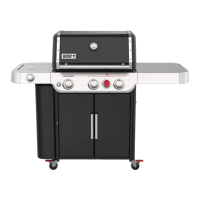
Diagram identifying all parts for the Genesis E-335 and S-335 models.
Diagram identifying all parts for the Genesis SE-S-335 model.
Diagram identifying all parts for the Genesis E-435 and S-435 models.
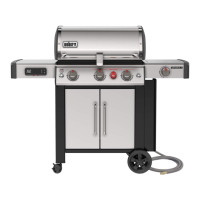
Diagram identifying all parts for the Genesis SP-E-335 model.
Diagram identifying all parts for the Genesis SL-S-435 model.
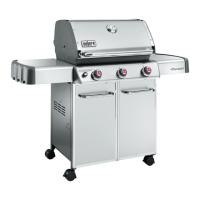
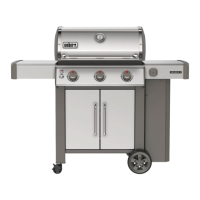
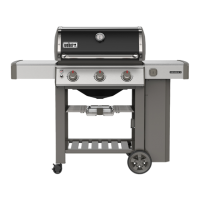
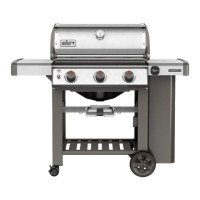
This document is the owner's manual for the Weber Genesis LP gas grill, covering models E-335, S-335, SE-S-335, SP-E-335, E-435, S-435, and SL-S-435. It provides comprehensive information on installation, operation, maintenance, and troubleshooting to ensure a safe and enjoyable grilling experience.
The Weber Genesis grill is designed for outdoor use only and features a high-performance grilling system. Key components include:
The manual also includes a grilling guide with approximate total grill times for various types of meat and vegetables, emphasizing that these are guidelines and factors like altitude and wind can affect cooking times. It encourages users to register their grill for special content and support.
 General
| Type | Gas Grill |
|---|---|
| Fuel Type | Liquid Propane |
| Number of Burners | 3 |
| Total Cooking Area | 669 sq in |
| Warranty | 10 years |
| Grates Material | Stainless Steel |
| Flavorizer Bars | Stainless Steel |
| Ignition | Electronic |
| Main Burner BTUs | 39, 000 BTU |
| Side Burner BTUs | 12, 000 BTU |


 To Next Page
