Choosing the correct position
First you need to choose the correct position in which to install your LINK 640.
Take the following into consideration:
•
Do not expose the LINK 640 to direct sunlight and/or high temperature for long periods to ensure prop-
er operation.
•
For optimal GNSS reception using the integrated GNSS receiver, the top of the device must not be ob-
structed by metal items.
•
For optimal cellular reception using the integrated cellular antenna, the device must not be placed on or
surrounded by metal items such as the vehicle’s coachwork closer than 5 cm (2 inches) and the top side
must not be obstructed by metal items.
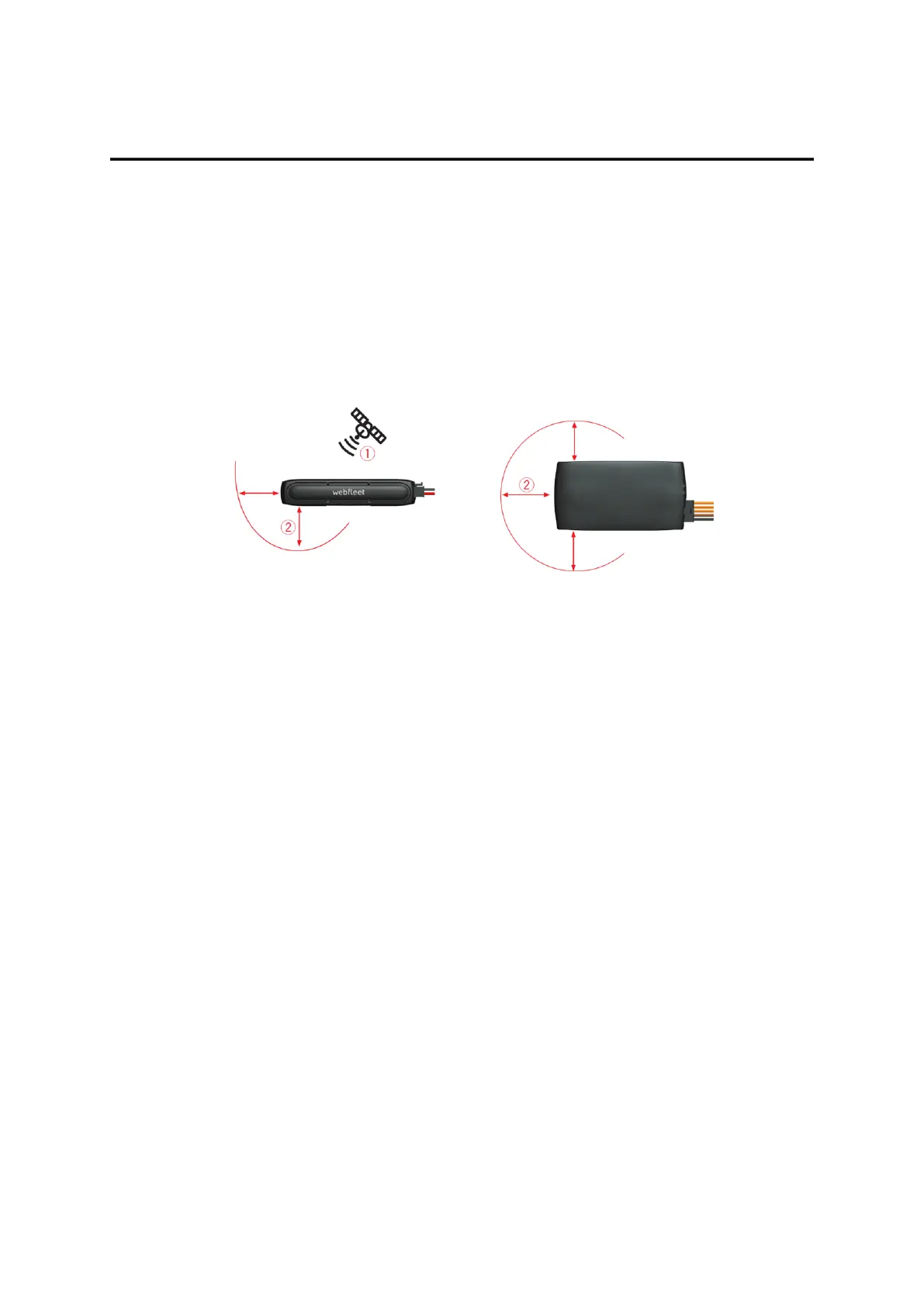
1. Top side of the device must not be obstructed by metal items.
2. Keep minimum distance of 5 cm (2 inches) to metal items.
Please consider the following to select the correct position for your device:
•
The device must be positioned with the top side pointing to the sky.
•
For optimal reception the device must be positioned so that it is unobstructed by metal objects.
•
The device must not interfere with clear vision for the driver.
•
Tinted metallised windscreens or those with integrated filament heating may block GNSS reception.
•
Place the unit a minimum of 5 cm (2 inches) distance to the coachwork or other metal items, so that op-
timal mobile network transmission and GNSS reception is ensured.
•
The unit must be placed on an oil free, dry and clean surface, when using the adhesive strips. Extreme
temperature changes/differences can affect the adhesive property of the strips.
•
The device must not be placed inside ventilation ducts.
•
The device and its cable must not block or impede vent controls, in the case the device is mounted near
ventilation ducts.
•
Do not mount the device close to other electrical components in the car like built-in alarms, gateway,
control units, navigation units or to toll collect devices where it could cause or receive interferences.
•
Before installing the device, please consider the safety instructions and choose the correct position.
12


 To Next Page