EasyManua.ls Logo

Westinghouse iGen2500c - User Manual

Westinghouse iGen2500c
30 pages
Print Icon
To Next Page IconTo Next Page
Loading...
USER MANUAL
DO NOT RETURN THIS PRODUCT TO THE STORE
If you have questions or need assistance, please call customer
service at 855-944-3571.
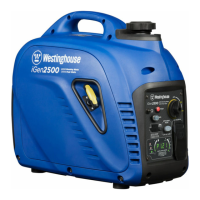
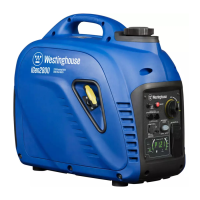
iGen2500c
Digital Inverter Generator
2200 Running Watts | 2500 Peak Watts

Questions and Answers

Summary

Specifications

Product Registration

Information and steps for registering your Westinghouse generator for warranty.

Safety

Safety Definitions

Explains the meaning of DANGER, WARNING, CAUTION, and NOTICE terms.

Safety Symbols

Lists and describes safety symbols found on the generator and in the manual.

Safety Instructions

Provides essential safety instructions for operating the generator.

General Safety Precautions

Outlines general precautions to take when using the generator.

Safety Labels and Decals

Identifies and explains safety labels and decals on the generator.

CO Sensor Information

Information about the carbon monoxide sensor and its function.

Action Label Guidance

Instructions for automatic shutoff situations.

Control Panel CO Auto-Shutoff

Details the CO auto-shutoff features on the control panel.

Fuel Safety Guidelines

Provides essential safety precautions related to fuel handling and storage.

Gasoline Hazards

Details the fire and explosion hazards associated with gasoline and its vapors.

Components

Generator Components Overview

Identifies and describes the external parts of the generator.

Digital Data Center Functions

Explains the functions of the digital display and its indicators.

Control Panel Component Details

Details the various controls and indicators on the generator's control panel.

Assembly

Carton Contents List

Lists the items included in the generator packaging.

Initial Oil Fill Procedure

Instructions and warnings for adding oil before first use.

Fuel Requirements

Specifies the type and grade of gasoline required for the generator.

Using Fuel Stabilizer

Guidance on using fuel stabilizer for extended storage.

Filling the Fuel Tank

Step-by-step instructions for safely filling the fuel tank.

Operation

Generator Location Guidelines

Guidelines for safely positioning the generator outdoors.

Generator Grounding

Explains the importance and procedure for grounding the generator.

High Altitude Operation

How altitude affects generator performance and adjustments.

Generator Break-In Period

Instructions for the initial break-in period of the generator.

Pre-Start Generator Checks

Checks to perform before starting the generator.

Starting the Generator Engine

Step-by-step guide for starting the generator engine.

Stopping the Generator Engine

Instructions for safely shutting down the generator.

Frequency of Use Guidance

Guidance on generator use and storage based on frequency.

Eco Mode Operation

How to use and benefits of the Eco Mode feature.

Overload Reset Procedure

Procedure for resetting the generator after an overload.

AC Circuit Breaker

Information on the circuit breaker and how to reset it.

Generator Capacity Management

How to determine the generator's power capacity requirements.

Power Management Strategy

Safely adding electrical loads to the generator sequentially.

Appliance Wattage Reference

Chart showing typical running and starting watts for appliances.

Extension Cord Safety and Usage

Warnings and guidelines for using extension cords.

Extension Cord Sizing Guide

Guide to selecting appropriate gauge extension cords.

Parallel Operation Instructions

Instructions for connecting two generators for increased power.

Generator Transporting

Safe practices for moving and transporting the generator.

Maintenance

Maintenance Schedule

Recommended maintenance intervals for optimal performance.

Replacement Parts List

List of common replacement parts and their part numbers.

Engine Service Cover Access

How to access engine components for service.

Air Filter Maintenance

Steps for cleaning and maintaining the air filter.

Engine Oil Level Check

Procedure for checking and maintaining the engine oil level.

Engine Oil Change Procedure

Instructions for performing an engine oil change.

Spark Plug Maintenance

How to inspect, clean, and gap the spark plug.

Spark Arrestor Service

Steps for cleaning the spark arrestor.

Valve Clearance Adjustment

How to check and adjust valve clearance.

Storage

Short Term Storage

Recommendations for storing the generator for less than 6 months.

Long Term Storage

Guidance for storing the generator for more than 6 months.

Draining the Float Bowl

Procedure to drain the carburetor float bowl.

Draining the Fuel Tank

Steps to drain the generator's fuel tank for storage.

Troubleshooting

Troubleshooting Common Issues

Common problems and their solutions.

Exploded View

Engine Exploded View

Diagram showing the engine components and their assembly.

Engine Parts List

A detailed list of engine parts with codes and descriptions.

Generator Exploded View

Diagram showing the generator components and their assembly.

Generator Parts List

A detailed list of generator parts with codes and descriptions.

Schematics

Electrical Schematics

Electrical diagrams and wiring schematics for the generator.

Summary

Specifications

Product Registration

Information and steps for registering your Westinghouse generator for warranty.

Safety

Safety Definitions

Explains the meaning of DANGER, WARNING, CAUTION, and NOTICE terms.

Safety Symbols

Lists and describes safety symbols found on the generator and in the manual.

Safety Instructions

Provides essential safety instructions for operating the generator.

General Safety Precautions

Outlines general precautions to take when using the generator.

Safety Labels and Decals

Identifies and explains safety labels and decals on the generator.

CO Sensor Information

Information about the carbon monoxide sensor and its function.

Action Label Guidance

Instructions for automatic shutoff situations.

Control Panel CO Auto-Shutoff

Details the CO auto-shutoff features on the control panel.

Fuel Safety Guidelines

Provides essential safety precautions related to fuel handling and storage.

Gasoline Hazards

Details the fire and explosion hazards associated with gasoline and its vapors.

Components

Generator Components Overview

Identifies and describes the external parts of the generator.

Digital Data Center Functions

Explains the functions of the digital display and its indicators.

Control Panel Component Details

Details the various controls and indicators on the generator's control panel.

Assembly

Carton Contents List

Lists the items included in the generator packaging.

Initial Oil Fill Procedure

Instructions and warnings for adding oil before first use.

Fuel Requirements

Specifies the type and grade of gasoline required for the generator.

Using Fuel Stabilizer

Guidance on using fuel stabilizer for extended storage.

Filling the Fuel Tank

Step-by-step instructions for safely filling the fuel tank.

Operation

Generator Location Guidelines

Guidelines for safely positioning the generator outdoors.

Generator Grounding

Explains the importance and procedure for grounding the generator.

High Altitude Operation

How altitude affects generator performance and adjustments.

Generator Break-In Period

Instructions for the initial break-in period of the generator.

Pre-Start Generator Checks

Checks to perform before starting the generator.

Starting the Generator Engine

Step-by-step guide for starting the generator engine.

Stopping the Generator Engine

Instructions for safely shutting down the generator.

Frequency of Use Guidance

Guidance on generator use and storage based on frequency.

Eco Mode Operation

How to use and benefits of the Eco Mode feature.

Overload Reset Procedure

Procedure for resetting the generator after an overload.

AC Circuit Breaker

Information on the circuit breaker and how to reset it.

Generator Capacity Management

How to determine the generator's power capacity requirements.

Power Management Strategy

Safely adding electrical loads to the generator sequentially.

Appliance Wattage Reference

Chart showing typical running and starting watts for appliances.

Extension Cord Safety and Usage

Warnings and guidelines for using extension cords.

Extension Cord Sizing Guide

Guide to selecting appropriate gauge extension cords.

Parallel Operation Instructions

Instructions for connecting two generators for increased power.

Generator Transporting

Safe practices for moving and transporting the generator.

Maintenance

Maintenance Schedule

Recommended maintenance intervals for optimal performance.

Replacement Parts List

List of common replacement parts and their part numbers.

Engine Service Cover Access

How to access engine components for service.

Air Filter Maintenance

Steps for cleaning and maintaining the air filter.

Engine Oil Level Check

Procedure for checking and maintaining the engine oil level.

Engine Oil Change Procedure

Instructions for performing an engine oil change.

Spark Plug Maintenance

How to inspect, clean, and gap the spark plug.

Spark Arrestor Service

Steps for cleaning the spark arrestor.

Valve Clearance Adjustment

How to check and adjust valve clearance.

Storage

Short Term Storage

Recommendations for storing the generator for less than 6 months.

Long Term Storage

Guidance for storing the generator for more than 6 months.

Draining the Float Bowl

Procedure to drain the carburetor float bowl.

Draining the Fuel Tank

Steps to drain the generator's fuel tank for storage.

Troubleshooting

Troubleshooting Common Issues

Common problems and their solutions.

Exploded View

Engine Exploded View

Diagram showing the engine components and their assembly.

Engine Parts List

A detailed list of engine parts with codes and descriptions.

Generator Exploded View

Diagram showing the generator components and their assembly.

Generator Parts List

A detailed list of generator parts with codes and descriptions.

Schematics

Electrical Schematics

Electrical diagrams and wiring schematics for the generator.

Overview

The Westinghouse iGen2500c is a digital inverter generator designed for portable power needs, offering a balance of power, efficiency, and safety features. It's built for continuous operation in various ambient temperatures, with specific guidelines for storage and use in extreme conditions.

Function Description:

The iGen2500c is a digital inverter generator that provides electrical power for various applications. It converts mechanical energy from its engine into stable AC electrical power suitable for sensitive electronics. A key feature is its CO Sensor, which monitors carbon monoxide levels around the generator and automatically shuts down the engine if hazardous levels are detected, enhancing user safety. The generator also includes an Eco Mode to optimize fuel consumption and reduce noise by adjusting engine RPM based on the load. It can be used independently or in parallel with another compatible Westinghouse inverter generator for increased power output.

Important Technical Specifications:

  • Running Watts: 2200 Watts
  • Peak Watts: 2500 Watts
  • Rated Power @1.0 Power Factor: 1.8 kW (Gasoline)
  • Peak Power: 2.2 kVA (Gasoline)
  • Rated Voltage: 120V
  • Rated Frequency: 60 Hz @ 3600 RPM
  • Phase: Single phase
  • Total Harmonic Distortion (THD): ≤ 3% (making it safe for sensitive electronics)
  • Engine Displacement: 80 cc
  • Starting Type: Recoil
  • Fuel Capacity: 1.14 Gallons (4.3 Liters)
  • Fuel Type: Unleaded gasoline, 87-93 Octane*, with ethanol content of 10% or less. E15 or E85 are NOT to be used.
  • Oil Capacity: 0.37 qt. (11.8 oz.)
  • Oil Type: SAE 10W-30 (recommended, with temperature-based alternatives)
  • Spark Plug: E6RTC
  • Spark Plug Gap: 0.024 - 0.032 in. (0.60 - 0.80 mm)
  • Valve Intake Clearance: 0.0031 - 0.0047 in. (0.08 - 0.12 mm)
  • Valve Exhaust Clearance: 0.0051 - 0.0067 in. (0.13 - 0.17 mm)
  • AC Grounding System: Floating neutral
  • Voltage Regulator: Digital
  • Alternator Type: Permanent magnet
  • Maximum Ambient Temperature: 104°F (40°C) for continuous operation. Can operate from 5°F (-15°C) to 122°F (50°C) for short periods.
  • Certifications: EPA, CARB
  • Receptacles: 120 Volt AC, 20 Amp Duplex NEMA 5-20R (maximum 20 Amps), Two-port 5V/2.1A USB outlet (Type A USB plugs).
  • Parallel Operation Outlets: For connecting with compatible Westinghouse Inverter Generators.

Usage Features:

The iGen2500c is designed for outdoor use, far from windows, doors, and vents, to prevent carbon monoxide poisoning. It features a user-friendly control panel with a digital data center that displays crucial information such as remaining run time, power output (kW), fuel level (liters), voltage output (V), and lifetime hours.

  • Starting the Engine: The generator is started using a recoil handle. The fuel knob has "choke," "run," and "off" positions. For proper break-in, the generator should not exceed 50% of its rated running watts (900 watts) for the first five hours of operation, with occasional load variations.
  • Stopping the Engine: All electrical loads must be disconnected before stopping. The generator should run with no load for a few minutes to stabilize internal temperatures, then the fuel knob is turned to "off."
  • ECO Mode: This feature minimizes fuel consumption and noise by adjusting the engine RPM to the minimum required for the current load. It's recommended for small appliances with continuous loads and should be turned off for large surge loads.
  • Overload Reset: If overloaded or a short circuit occurs, the generator automatically switches off AC output. The engine continues to run, and the OVERLOAD LED illuminates. To restore power, all loads must be unplugged, the RESET button pressed, and the circuit breaker reset if tripped.
  • CO Sensor: A critical safety feature, the CO Sensor detects carbon monoxide accumulation and automatically shuts down the engine if levels are too high. A flashing RED light indicates a CO shut-off, while a flashing YELLOW light indicates a CO sensor system fault.
  • Parallel Operation: Two compatible Westinghouse Inverter Generators can be linked using a parallel cord (sold separately) for increased power output. ECO Mode should not be used during parallel operation with large surge loads.
  • High Altitude Operation: For altitudes over 5,000 ft. (1524 m), a high altitude adjustment kit (Part# 202801) is required to prevent decreased performance, increased fuel consumption, and emissions. Operating below 2,000 ft. with the kit installed can damage the engine.
  • Power Management: To prolong the generator's life, loads should be added sequentially, starting with the largest, allowing the generator to stabilize after each connection.

Maintenance Features:

Regular maintenance is crucial for optimal performance and extended service life. The manual provides a detailed maintenance schedule.

  • Engine Oil: Check before each use. Change after the first 25 hours or first month, then every 50 hours or every 6 months (more frequently under heavy load or high temperatures). The generator is shipped without oil and must be filled before the first start.
  • Air Filter: Clean every 50 hours of use or six months (more often in dusty environments). The foam air filter element is oil-soaked and should be cleaned with household detergent soap and warm water, then re-oiled.
  • Spark Arrestor: Inspect and clean every 100 hours of use or six months. Carbon deposits should be removed with a wire brush.
  • Spark Plug: Inspect and clean every 100 hours of use or six months. Replace every 300 hours of use or every year. The gap should be measured and adjusted if necessary. Only Westinghouse OEM or compatible non-resistor-type spark plugs should be used.
  • Valve Clearance: Checking and adjusting valve clearance must be done when the engine is cold. This is a more advanced maintenance task.
  • Fuel System: For storage longer than one month, a fuel stabilizer should be added. For storage longer than six months, the fuel tank and carburetor float bowl should be drained to prevent fuel deterioration and deposits. The generator should be run until the engine stops to ensure all fuel is consumed.
  • Storage: The generator should be stored in a well-ventilated, dry location, away from ignition sources. It should be allowed to cool for at least 30 minutes before storage. All protective covers should be replaced. For long-term storage, a teaspoon of engine oil should be added to the cylinder, and the recoil handle pulled until resistance is felt to prevent internal corrosion.

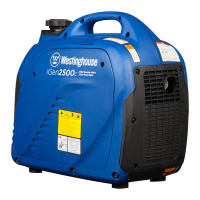
Westinghouse iGen2500c Specifications

General IconGeneral
BrandWestinghouse
ModeliGen2500c
CategoryPortable Generator
LanguageEnglish

Related product manuals