EN-24
BPM Core
v1.0 | July 2019
Analysing my ECG recordings
After a successful ECG recording, you will receive one of the following
information:
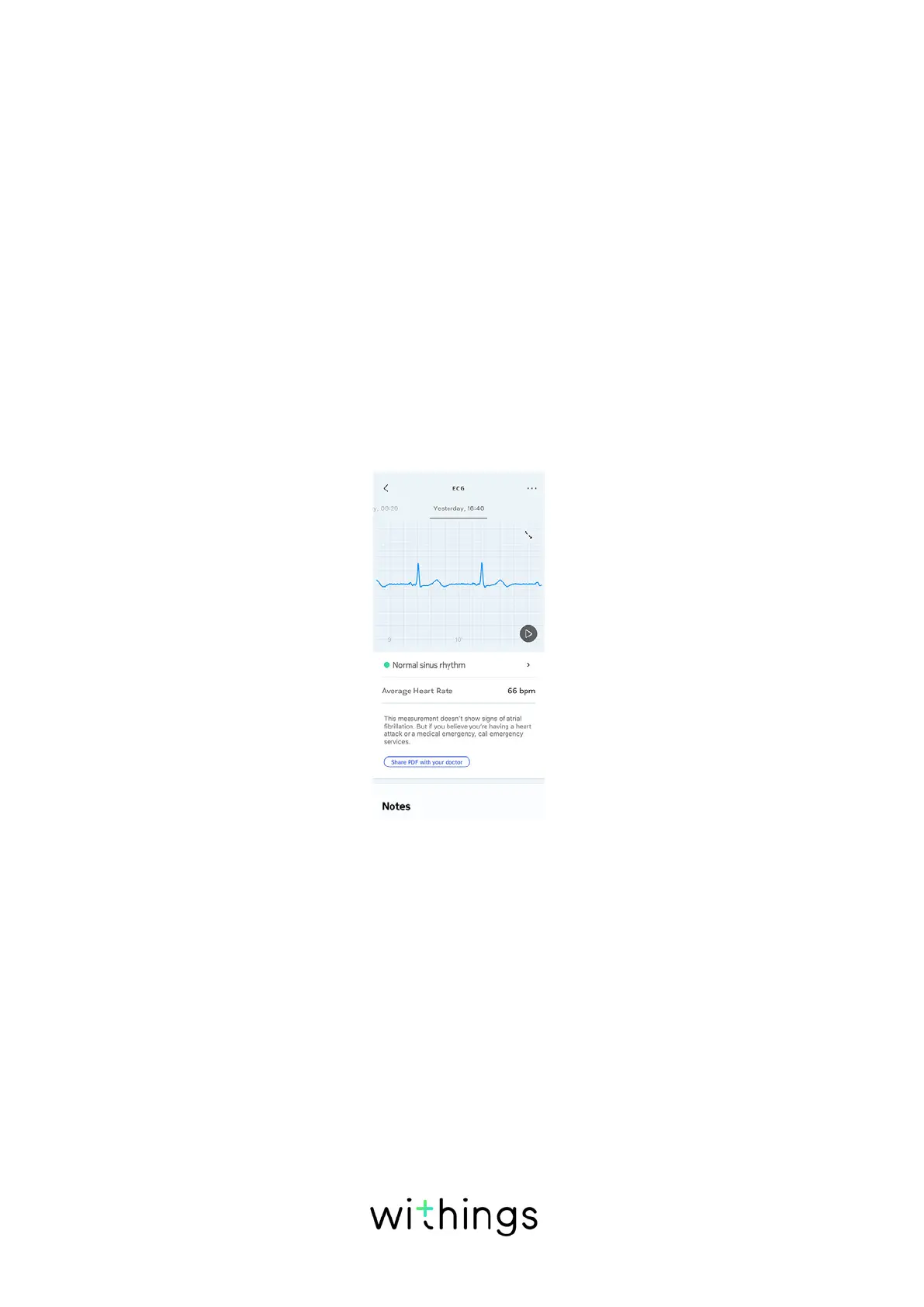
• Normal Sinus Rhythm: A normal sinus rhythm means the heart is beating in a
uniform pattern between 50-150 bpm.
• Atrial Fibrillation: AFib is the most frequent form of heart rhythm disorder,
it can lead to heart failure and it is a major risk for stroke. AFib is a frequent
condition as populations are getting older. High blood pressure and obesity
can also lead to AFib. Some people who have AFib don’t know they have it
and don’t have any symptoms. Others may experience one or more of the
following symptoms: irregular heartbeat, palpitations, shortness of breath. If
you are experiencing any symptoms or have concerns, please contact your
physician.
• Low or High Heart Rate: A heart rate under 50 bpm or over 150 bpm
aects the ECG app’s ability to check for AFib. The recording is considered
inconclusive.
The ECG data is analyzed to determine if it is 30-seconds long, and, if so, if either
Sinus Rhythm or AFib is present, or if an Inconclusive result is warranted.
Inconclusive ECG results may mean that:
• There may have been too much artifact or noise to acquire a good signal,
• You may have an arrhythmia other than AFib the app cannot classify,
• Your heart rate is below 50 bpm or above 150 bpm.
a. A heart rate can be low because of certain medications or if electrical
signals are not properly conducted through the heart. Training to be an elite
athlete can also lead to a low heart rate.
b. A heart rate can be high because of exercise, stress, nervousness alcohol,
dehydration, infection, AFib, or another arrhythmia.


 To Next Page