7 SERVICE AND MAINTENANCE
7-1
Neutral Adjustment
Neutral refers to the machine movement when the
engine is set to full throttle, parking brake is o, and
the control levers are in the neutral position.
The machine should not move forward or backward
in this state. If it does, the neutral setting must be
adjusted by using the Return-to-Neutral (RTN) device
built into the linkage of the hydraulic pump.
Preferred Method
1. Lift the rear drive wheels o the ground using a
jack and stands.
2. Lift Seat
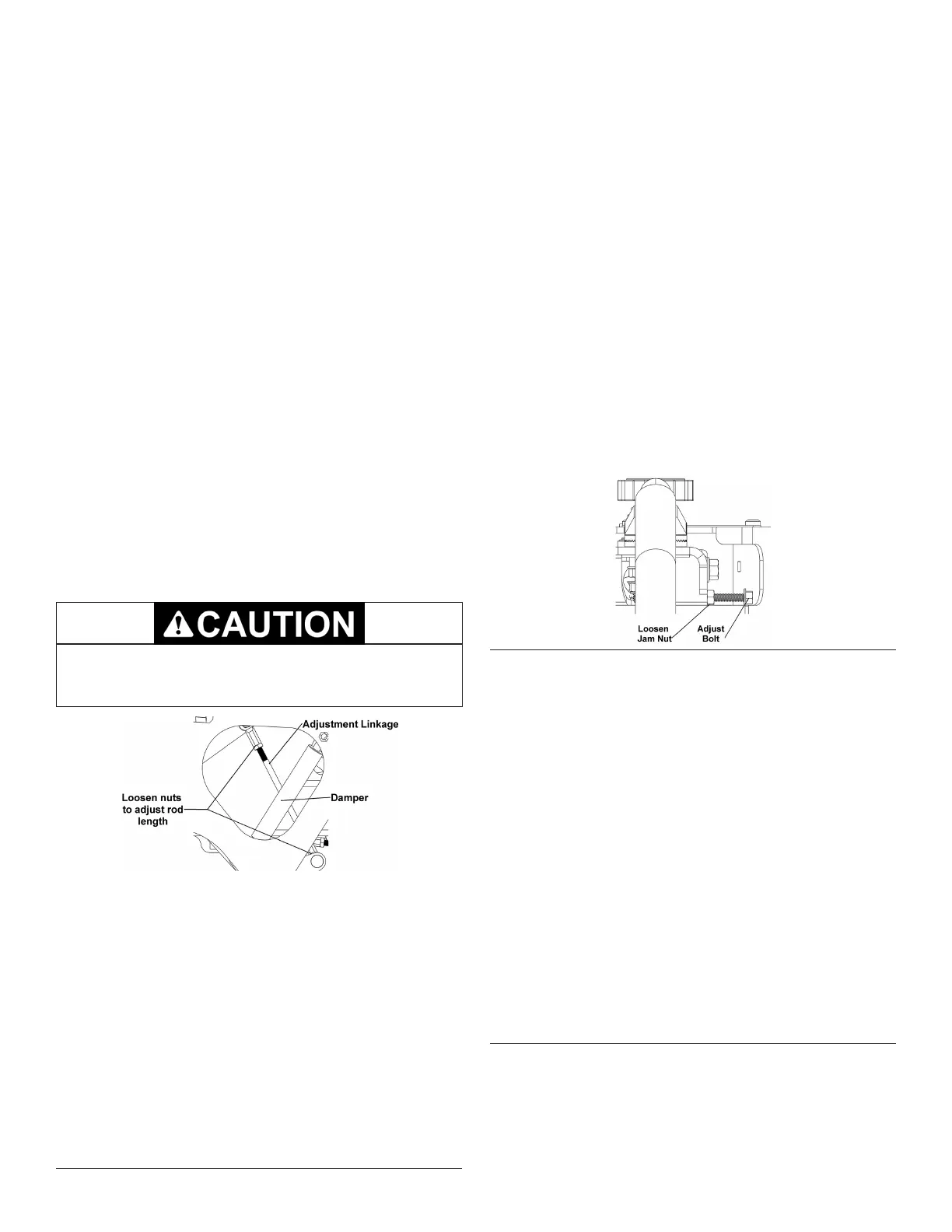
3. Loosen Top (Left Hand Thread) and Bottom
(Right Hand Thread) 5/16 nuts on the short Rod
with a ½” wrench
a. If wheels are moving Forward turn
counterclockwise to lengthen rod.
b. If wheels are turning in Reverse turn rod
clockwise to shorten rod.
4. Once Wheels are in Neutral tighten 5/16 Jam
nuts
5. Check tracking and adjust if necessary.
DO NOT adjust rod connected directly to the
pump. ONLY make adjustments to the linkage
shown.
Alternate Method
1. Lift the rear drive wheels o the ground using a
jack and stands.
2. Remove rear wheels
3. Loosen the ¼” Allen bolt on the pump.
4. Rotate the RTN device on the pump
corresponding to the wheel that needs
adjustment. Stop when the neutral position is
found.
5. Retighten the ¼” Allen bolt. Do not over tighten.
6. Check tracking and adjust if necessary.
Tracking Adjustment
Check Machine Tracking
1. Ensure rear tire pressure is equal on both sides.
2. Drive at full throttle in a level parking lot.
3. Check if the machine drives straight when both
control levers are in the full speed position. If it
does not, tracking adjustment is needed
Adjust Machine Tracking
1. Ensure machine is parked and engine is o.
2. Use a 7/16” wrench to loosen the ¼” Jam nut
on the control tracking adjust
3. Use a 3/8” wrench to adjust ¼” tracking bolt
a. If machine tracks to the left: loosen the right
tracking bolt or tighten the left tracking bolt.
b. If machine tracks to the right: loosen the left
tracking bolt or tighten the right tracking bolt.
4. Tighten ¼” nut with 7/16” wrench.
Tire Maintenance and Pressure
• Excessively worn tire tread is dangerous on all
hills. Replace drive tires with less than 3/32” of
any tread groove left.
• Use tires with the tread pattern recommended
by Wright Mfg., Inc. only.
• Keep the drive tire pressure between 12-18 psi.
Factory setting is 18 psi.
• Always check deck pitch after adjusting tire
pressure
• Higher pressures cause the tires to have less
traction, decreasing safety, speed and ride
quality
• Front Casters are equipped with non-pneumatic
tires and do not require any air. They do not
have any tread but should be replaced when
excessively worn.
Troubleshoot No-Start Condition
1. Check that the battery is fully charged. If the
battery repeatedly dies, check the regulator
and charge wire going from the regulator to the
starter battery stud.


 To Next Page