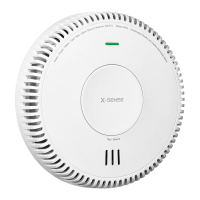
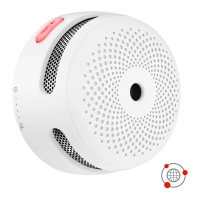
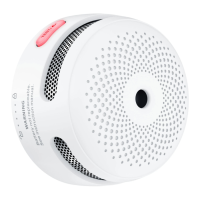
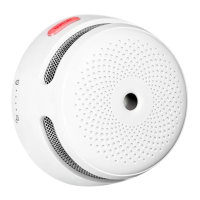
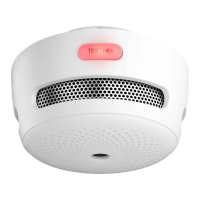
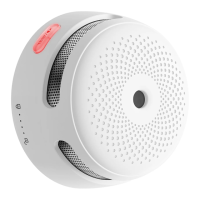
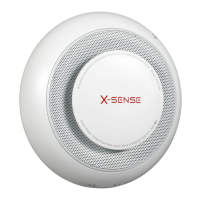
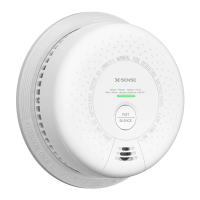
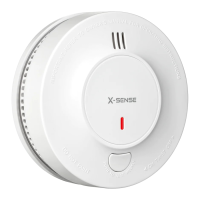
The X-Sense Combination Smoke and Carbon Monoxide Alarm (XP01) is a safety device designed to detect both smoke and carbon monoxide (CO) in indoor environments. This alarm utilizes photoelectric technology for smoke detection, which is particularly effective at identifying large particles typically produced by smoldering fires. For carbon monoxide detection, it employs electrochemical sensing technology, enabling early detection of increased CO levels.
Function Description:
The primary function of this device is to alert occupants to the presence of smoke or dangerous levels of carbon monoxide, thereby enhancing safety in the home. It is designed to conform with regulatory requirements, including UL 217 and UL 2034 standards. The alarm features a distinct sounder and an LED indicator (red/green/yellow) to communicate different states and types of alarms.
When a smoke alarm sounds, it indicates the presence of smoke. The alarm is designed to minimize false alarms from common sources like cigarette smoke, unless blown directly into the unit. It incorporates nuisance alarm protection to reduce the impact of cooking particles, though large quantities of combustible particles from spills or broiling could still trigger an alarm if the unit is too close to the cooking area. In the event of a smoke alarm, users are advised to check for fires, follow planned escape routes, alert small children, and move to a predetermined meeting place outside. It's crucial not to re-enter the premises until fire officials give the go-ahead. The manual also highlights situations where a smoke alarm may not be effective, such as smoking in bed, unsupervised children, cleaning with flammable liquids, or fires where smoke is obstructed from reaching the detector.
When a carbon monoxide alarm sounds, it indicates the presence of CO, a colorless, odorless, and tasteless gas that can be fatal. The alarm's activation signifies a potentially life-threatening situation. Upon a CO alarm, users should immediately operate the test/reset button, call emergency services, and move to fresh air outdoors or by an open door/window. A head count should be performed to ensure all persons are accounted for. Re-entry to the premises is not advised until emergency services have arrived, the area has been aired out, and the alarm returns to its normal condition. If the alarm reactivates within a 24-hour period after following these steps, a qualified appliance technician should be called to investigate for CO sources from fuel-burning equipment and appliances. The manual emphasizes that CO poisoning symptoms can mimic the flu, including dizziness, fatigue, weakness, headache, nausea, vomiting, sleepiness, and confusion. Unborn babies, small children, pregnant women, senior citizens, and individuals with heart or respiratory problems are at higher risk. Annual inspection and cleaning of heating systems, vents, chimneys, and flues by a qualified technician are recommended. Conditions that can lead to transient CO situations include excessive spillage or reverse venting of fuel-burning appliances, negative pressure from exhaust fans, simultaneous operation of multiple fuel-burning appliances, loose vent pipe connections, obstructed vent pipe designs, extended operation of unvented fuel-burning devices, temperature inversions, and idling cars in or near attached garages.
Usage Features:
The alarm unit includes a "Test & Silence Button" which serves multiple purposes. Weekly testing of the alarm's electronics and sounder is recommended by pressing this button until a short beep is heard, indicating entry into test mode. During a test, the alarm will sound, and the LED will flash red, which is normal and does not indicate the presence of smoke or CO. If the button is pressed during an alarm state, the unit will enter silence mode. For CO silence mode, if the CO density still exceeds the alarm threshold within 6 minutes, the unit will re-enter an alarm state; otherwise, it will exit silence mode after 9 minutes. It's important to note that silence mode cannot be enabled if smoke or CO concentration has reached an alarm level, and the unit will continue to alarm until levels decrease.
The LED indicator flashes in conjunction with the alarm sounder and provides visual cues for various states: powering on, standby, smoke or CO alarm, exiting an alarm state, test mode, low battery, silence mode, fault, and end-of-life. A low battery is indicated by a yellow LED flash and one beep every 60 seconds. Pressing the test button during a low battery signal will temporarily silence it for 10 hours. The alarm has a maximum lifetime of 10 years. Upon reaching this limit, it delivers 2 beeps, and the LED indicator flashes yellow twice every 30 seconds, signaling end-of-life. This signal can be temporarily silenced for 3 days by pressing the test button, with a total silence period of 30 days. After 30 days, the end-of-life signal cannot be silenced.
Installation involves drilling three holes, inserting anchor plugs, and attaching the mounting bracket with screws. The alarm unit is then mounted onto the bracket by pushing and twisting clockwise until it locks into place without gaps. A unique feature is that the alarm automatically activates when properly attached to the mounting bracket. It is crucial to ensure proper installation, as an improperly mounted alarm will not turn on or may power off if the bracket is removed.
Maintenance Features:
To ensure proper operation, weekly testing of the alarm's sound and indicators is recommended. The unit should be removed from the ceiling/wall monthly for cleaning. The alarm cover and vents should be cleaned with a soft brush attachment to remove dust and dirt. Users should never use detergents or other solvents, spray air fresheners, hair spray, or other aerosols near the alarm, or paint the unit, as this can seal the vents and interfere with sensor functionality, voiding the warranty. Disassembly of the unit is also prohibited. After cleaning, the smoke/CO alarm should be promptly returned to its proper location to maintain continuous protection. When household cleaning supplies or similar contaminants are used, the area should be well-ventilated. The manual explicitly warns against using vehicle exhaust to test the unit, as it can cause permanent damage and void the warranty. It also advises against standing close to the alarm when it is sounding, as exposure at close range can be harmful to hearing.


 To Next Page
 General