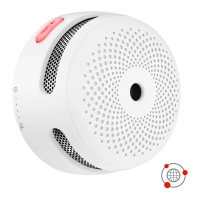
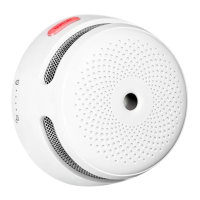
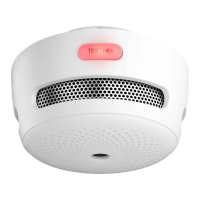
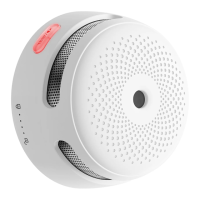
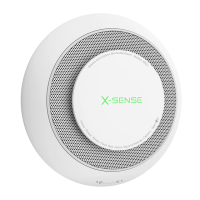
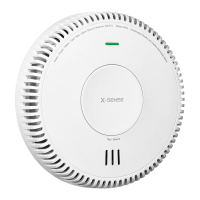
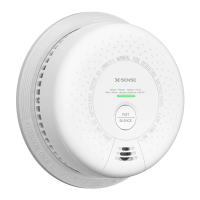
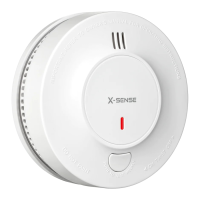
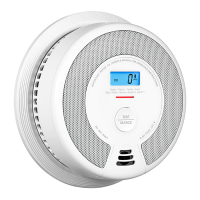
The X-SENSE XS01-W is a wireless photoelectric smoke alarm designed for residential use. It functions as a standalone smoke detector and can also be interconnected wirelessly with other compatible X-SENSE smoke alarms to create an interlinked network. When one unit in the network is triggered, all interconnected units will sound an alarm, providing comprehensive coverage throughout a home.
Function Description:
The primary function of the XS01-W is to detect smoke and alert occupants to potential fires through an audible alarm and visual LED indicators. It utilizes a photoelectric sensor, which is effective at detecting slow-smoldering fires. The alarm is powered by a 10-year sealed lithium battery, ensuring long-term operation without battery replacement.
Interconnection:
All XS01-W units come with an inbuilt RF module, enabling wireless interconnection. Units in a multi-pack are pre-interconnected. To interconnect additional alarms, users need to activate all units, then press and hold the test/silence button on one alarm for 3 seconds until its red LED flashes slowly. Pressing the button again for 3 seconds will make the LED flash rapidly, indicating it's sending an RF signal. For other alarms to join the network, their test/silence buttons must also be held for 3 seconds until their red LEDs flash slowly. Successful interconnection is confirmed by a single beep and automatic exit from interconnecting mode. A maximum of 24 wireless smoke alarms can be interconnected, but only with other X-SENSE wireless smoke alarms. To disconnect an alarm, hold the test/silence button for 3 seconds, then continuously press it twice; the alarm will sound once and disconnect.
Alarm Test:
The alarm must be properly attached to its mounting bracket before testing. For a single alarm, pressing the test/silence button will cause it to sound 3 short quick beeps, and the red LED will flash once per second. For interconnected alarms, pressing the test/silence button twice on any interconnected alarm will initiate a test of the entire network. The initiating alarm will give 1 short quick beep with its red LED flashing rapidly (once every 0.25 seconds), while other interconnected alarms will sound 3 short quick beeps with their red LEDs flashing once per second. The initiating alarm's red LED will flash rapidly while sending the signal and stop when all other alarms have received it. The test function checks the smoke sensing circuit without requiring actual smoke.
Silence Mode:
During an alarm state, pressing the silence button will put the unit into silence mode for 9 minutes. In this mode, the red LED will flash once every 5 seconds. The alarm will return to normal mode after 9 minutes. When interconnected, pressing the silence button on the initiating smoke alarm will mute all other interconnected alarms. However, the initiating smoke alarm itself cannot be silenced by pressing the silence button of any other interconnected alarm. During the 9-minute silence duration, the initiating smoke alarm cannot be re-triggered, but other interconnected alarms can still trigger if they detect dangerous smoke levels.
Users are warned never to ignore any alarm, as failure to respond can lead to serious injury or death. The silence feature is for convenience and does not correct a problem; users should always check their home for potential issues after an alarm. The alarm should be tested weekly, and if it fails to test correctly, it must be replaced immediately. This device does not detect flames, heat, carbon monoxide, or other hazardous gases. It is not intended for hearing-impaired individuals, and the use of alcohol or drugs may impair one's ability to hear the alarm. Fires in chimneys, walls, roofs, different levels, or behind closed doors might not be detected.
Installation Positioning:
Installation should prioritize bedrooms and walkways, ensuring the alarm is audible from all sleeping areas. In homes with multiple bedrooms, an alarm should be installed in each. If only one alarm is installed, it should be near all bedrooms, not in a basement or furnace room. Alarms should be installed above stairways and on every floor. Smoke and heat spread horizontally after rising, so alarms should be placed in the middle of the ceiling where possible, at a minimum distance from corners. If not in the middle of the ceiling, install it at least 20 inches (50 cm) from corners. Wall-mounted alarms should be 4-12 inches (10-30 cm) below the ceiling. For rooms or halls longer than 30 feet (900 cm), multiple alarms are recommended. When walls or ceilings are angled, the alarm should be at least 3 feet (90 cm) from the highest point. In multi-level homes, at least one wireless smoke alarm should be installed on each level, in a straight line with minimal obstacles between interconnected alarms for optimal signal transmission. Kitchens should be covered by smoke alarms with a silence mode.
Locations to Avoid:
Avoid installing near large metal surfaces, bundles of wire, fluorescent lights, amateur radios, electrical equipment, or other devices that transmit RF signals, as electronic "noise" can cause nuisance alarms. The alarm should be installed by a competent person and is not a substitute for proper installation, use, and maintenance of fuel-burning appliances, including appropriate ventilation and exhaust systems.
Technical Specifications:
- Power Supply: 10-year sealed lithium battery
- Sensor Type: Photoelectric
- Safety Standards: EN 14604:2005+AC:2008
- Standby Current: < 15 uA
- Alarm Current: < 150 mA
- Coverage Area: 20-40 m²
- Best Operating Ambient Temperature: 4.4-37.8 °C
- Operating Relative Humidity: ≤ 85% (non-condensing)
- Alarm Loudness: ≥ 85 dB at 3 m @ 3.2 ± 0.3 kHz pulsing alarm
- Silence Duration: About 9 minutes
- Operating Frequency: 868 MHz
- Maximum Number of Interconnected Units: 24 wireless units (Only compatible with X-SENSE wireless smoke alarms)
- Transmission Range: 35 m (over 250 m in clean air)
Maintenance Features:
To ensure proper functioning, the smoke alarm should be maintained regularly:
- Weekly Test: Verify the unit's alarm sound and indicator are working properly by testing it once a week.
- Quarterly Cleaning: At a minimum, clean the smoke alarm every 3 months. Remove the unit from the ceiling and clean the alarm cover and vents with a vacuum cleaner fitted with a soft brush attachment to remove dust and dirt.
- Avoid Chemicals: Never use detergents or other solvents to clean the unit. Avoid spraying air fresheners, hair spray, or other aerosols near the alarm.
- No Painting: Do not paint the unit, as paint will seal the vents and interfere with the sensor's ability to detect fire.
- No Disassembly: Never attempt to disassemble the unit or clean inside, as this will void the warranty.
- Reinstallation: When removed, place the smoke alarm back in its proper location as soon as possible to assure continuous protection from fire.
- Ventilation: When household cleaning supplies or similar contaminants are used, the area should be ventilated.
Troubleshooting:
- Alarm not sounding during testing: Check if the alarm is properly attached to the mounting bracket, ensure the central test button is pushed firmly, and check installation positioning for wireless signal blockage or being out of range.
- False alarms/intermittent alarms (cooking, showering): Check the smoke alarm's location (refer to "Installation Positioning") and clean the smoke alarm (refer to "Maintenance").
- Red LED flashes and alarm sounds one beep every 60 seconds: Indicates low battery. Replace immediately.
- Red LED flashes and alarm sounds two beeps every 40 seconds: Indicates detector malfunction. Clean or replace immediately.
Environmental Protection:
Waste electrical products should not be disposed of with household waste. Users are encouraged to recycle where facilities exist and should check with their local authority or retailer for recycling advice.


 To Next Page
 General