Periodic maintenance and adjustment
6-21
6
EWA10512
Never overload your vehicle. Opera-
tion of an overloaded vehicle could
cause an accident.
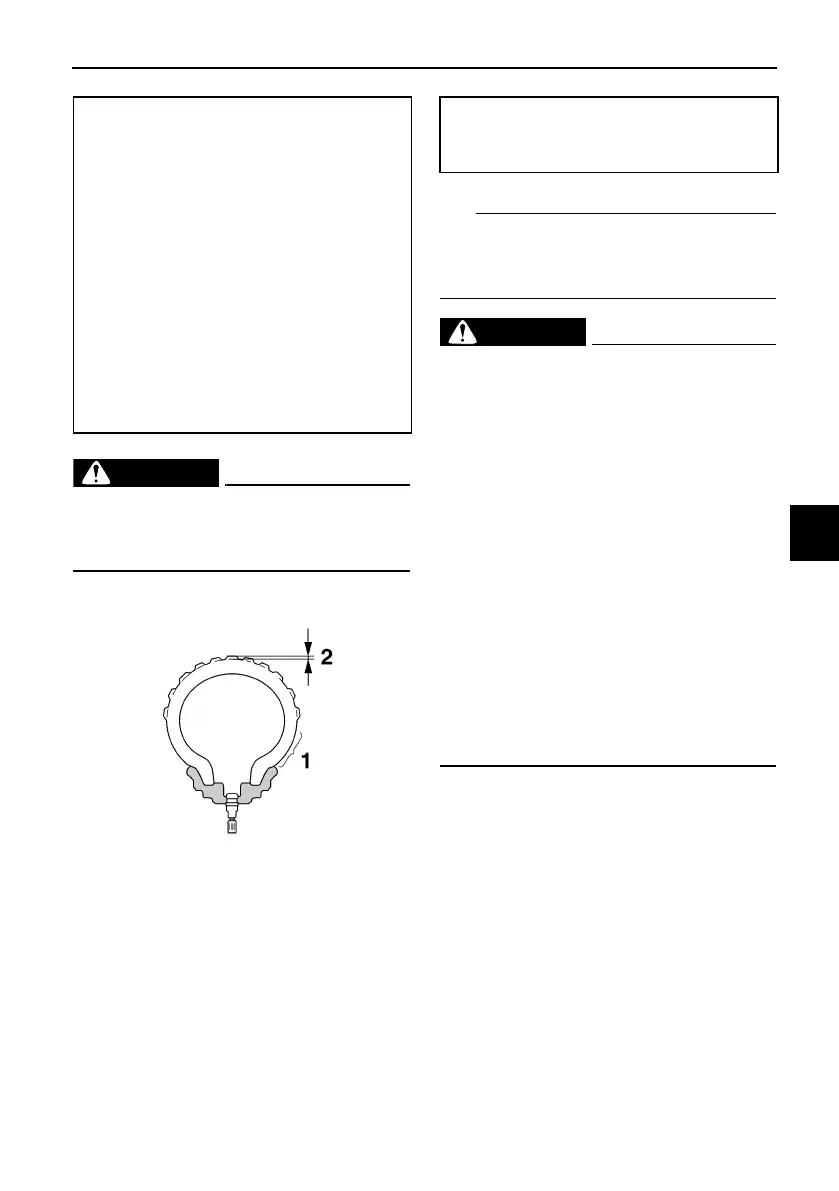
Tire inspection
The tires must be checked before each
ride. If the center tread depth reaches
the specified limit, if the tire has a nail
or glass fragments in it, or if the side-
wall is cracked, have a Yamaha dealer
replace the tire immediately.
The tire tread depth limits may differ
from country to country. Always com-
ply with the local regulations.
EWA10472
Have a Yamaha dealer replace
excessively worn tires. Besides
being illegal, operating the vehi-
cle with excessively worn tires
decreases riding stability and
can lead to loss of control.
The replacement of all wheel
and brake-related parts, includ-
ing the tires, should be left to a
Yamaha dealer, who has the
necessary professional knowl-
edge and experience to do so.
Ride at moderate speeds after
changing a tire since the tire
surface must first be “broken
in” for it to develop its optimal
characteristics.
Tire information
This model is equipped with tubeless
tires and rubber tire air valves.
Tires age, even if they have not been
used or have only been used occasion-
ally. Cracking of the tread and sidewall
rubber, sometimes accompanied by
carcass deformation, is an evidence of
ageing. Old and aged tires shall be
checked by tire specialists to ascertain
their suitability for further use.
Tire air pressure (measured on cold
tires):
1 person:
Front:
150 kPa (1.50 kgf/cm², 22 psi)
Rear:
2 persons:
Front:
150 kPa (1.50 kgf/cm², 22 psi)
Rear:
Maximum load*:
168 kg (370 lb)
* Total weight of rider, passenger, car-
go and accessories
1. Tire sidewall
2. Tire tread depth
Minimum tire tread depth (front and
rear):
1.6 mm (0.06 in)
UBV3E0E0.book Page 21 Monday, September 26, 2016 3:42 PM
250 kPa (2.50 kgf/cm², 36 psi)
250 kPa (2.50 kgf/cm², 36 psi)



 To Next Page