American Beer Equipment 2001 SW 6
th
St.
Lincoln, NE 68522
22
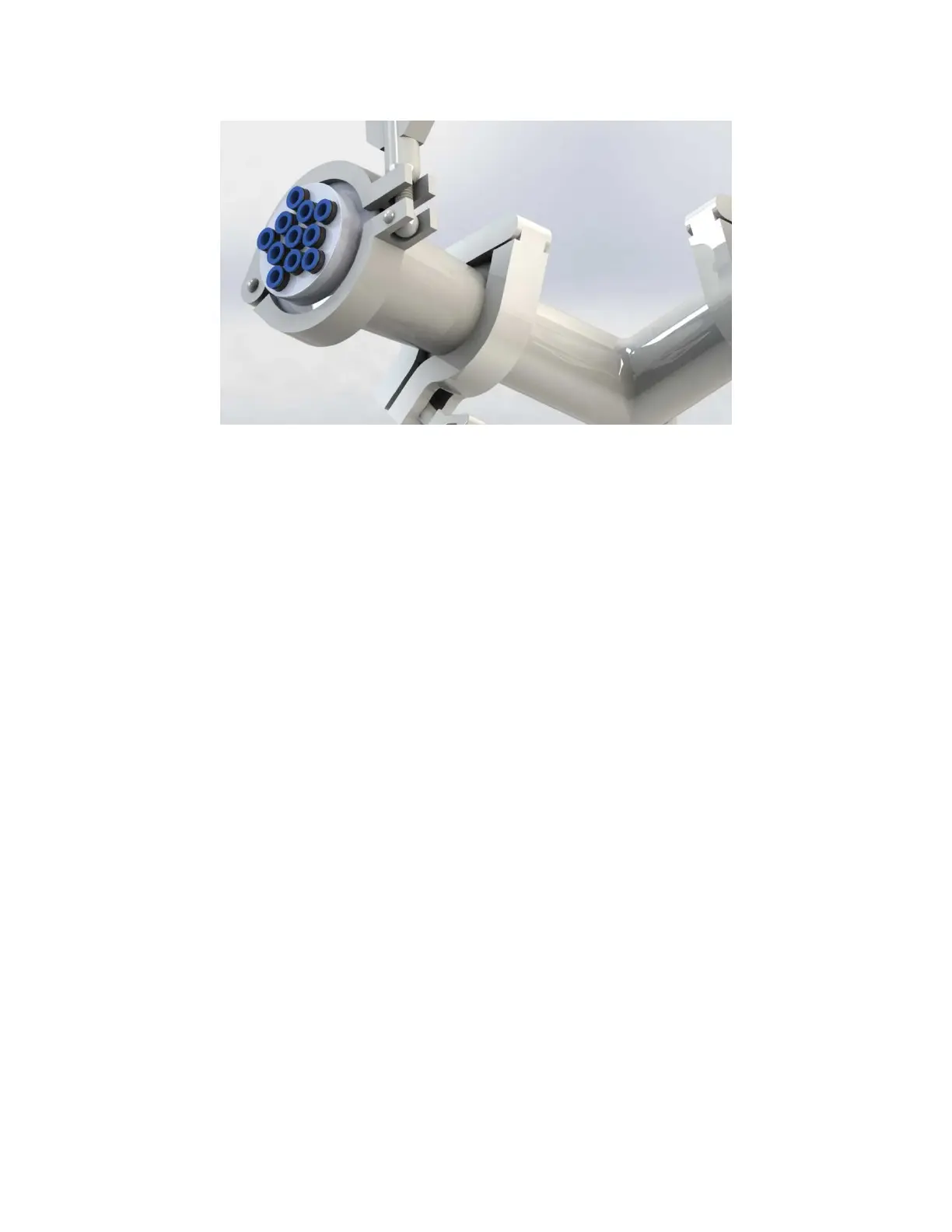
ii. Beer Lines
Figure 11 Beer Manifold
If your lines are leaking beer, cut them back about an inch or two. You must cut squarely. The lines may change size, in
the push-to-connect fittings due to the repeated thermal expansion and retraction from cold beer and hot cleaning
cycles. The tubing is rated for up to 165 degrees Fahrenheit
Note: It is recommended to leave the beer lines pointing up on the welded frame bracket behind the HMI. This allows
for the manifold to evenly distribute beer as well, prevents the manifold from getting kicked, and keeps it off the
ground.
iii. Nozzle Leaks
Filler nozzles should not leak. Areas for leaking could be near the packing plug nut, filler ball, or tube connections. All
areas of leaking are able to be adjusted and fixed.
If the packing plug nut leaks, you may gently tighten it (refer to figure Figure 12). Usually a ¼ turn will fix any leaking.
If the ball is leaking, several areas can be checked. Is something obstructing the ball from closing? Is the ball getting
retracted while in the center of the nozzle tube? The most probable cause may be the ball has worn itself into the
stainless tube a bit and the cylinder needs to retract the ball up into the nozzle body a bit more. This will ensure a tighter
seal between the nozzle body and ball. There are two threaded areas, Figure 12, which have adjustment in the form of
threads- coupling and rod. Either section can provide a tighter seal. In short, what needs to happen is the distance
between the ball and cylinder must become shorter. To do this, the rod can be threaded into the coupling, or the
coupling can be threaded into the cylinder. For example, to decrease the rod thread, the rod jam nut would be loosened.
Then, the rod would be threaded into the coupling. Typically, an allen wrench is inserted into the ball and tightened
while keeping the coupling stationary. After the rod thread is threaded into the coupling, the rod thread jam nut must
be tightened. Loctite must be used on the threads to ensure the threads do not loosen and thus the need for the process
to happen again.
Tightening the coupling to cylinder interface is much the same as the previous example. The accompanying jam nut
thread would be loosened, the coupling would be threaded into the cylinder, and then the locktighted jam nut would be
tightened.


 To Next Page